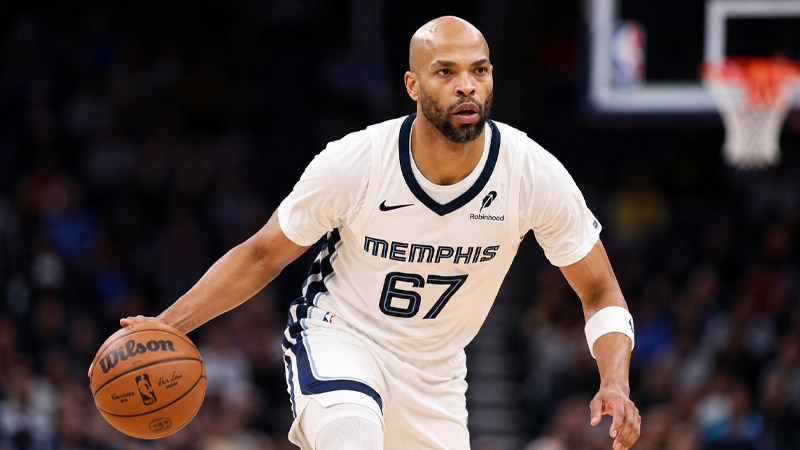
Taj Gibson wears jersey number 67 to honor his deep-rooted connections to Fort Greene, Brooklyn, specifically paying tribute to Public School 67 (P.S. 67 Charles A. Dorsey School).
After wearing number 22 for eight seasons with the Chicago Bulls and Oklahoma City Thunder, Gibson made the switch upon joining the Minnesota Timberwolves in 2017 because his preferred number was already taken.
Rather than choosing a random replacement, he consulted children in his old neighborhood, who enthusiastically suggested 67. Today, it stands as a historic symbol of community pride and a powerful beacon of hope.
Why Did Taj Gibson Change His Jersey Number to 67?
The transition to this unique jersey number was born out of a combination of professional necessity and a deep desire to remain connected to his origins.
When veteran power forward Taj Gibson moved from the Oklahoma City Thunder to the Minnesota Timberwolves, he faced a common athlete’s dilemma regarding his identity on the court.
The Conflict Over Number 22
For the first eight years of his professional career, Gibson was synonymous with the number 22. He wore this “lucky” number throughout his successful tenure with the Chicago Bulls and his brief stint in Oklahoma City.
However, upon arriving in Minnesota in 2017, he discovered that the number 22 was already claimed by the team’s young cornerstone, Andrew Wiggins.
Respecting the team hierarchy and his new teammate, Gibson realized he needed a new identifier that carried just as much personal weight as his previous one.
Returning to His Brooklyn Roots
Faced with the need for a change, Gibson did not look at a list of available numbers and pick one at random. Instead, he returned to the streets of Brooklyn to seek guidance from the people who knew him best.
He visited the Fort Greene community and engaged with the local residents and children to see what they envisioned for his next chapter.
This consultation was not just a PR move; it was a sincere attempt to ensure that his presence in the league continued to reflect the community that raised him.
The Cultural Significance of Fort Greene and P.S. 67
The choice of 67 is a direct geographical and educational marker that points toward a specific block in New York City. For Gibson, the number is a “badge of honor” that he carries into every arena, regardless of which city he is playing in.
A Tribute to Charles A. Dorsey School
The most specific reference point for the number 67 is Public School 67, also known as the Charles A. Dorsey School. This is the elementary school Gibson attended as a child, and it remains a central pillar of the Fort Greene neighborhood.
By selecting this number, he is effectively acknowledging the foundation of his education and the teachers and mentors who helped shape his early life. It serves as a permanent shout-out to the school that sits at the heart of his childhood memories.
Representing the Housing Projects
P.S. 67 is located directly within the Fort Greene housing projects, the environment where Gibson grew up and faced numerous challenges. Choosing to wear the number is his way of “putting the neighborhood on his chest” every single night.
He wanted everyone from his old block to know that when they see 67 on an NBA court, it is a representation of them and their shared history.
This connection is particularly poignant because Gibson remains deeply invested in the well-being of the area, often returning to support the community.
How Local Children Inspired an NBA History-Making Choice
One of the most heartwarming aspects of Gibson’s number selection is that it was essentially “voted on” by the youth of Fort Greene. Their immediate and joyful reaction to the suggestion confirmed for Gibson that 67 was the only choice.
The Neighborhood Consultation Process
During his visit to the neighborhood, Gibson specifically asked a group of kids what number he should pick for his new team. The response was instantaneous and unanimous: “67!”.
Gibson noted that the children said it with massive smiles on their faces, recognizing the immediate connection to their local school.
At first, he was slightly hesitant because 67 is a highly unusual number in the world of basketball, but their enthusiasm quickly won him over.
Overcoming Initial Hesitation
Gibson admitted that his first instinct was to say “nah” to such a high and unconventional number. However, he quickly realized that if this was the number that would make the kids in his neighborhood proud, then the aesthetic of the number didn’t matter.
He concluded that “it’s only a number,” and the value it provided in terms of representation far outweighed any traditional basketball conventions. This decision highlighted his selfless approach to his career and his commitment to being a role model.
History of the Number 67 in Professional Basketball
Before Taj Gibson adopted the number, 67 was a ghost in the annals of professional basketball. Its absence for over half a century makes Gibson’s choice even more statistically significant within the league.
Breaking a Seventy-Year Silence
The last time a professional player wore the number 67 was in 1946, during the very early days of organized professional basketball. Moe Becker of the Detroit Falcons wore the number while playing in the Basketball Association of America (BAA).
The Falcons were a short-lived franchise that folded after just one season. This was years before the BAA merged with the National Basketball League (NBL) in 1949 to officially form the NBA as we know it today.
Modern Era Exclusivity
Because the Detroit Falcons ceased operations so early in the league’s history, Gibson is effectively the only player to wear the number 67 in the modern NBA era.
When he debuted the jersey on October 4, 2017, he officially became the first player in NBA history to bring the number to a major, long-standing franchise.
His career longevity has ensured that the number 67 is now firmly associated with his defensive tenacity and veteran leadership.
A Visual Guide to Taj Gibson’s Teams Wearing Number 67
| Team | Year Range | Significance |
|---|---|---|
| Minnesota Timberwolves | 2017 – 2019 | The debut of #67 after 8 years of wearing #22. |
| New York Knicks | 2019 – 2022, 2023 – 2024 | Bringing the Brooklyn tribute back to his home state. |
| Washington Wizards | 2022 – 2023 | Continued veteran leadership in the nation’s capital. |
| Detroit Pistons | 2024 | A brief stint keeping the legacy alive in the Midwest. |
| Charlotte Hornets | 2024 – 2025 | Providing mentorship to a young roster in Charlotte. |
| Memphis Grizzlies | 2026 – Present | Became the first player in Grizzlies history to wear #67. |
The Role of Tom Thibodeau in Gibson’s Personal Journey
A major factor in Gibson’s success and his ability to stay grounded is his long-standing relationship with coach Tom Thibodeau. Thibodeau’s understanding of Gibson’s background has played a crucial role in how the two interact.
Coaching with Community Context
Thibodeau is not just a coach to Gibson; he is someone who has taken the time to understand the player’s life outside of the gym.
Gibson has mentioned that Thibodeau actually visited his neighborhood in Fort Greene and attended funerals for friends Gibson lost to violence. This level of personal commitment creates a unique bond of trust.
Because Thibodeau has seen where Gibson comes from, he doesn’t need to say much to motivate him; the shared understanding of Gibson’s “tough” journey is enough.
Hardship and Motivation
Gibson has been open about the difficulties of growing up in an area plagued by gun violence and the loss of close friends.
He takes immense pride in his journey, which involved leaving New York for California to attend prep school and junior college to make it to the NBA. Thibodeau uses this history as a tool to push Gibson to his limits.
By constantly reminding Gibson of his roots, Thibodeau ensures that the power forward never loses the hunger that allowed him to escape difficult circumstances and find fame in the league.
Frequently Asked Questions About Taj Gibson’s Number
Who was the first player to wear 67?
While Taj Gibson is the first and only player to wear the number in the modern NBA, the technical first was Moe Becker. Becker played for the Detroit Falcons in 1946 in the BAA.
However, since that team and league existed before the formal creation of the NBA, many historians and fans view Gibson as the true pioneer of the number. In February 2026, he even set a new franchise record by being the first to wear it for the Memphis Grizzlies.
Why did he choose 67 over other numbers?
The selection was entirely about local identity rather than a personal preference for the digits. Gibson wanted a number that would make the kids in the Fort Greene projects smile.
Since P.S. 67 is the focal point of their daily lives and education, the number was a perfect fit for a “community-driven” identity.
It serves as a reminder that “anything’s possible” for those living in the projects, showing them that a kid from their same school can reach the highest levels of global sport.
The Legacy of a Veteran Leader
Taj Gibson’s career is defined by more than just his rebounding and interior defense; it is defined by his authenticity. By wearing 67, he has created a lasting legacy that bridges the gap between professional sports and the inner city.
Impact on the Next Generation
Gibson’s primary goal with the number was to motivate young people to “push through and do what you want to do with your life”. He encourages them to ignore the negatives and the doubters, using his own jersey as a constant visual reminder of their potential.
When kids in Brooklyn or fans in China see that 67, they are seeing a story of resilience. He treats the number as a symbol of hope, proving that one’s beginnings do not have to dictate their ending.
A Career Defined by Authenticity
Whether playing in Shenzhen, China, or at Madison Square Garden, Gibson has remained the same person who grew up in the Fort Greene projects.
He appreciates the journey that took him from a prep school in California to becoming a household name in the NBA.
His commitment to the number 67 through six different NBA franchises shows a level of consistency and loyalty to his roots that is rare in professional athletics.
It is a testament to the idea that no matter how far basketball takes you, you should always carry a piece of home with you.