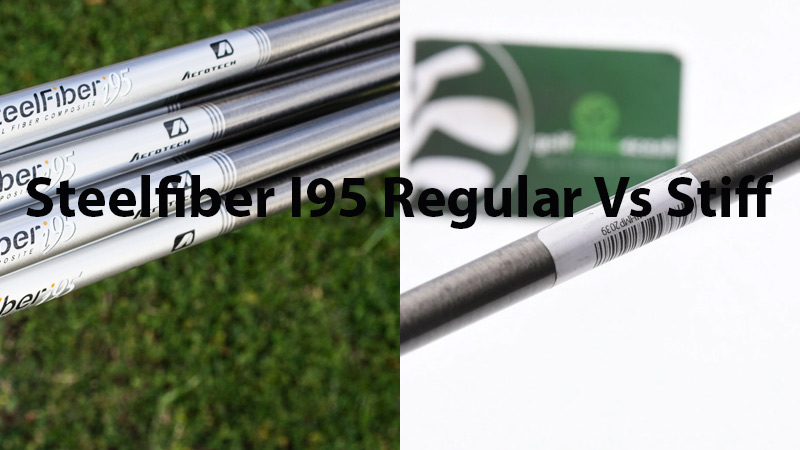
In the pursuit of golfing excellence, the equipment serves as the bridge between athletic intent and on-course execution. Among the most critical components of this bridge is the shaft—often referred to as the “engine” of the club.
The Aerotech Steelfiber i95 has emerged as a gold standard for players seeking the benefits of graphite with the stability of steel.
However, the pivot point of a successful transition to this shaft lies in the flex selection. This report provides a comprehensive, data-driven analysis of the Steelfiber i95 Regular vs. Stiff options, aligning technical specifications with player personas to optimize your performance.
The Strategic Importance of Shaft Optimization
For the discerning golfer, an equipment upgrade is not merely a purchase; it is a strategic investment in consistency. The Steelfiber i95 series is specifically engineered for players who want to reduce vibration while maintaining the professional-grade “weight” of a 95-gram shaft.
The primary challenge many players face is reconciling their perceived swing speed with their actual mechanical requirements.
Choosing the wrong flex—whether too soft or too rigid—can lead to catastrophic dispersion patterns and a loss of distance. As we examine the i95, we focus on two primary variables: Swing Speed (MPH) and Bend Point (Kick Point).
Technical Specification Matrix: Steelfiber i95
To understand the performance ceiling of each option, we must first analyze the empirical data provided by the sources.
| Metric | Steelfiber i95 Regular | Steelfiber i95 Stiff |
|---|---|---|
| Optimal Swing Speed | 84 – 96 MPH (135.2 – 154.5 KPH) | 97 – 104 MPH (156.1 – 167.4 KPH) |
| Bend Point | Middle | High |
| Weight | 95 Grams (3.35 oz) | 95 Grams (3.35 oz) |
| Target Experience | All Skill Levels | Intermediate to Professional |
| Primary Benefit | Increased Launch/Ball Propulsion | Maximum Directional Control |
One of the most notable features of the i95 lineup is that the weight remains constant at 95 grams regardless of the stiffness.
This allows a golfer to change flexes without having to recalibrate their feel for the overall weight of the club, a common issue in other shaft lineups where “Stiff” often implies “Heavier.”
Deep Dive: The Regular Flex (84 – 96 MPH)
The Regular flex Steelfiber i95 is designed for a broad demographic, ranging from beginners to seniors and even low-handicap experts who prioritize a smoother, more deliberate tempo.
1. Mechanics of the Middle Bend
The “Middle Bend” point in the Regular flex allows the shaft to store more energy during the transition and release it efficiently at impact. For golfers in the 84–96 mph range, this extra flex acts as a force multiplier.
2. Propulsion vs. Effort
As noted in the sources, the bend in a Regular shaft helps propel the ball forward. For players who do not generate elite-level clubhead speed, this mechanical assistance is vital for maintaining competitive distances.
It ensures that the club is working with the golfer rather than forcing the golfer to “over-swing” to get the ball airborne.
3. Ideal Persona: The Consistent Tempo Player
If you find that your swing is rhythmic rather than aggressive, the Regular flex provides the necessary “kick” to maximize your shot potential without sacrificing the premium feel of the Steelfiber composite.
Deep Dive: The Stiff Flex (97 – 104 MPH)
As a player moves into the 97–104 mph range, the physics of the swing change. The forces applied to the shaft during the downswing require a more rigid structure to maintain the integrity of the clubhead’s position at impact.
1. The High Bend Advantage
The Stiff flex features a High Bend point. This technical distinction is crucial. A high bend point generally results in a lower, more penetrating ball flight and, most importantly, maximum control. For the high-speed player, control over where the ball lands is often more valuable than raw distance.
2. Stability at Velocity
When swinging at speeds exceeding 97 mph, a shaft that flexes too much can “lag” or “droop” excessively. The Stiff flex limits this movement, ensuring the clubface returns to square consistently.
3. Ideal Persona: The Aggressive Striker
This shaft is tailored for the intermediate-to-advanced player who possesses a fast transition and a high-velocity finish. If you frequently “overpower” your current clubs, the transition to Stiff is likely necessary.
The Risk of Misalignment: Over-Flex and Performance Decay
Understanding the “why” behind flex selection is essential for long-term improvement. Choosing a shaft that is too flexible for your speed (Over-Flex) carries significant performance penalties.
Dynamic Loft Issues
If you swing too fast for a Regular shaft, the club continues to flex as you hit the ball. This can result in hitting “too high” on the ball, leading to ballooning shots that lose distance in the wind.
Precision Loss
In extreme cases of over-flexing, the golfer may miss the ball’s “sweet spot” entirely or experience total mishits.
The Psychological Impact
Frequent mishits caused by improper equipment often lead to swing compensations. A golfer may subconsciously slow down their swing to accommodate a shaft that is too weak, which stalls athletic development.
Conversely, using a Stiff shaft with a slow swing speed results in a “dead” feel, where the golfer lacks the speed to “load” the shaft, leading to low, weak shots that fall short of the target.
Expert Audience Profiling: Which Path Are You On?
Persona A: The Aspiring Amateur/Senior
- Swing Speed: 85-90 MPH.
- Current Struggle: Difficulty getting long irons in the air.
- Recommendation: Steelfiber i95 Regular. The middle bend will assist in launch angle, while the 95g weight provides a stable transition from traditional steel shafts.
Persona B: The Competitive Mid-Handicapper
- Swing Speed: 98-102 MPH.
- Current Struggle: Occasional “hook” or “pull” when swinging hard.
- Recommendation: Steelfiber i95 Stiff. The high bend point will stabilize the clubhead during aggressive transitions, offering the “Intermediate Plus” level of control needed for lower scores.
The Roadmap to Your Ideal Fit
While swing speed data provides the foundation for your choice, real-world application requires a few additional steps to ensure Fortune 500-level precision in your equipment selection.
- Baseline Speed Measurement: Visit a local pro shop or use a high-end launch monitor (such as Trackman or GCQuad) to establish an accurate average swing speed. Do not rely on “best-ever” numbers; focus on the speed you can maintain for 18 holes.
- Monitor Your Progression: As Al, a 15-year veteran golfer, notes, your swing speed is not static. As you gain strength or improve your technique, you may move from the Regular bracket (84-96 mph) into the Stiff bracket (97-104 mph).
- Evaluate Ball Flight:
- Too High/Left (for righties): You may need more stiffness.
- Too Low/Short: You may need more flex.
Enhanced FAQ: Steelfiber i95 Dynamics
Q: Does the Steelfiber i95 Stiff weigh more than the Regular?
A: No. Both the Regular and Stiff versions of the i95 weigh exactly 95 grams (3.35 oz). This allows you to choose the flex based solely on your swing speed and desired bend point without altering the weight of your clubs.
Q: Is the Steelfiber i95 suitable for beginners?
A: Yes, specifically the Regular flex. It is described as being suitable for “All” experience levels, including beginners, because it provides the flex needed to help propel the ball forward.
Q: Why does the Stiff flex have a “High” bend point?
A: A high bend point limits the amount of “whip” in the lower part of the shaft. This is intentional for higher swing speeds (97–104 mph), as it grants the player maximum control over the clubhead’s position at impact.
Q: What is the most common sign that my shaft is too flexible?
A: The most common sign is “over-flexing” at impact, which causes the ball to fly too high or results in inconsistent contact, including hitting too high on the ball face.
Conclusion: Engineering Your Success
The Aerotech Steelfiber i95 represents a significant technological leap in shaft design, combining the best attributes of graphite and steel.
However, the efficacy of this technology is entirely dependent on the match between the shaft’s mechanical properties and the golfer’s physical output.
If your swing speed sits between 84 – 96 mph, the Regular flex—with its middle bend and propulsion-aiding flex—is your optimal choice.
If your speed reaches the 97 – 104 mph range, the Stiff flex is required to provide the stability and high bend point necessary for professional-grade control.