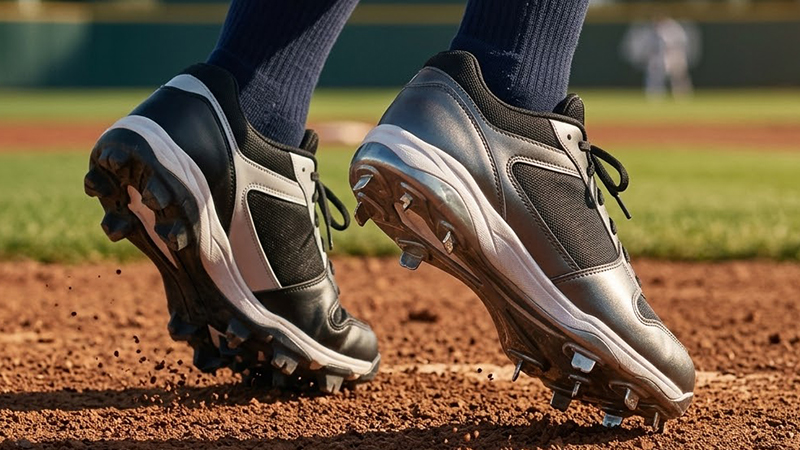
In the high-stakes world of competitive baseball, every millisecond counts—from the explosive burst out of the batter’s box to the split-second pivot required for a double play.
At the heart of this performance is a single, often debated piece of equipment: the cleat. Choosing between molded and metal baseball cleats is not merely a matter of aesthetic preference; it is a strategic decision that directly impacts traction, joint health, and league eligibility.
Whether you are a scout for a Fortune 500 sports agency or a dedicated athlete aiming for the collegiate level, understanding the technical nuances of footwear is essential.
This guide provides a comprehensive analysis of the “Molded vs. Metal” showdown, drawing on professional insights, field testing, and the evolving preferences of Major League Baseball (MLB) icons.
The Foundation: Technical Specifications and Field Compatibility
The fundamental difference between these two categories lies in the material and construction of the studs.
Metal Spikes: The Performance Beast
Metal cleats feature permanent, razor-sharp blades designed to “dig into” the ground. They are the gold standard for elite players who prioritize raw power and speed on natural surfaces.
- Weight: Generally lighter, averaging approximately 12 oz.
- Traction: Superior grip on hard, dry, or firm fields.
- Maintenance: Requires consistent cleaning and occasional spike replacement using a manual wrench to prevent spikes from becoming “slippery nubs”.
Molded Cleats: The Versatile Warrior
Commonly made from rubber or hard plastic (often referred to as MCS), molded cleats offer a multi-stud configuration that prioritizes comfort and surface versatility.
- Weight: Slightly heavier, typically around 14 oz due to the density of the sole.
- Traction: Excels on artificial turf, wet grass, and mixed surfaces.
- Durability: High abrasion resistance, requiring minimal upkeep beyond a quick post-game scrub.
The Performance Gap: Data-Driven Field Insights
When traction is the primary metric, metal spikes are often viewed as a “turbo boost” for explosive movements.
In controlled sprint drills and base-stealing simulations, metal spikes allow for more aggressive acceleration out of the box because the sharp points penetrate deep into the soil for a solid “purchase” with every push-off.
However, the “performance boost” is highly dependent on field conditions. In a “Field Conditions Face-Off,” research shows that:
Wet Grass/Mud
Metal spikes are essential. On rain-slicked blades, molded cleats can feel like “running on ice,” whereas metal spikes rarely falter.
Hard-Packed Dirt/Turf
Metal spikes can actually become a liability. On extremely hard surfaces, the metal spikes cannot penetrate, leading to “spiked pokes” underfoot and increased foot fatigue. In these environments, molded cleats offer a more stable and cushioned platform.
Why MLB Pros are Switching to Plastic?
One of the most surprising trends in modern professional baseball is the increasing number of world-class athletes opting for molded (MCS) cleats over traditional metal spikes. This shift is driven by two factors: weight distribution and injury prevention.
Weight Distribution and Fatigue
A standard MLB season consists of 162 games. Over such a grueling schedule, the physical toll on a player’s lower body is immense.
Experts note that because molded cleats have more individual studs, they distribute body weight more evenly across the sole. This reduces pressure points that can lead to chronic foot pain and joint stress.
Joey Votto
While he primarily wears metal for hitting stability, Votto frequently mixes in MCS models to give his feet a break from the rigidity of metal.
Brandon Phillips
Known for his athleticism, Phillips uses metal to maximize torque on highlight plays but switches to plastic on days when his legs feel fatigued to alleviate stress on his joints.
The “Snag” Factor and Injury Prevention
The very traction that makes metal spikes effective can also make them dangerous. High-traction spikes have a tendency to “snag” in the turf during high-speed slides or pivots.
The Buster Posey Case Study
After a devastating ankle injury in 2011, Posey switched to MCS cleats. He intentionally chose the “downgrade” in traction to ensure his foot would give way or slide rather than snagging in the dirt, which was a contributing factor to his injury.
Troy Tulowitzki
To combat a history of durability issues, the Rockies’ medical staff encouraged Tulowitzki to use MCS cleats as a preventative measure to keep him on the field.
Modern Market Leaders: Top Cleant Recommendations
For those seeking the best of both worlds, the market has responded with specialized models that bridge the gap between performance and comfort.
Elite Metal Options
- Nike Alpha Huarache Elite 4: Designed for explosive movement, these features an inner cushioning system to mitigate the traditional discomfort of metal.
- New Balance Fresh Foam 3000 v6: Widely considered one of the most comfortable metal cleats, it utilizes “Fresh Foam” midsole technology to provide a cushioned ride without sacrificing grip.
- Mizuno Dominant Knit: Features a breathable, sock-like fit for elite players seeking a lightweight, high-performance experience.
- Jifffly AG Long Spikes: An aggressive, budget-friendly option ($25) for those who play primarily on natural grass and demand maximum bite.
Elite Molded Options
- Adidas Icon 7: Engineered for versatility, it is a favorite for youth and recreational players who play on mixed surfaces.
- Under Armour Yard Low ST: Known for flexibility and a padded tongue, this model is ideal for players who prioritize mobility and long-lasting wear.
The Future of Footwear: The Hybrid Revolution
The most significant development in baseball footwear is the emergence of the hybrid cleat. Popularized by stars like Bryce Harper, hybrid cleats feature metal spikes under the toe for maximum drive and molded studs under the heel for shock absorption and comfort.
This configuration offers a “best of both worlds” solution:
- Explosive Jumps: The metal toe allows for aggressive acceleration.
- Reduced Pounding: The molded heel softens the impact on knees and hips during a long game. As high-school and collegiate players face increasingly heavy schedules (often 100+ games a year), hybrid models are expected to become the industry standard for serious athletes.
Safety and Compliance: Navigating League Rules
Before investing in a high-performance metal spike, it is critical to verify league regulations.
Youth and Little League
Metal spikes are almost universally banned in youth divisions. This is primarily for safety, as metal can cause significant injury during slides or close-contact plays.
High School and College
Metal is generally allowed and often encouraged for the performance edge it provides in competitive play.
Field Preservation
Some facilities with artificial turf prohibit metal spikes because they can tear the synthetic fibers and damage the underlying shock pads.
Professional Maintenance: The DIY Guide to Longevity
To ensure your investment lasts multiple seasons, proper upkeep is non-negotiable.
Metal Maintenance Checklist
- Daily Wipe Down: Remove mud and debris immediately after games to prevent oxidation.
- Spike Inspection: Check for worn or rounded tips. A dull spike provides no performance benefit and can lead to instability.
- Replacement: Use a manual wrench to swap out spikes before they wear down to the base of the shoe.
Molded Maintenance Checklist
- Sole Inspection: Look for cracks in the rubber or plastic.
- Surface Cleaning: A quick scrub with a stiff brush is sufficient to maintain the integrity of the studs.
Enhanced FAQ: Expert Answers to Common Queries
1. Do metal spikes actually make me faster?
Technically, they improve traction, which allows for more efficient power transfer during acceleration. On natural grass, this can result in faster sprint times. However, on hard surfaces, the lack of penetration can actually slow you down due to instability.
2. Which is better for pitchers?
Pitchers generally prefer metal spikes. The “drive leg” requires an absolute grip on the mound to maximize stride length and velocity. Legends like Clayton Kershaw and Yu Darvish rely on metal to shorten the distance between their release point and the hitter.
3. Are molded cleats only for “cheap” or “beginner” players?
Absolutely not. While they are the standard for beginners, elite players like Manny Machado and Miguel Cabrera (early in his Triple Crown season) have utilized molded cleats for their weight distribution and joint-health benefits.
4. Can I wear metal cleats on turf?
It is not recommended. Metal spikes can wear down rapidly on artificial surfaces, and many turf facilities ban them to prevent damage to the field.
Final Verdict: Finding Your Competitive Edge
The decision between molded and metal cleats ultimately depends on three pillars: Field Surface, Performance Needs, and Physical Longevity.
- Choose Metal if you are an advanced player competing on natural grass who demands maximum acceleration and has the time to maintain your gear.
- Choose Molded if you value comfort, play on varied surfaces (including turf), or participate in a league where safety regulations prohibit metal.
- Choose Hybrid if you are a serious athlete playing a high volume of games and want to protect your joints without sacrificing the “dig” needed for elite-level play.
Ready to upgrade your game?