
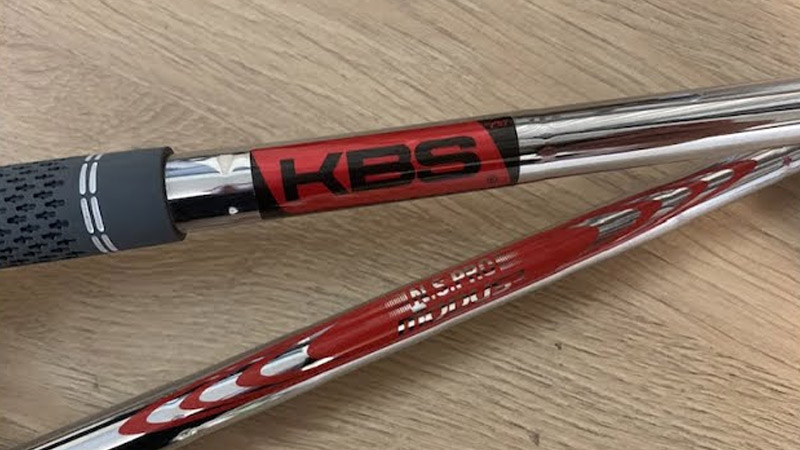
In the modern era of golf, the “engine” of the club—the shaft—has undergone a radical transformation. Gone are the days when a “strong” player was pigeonholed into 130-gram extra-stiff steel rods as a badge of honor.
Today, the focus has shifted from raw mass to optimized efficiency. For golfers seeking to maximize clubhead speed without compromising the structural integrity of their shot shape, the 100-gram weight class has become the new industry standard for performance.
Two titans dominate this specific territory: the Nippon N.S. Pro Modus3 Tour 105 and the KBS Tour 90. While they appear nearly identical on a spec sheet, their on-course performance profiles cater to vastly different swing dynamics.
This comprehensive guide leverages fitting data, user experiences, and metallurgical insights to help you determine which of these lightweight powerhouses belongs in your bag.
The Foundation: Why Lightweight Steel is Redefining the Game
The transition to lightweight steel is not merely a trend; it is a data-driven evolution. As seen in recent fitting trends, even high-level players are moving away from traditional heavyweights like the Dynamic Gold S300 in favor of lighter profiles that offer increased clubhead speed and improved distance.
The 100-Gram Sweet Spot
The Modus 105 (approximately 103 grams) and the KBS Tour 90 (approximately 102 grams) sit in a unique “sweet spot”.
This weight class is light enough to help golfers gain 8-10 yards of carry distance through increased swing speed, yet heavy enough to provide the “thump” and timing necessary for consistent iron play.
Breaking the “Macho” Stigma
One of the primary hurdles in shaft selection is the traditional mindset that larger or stronger players require heavier shafts. However, performance data often tells a different story.
Players described as “strong as an ox” have found significant success moving to these 100g profiles because they prioritize smash factor and ball speed over the ego of playing a 130g shaft.
Nippon Modus 105: The Penetrating Performer
The Nippon Modus 105 has earned a cult following for its unique ability to feel “smooth” while remaining “very stable,” even when a player decides to “give it full beans”.
Technical Profile and Feel
The Modus 105 is engineered with a unique heat-treatment process that allows the shaft to remain rigid in the tip and mid-section while maintaining a smooth energy transfer.
- Feel: It is frequently described as providing excellent feedback. Unlike some lightweight shafts that can feel “boardy,” the Nippon allows the player to feel the clubhead’s position throughout the transition.
- Stability: A standout feature is its stability. Users note that it doesn’t “wash out” or feel flimsy during aggressive transitions.
Performance Characteristics: Trajectory and Spin
The defining characteristic of the Modus 105 is its penetrating ball flight.
- Launch: Lower than the KBS Tour 90.
- Spin: Designed to produce mid-to-low spin, making it an ideal choice for the “high-ball hitter” who struggles with ballooning shots in the wind.
- Real-World Success: Fitters often turn to the Modus 105 when a player needs to bring their peak height down to a more manageable window without losing the “pop” of a lightweight shaft.
KBS Tour 90: The High-Launch Specialist
If the Nippon is the scalpel, the KBS Tour 90 is the trampoline. It is designed specifically for the golfer who needs assistance getting the ball into the air with enough spin to hold firm greens.
Technical Profile and Feel
The KBS Tour 90 utilizes Kim Braly’s signature “stepless” technology, which is designed to provide a more linear energy transfer from grip to clubhead.
- Feel: Some users characterize the KBS Tour 90 as feeling “airy” or even “fragile” compared to heavier options. This is often a byproduct of its high-energy transfer design, which can feel less “dense” at impact.
- User Note: There is anecdotal evidence of durability concerns among high-speed “diggers” of the ball, with some players reporting the shaft can be more susceptible to damage during extreme impact conditions.
Performance Characteristics: Maximize Your Launch
The KBS Tour 90 is a high-launch, high-spin shaft.
- Launch: Noticeably higher than the Modus 105.
- Spin: Higher spin rates help slower-to-moderate swing speeds maintain “hang time,” preventing the ball from falling out of the sky prematurely.
- Ideal Candidate: This shaft is a premier choice for the player who has a “deliberate swing” rather than an aggressive “lash”.
Side-by-Side: The Decision Matrix
When comparing these two, the decision often boils down to your specific launch monitor numbers and your subjective “feel” preference.
| Feature | Nippon Modus 105 | KBS Tour 90 |
|---|---|---|
| Weight | ~103g | ~102g |
| Primary Launch | Mid / Penetrating | High / Towering |
| Spin Rate | Mid / Low | Mid / High |
| Feel | Smooth & Stable | Active & “Airy” |
| Feedback | High Feedback | High Energy Transfer |
| Swing Type | Through the ball / Aggressive | Deliberate / Smooth Tempo |
The “1-Gram” Fallacy
It is important to note that while the KBS is technically 1 gram lighter than the Nippon, this physical mass difference is virtually imperceptible to the human hand.
The distribution of weight (balance point) and the stiffness profile (EI profile) are what create the distinct differences in feel and flight.
Strategic Fitting: Analyzing the Data
A “Fortune 500” level fitting doesn’t just look at distance; it looks at the efficiency of the strike. When testing these two shafts, pay close attention to the following metrics:
Smash Factor and Ball Speed
The goal of moving to a lighter shaft is to increase your speed without losing your center-face contact. If your smash factor (ball speed divided by clubhead speed) drops when moving to the KBS or Nippon, the shaft may be too light or the profile may not match your timing.
The “Combo Set” Consideration
Interestingly, the Modus 105 is often a top choice for “combo sets”—mixing different iron heads like the Mizuno H5 (long irons) and MP25 (short irons). Its stable nature allows it to perform consistently across different head shapes and centers of gravity.
The “Feel” Factor: A Subjective Tie-Breaker
As one experienced golfer noted after switching from Nippon to KBS, “I wish I’d stayed with the Nippon. Just a feel thing for me. Numbers were about the same”.
When the data is a wash, trust your hands. The Nippon typically offers more feedback, while the KBS offers a more “active” feel through the zone.
Enhanced FAQ: Expert Answers to Common Queries
Q: Is the Nippon Modus 105 stiff enough for high swing speeds?
A: Yes. Even though it is lightweight, the Modus 105 in X-flex has been successfully used by players transitioning from much heavier shafts like the Dynamic Gold S300. Its stability “even when given full beans” makes it a viable option for faster tempos.
Q: Why does the KBS Tour 90 launch so much higher?
A: The KBS Tour 90 features a softer tip section relative to the Nippon. This allows the shaft to “kick” more at the bottom of the swing, increasing the dynamic loft at impact and resulting in a higher launch and more spin.
Q: I’m a “big unit”—should I avoid these lightweight shafts?
A: Not necessarily. Strength does not always equate to the need for a heavy shaft. If you “swing through” the ball with a deliberate tempo rather than “lashing” at it, a 100g shaft can offer significant benefits in clubhead speed and fatigue reduction.
Q: Which shaft is better for windy conditions?
A: The Nippon Modus 105 is generally superior in the wind due to its more penetrating flight and lower spin characteristics.
Conclusion: The Final Verdict
Choosing between the Nippon Modus 105 and the KBS Tour 90 is a strategic exercise in identifying your swing’s biggest weakness.
- Choose the Nippon Modus 105 if: You need to lower your trajectory, reduce excess spin, or if you prefer a smooth, stable feel with high feedback. It is the “player’s” lightweight shaft, offering control that rivals much heavier options.
- Choose the KBS Tour 90 if: You struggle to get the ball in the air, need more spin to stop the ball on the greens, or have a very smooth, deliberate tempo that benefits from a more active shaft profile.
The Bottom Line: Don’t let ego dictate your equipment. The data proves that the right 100g shaft can unlock 8-10 yards of distance and lead to your “best ever score”.







Thank you for this review. I wasn’t sure what to do initially, so this review really helped me out. I’ve decided I’m gonna have tacos for dinner and go to Niagara Falls in September. Once again, thanks for everything!!!