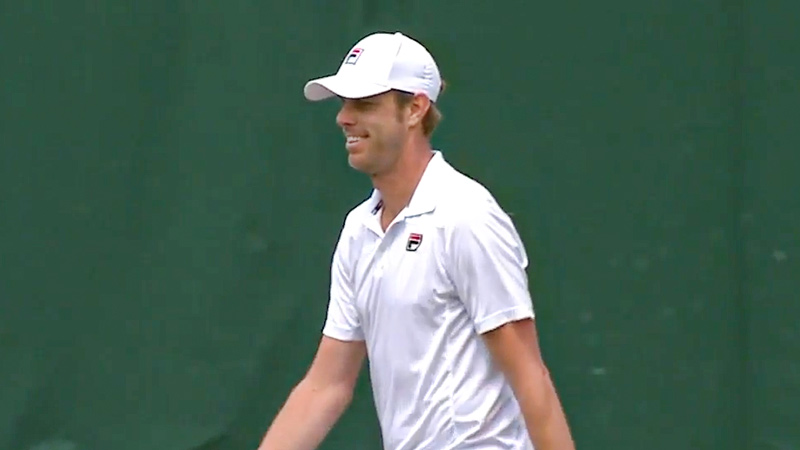
Yes, Sam Querrey was an exceptionally good tennis player, cementing his status as a premier figure in American sports for nearly two decades.
Throughout a resilient 17-year professional career, Querrey reached a peak world ranking of No. 11 and secured 10 ATP singles titles.
He earned a reputation as the ultimate “giant killer” by defeating legends like Novak Djokovic and Andy Murray on the sport’s biggest stages.
His record-breaking serve and consistent top-tier performance make him one of the most successful American men of his generation, proving his elite caliber and lasting impact on the ATP Tour.
Is Sam Querrey Considered an Elite Professional Athlete?
Sam Querrey’s career was defined by extreme longevity and a level of consistency that few players on the ATP Tour ever achieve.
To understand if he was “good” by professional standards, one must look at the sheer duration of his relevance in a sport known for its grueling physical demands and high turnover of talent.
Strategic Longevity and World Rankings
Querrey compiled a stellar 17-year career that solidified his status as one of the best American men’s tennis players of the post-Andy Roddick era.
He was a highly accomplished elite professional who established a formidable presence on the tour from 2006 until his retirement at the 2022 US Open.
His peak ranking of World No. 11, achieved in February 2018, places him in the top percentile of all athletes to ever pick up a racquet.
While he was not a member of the elite “Big Three,” he remained one of the top American players of his generation and was widely feared by his peers.
Financial Success and Professional Metrics
His status as a tier-one competitor is further evidenced by his career earnings and win-loss record. Querrey earned over $13.6 million in career prize money, a figure that reflects his deep runs in high-stakes tournaments.
Over 17 years, he maintained a winning percentage of 53.8% in singles, totaling 385 career victories.
These metrics do not just suggest he was “good”; they prove he was a mainstay at the highest level of international competition, capable of competing against the best in the world on a weekly basis.
Why is Sam Querrey Known as a “Giant Killer”?
The term “giant killer” is reserved for players who possess the rare psychological and technical ability to dismantle the game plans of all-time greats.
Querrey earned this moniker by becoming a bracket-busting force that the top seeds desperately wanted to avoid in major draws.
Ending the Djokovic Dominance
Querrey’s most famous act of giant-killing occurred at Wimbledon in 2016. Facing Novak Djokovic, who was then the World No. 1 and in the midst of a historic 28-match Grand Slam winning streak, Querrey pulled off one of the greatest upsets in the history of the sport.
By defeating Djokovic in the third round, he shifted the landscape of the tournament and proved that his massive game could penetrate even the most impenetrable defenses in tennis history.
Consistent Success Against Top 10 Opponents
The win over Djokovic was far from a fluke. Querrey secured a total of 23 career victories over Top 10 ranked opponents. In 2017, he returned to the grass of London to defeat World No. 1 Andy Murray in a grueling five-set quarterfinal thriller.
This victory was historic as it made him the first American man to reach a Grand Slam singles semifinal in eight years.
Furthermore, his “giant killer” reputation extended to other surfaces, notably defeating Rafael Nadal in the final of the 2017 Mexican Open in Acapulco.
The Technical Breakdown: How Did Querrey Play?
To understand his effectiveness, one must analyze the physical and technical attributes that made him nearly un-breakable on his preferred surfaces.
Standing at 6’6″, Querrey utilized his height to implement a “boom-boom” style of tennis that dictated the terms of every match.
The Dominant First Serve and World Records
Querrey’s game was built around an explosive first serve that remains legendary in the statistical annals of the ATP.
He holds the permanent world record for the most consecutive service aces in a single match, firing 10 in a row against James Blake during the 2007 Indianapolis Championships.
This “thermonuclear” serve allowed him to hold serve with ease, putting immense pressure on his opponents to be perfect in their own service games.
The One-Two Punch and Surface Specialization
Beyond the serve, Querrey employed a heavy, flat forehand to finish points quickly, a combination known as the “one-two punch.”
This aggressive strategy made him exceptionally dangerous on fast surfaces like grass and hard courts, where his power was maximized. Between 2016 and 2019, he went an incredible 15-4 at Wimbledon, highlighting his mastery of grass.
However, his massive frame did lead to limitations in lateral movement and defensive baseline grinding.
Consequently, his weapons were often neutralized on slow red clay, such as at the French Open, which prevented him from reaching the very top of the world rankings.
Statistical Snapshot of a 17-Year Career
The following data outlines the comprehensive achievements that define Sam Querrey’s legacy as an elite athlete.
| Career Metric | Singles Data | Doubles Data |
|---|---|---|
| Career-High Ranking | World No. 11 (2018) | World No. 23 (2010) |
| ATP Titles | 10 Titles | 5 Titles |
| Grand Slam Best | Semifinals (Wimbledon 2017) | Semifinals (US Open 2015) |
| Total Wins | 385 Wins | 177 Wins |
| Top 10 Victories | 23 Career Wins | N/A |
| Career Prize Money | Over $13.6 Million | (Included in total) |
Additionally, Querrey’s versatility was showcased during his breakout 2010 season, where he captured four titles across three completely different surfaces: hard, clay, and grass.
- 2008: Las Vegas Open (Hard)
- 2009: Los Angeles Open (Hard)
- 2010: Memphis Open (Hard), Serbia Open (Clay), Queen’s Club (Grass)
- 2012: Los Angeles Open (Hard)
- 2016: Delray Beach Open (Hard)
- 2017: Acapulco (Hard) and Los Cabos (Hard)
What Was Sam Querrey’s Impact on American Tennis?
Querrey did not just play for himself; he was a core fixture of the American tennis identity for over a decade, often carrying the burden of expectations for his country.
A Dedicated Team USA Competitor
Querrey was an incredibly proud representative for the United States on the international stage. He was a foundational member of the US Davis Cup squad, leading the team to the semifinals in both 2012 and 2018.
His commitment to national representation also included competing for Team USA at the 2008 Beijing Olympic Games.
In an era where individual success often overshadowed team commitments, Querrey remained a reliable and steadfast asset for American tennis.
Success in Doubles and Mixed Formats
While primarily known for his singles exploits, Querrey was also a highly accomplished doubles player, reaching a career-high ranking of No. 23. He secured five ATP doubles titles and reached the semifinals of the US Open in 2015.
His versatility even extended to mixed doubles, where he reached the championship match of the 2015 US Open alongside Bethanie Mattek-Sands.
This multi-disciplinary success further reinforces the argument that he was an exceptionally well-rounded and “good” player.
Where is Sam Querrey Following His Retirement?
Since retiring from the professional tour at the 2022 US Open, Querrey has maintained a highly visible and successful presence within the broader racquet sports community.
| Activity | Details and Current Involvement |
|---|---|
| Media & Broadcasting | Transitioned into a successful career as a commentator for the Tennis Channel, calling major ATP events., |
| Podcasting | Co-hosts the “Nothing Major” podcast with fellow retired pros John Isner, Jack Sock, and Steve Johnson. |
| Professional Pickleball | Competed briefly in Major League Pickleball (MLP) following his tennis retirement., |
| Legends Circuit | Regularly participates in the Wimbledon Invitational Legends exhibition matches., |
Frequently Asked Questions Regarding Sam Querrey
Did Sam Querrey ever win a Grand Slam?
While Sam Querrey never won a Grand Slam singles title, he reached the semifinals of Wimbledon in 2017 and multiple quarterfinals at both Wimbledon and the US Open.
He also reached a mixed doubles final at the US Open in 2015. His inability to win a major was more a reflection of the era—dominated by the “Big Three”—than a lack of talent.
What is his most significant world record?
Querrey holds the ATP Open Era record for the most consecutive service aces in a single match. He hit 10 consecutive aces against James Blake in 2007. This record serves as a testament to his status as one of the most dominant servers in the history of the sport.
Why was he so successful on grass courts?
His 6’6″ frame and massive “one-two punch” game were perfectly suited for the low-bouncing, fast nature of grass.
Between 2016 and 2019, he became a specialist on the surface, achieving a 15-4 record at Wimbledon and ending the reigns of the world’s top players. His serve was nearly impossible to break on grass, allowing him to dictate the tempo of matches.
Is he still involved in professional sports?
Yes, though he has retired from the ATP Tour, he remains active as a media analyst and broadcaster. He also explores other racquet sports, having played professional pickleball and continuing to compete in legends events at major tournaments.
Conclusion: The Enduring Legacy of Sam Querrey
Sam Querrey was not merely a “good” player; he was an elite competitor who defined a significant era of American tennis.
Throughout his resilient 17-year career, he remained a consistent top-tier threat, securing 10 ATP singles titles and achieving a career-high ranking of World No. 11.
His statistical achievements, including over $13.6 million in career prize money and a world-record 10 consecutive service aces, are permanent testaments to his power and consistency on the tour.
Ultimately, his legacy is anchored by his reputation as the ultimate “giant killer”. By dethroning all-time greats like Novak Djokovic and Andy Murray on the sport’s biggest stages, Querrey proved he could compete with—and defeat—anyone in the world.
Today, his successful transition into broadcasting, podcasting, and the legends circuit ensures that he remains one of the most respected figures of his generation, continuing to influence the sport he shaped for nearly two decades.