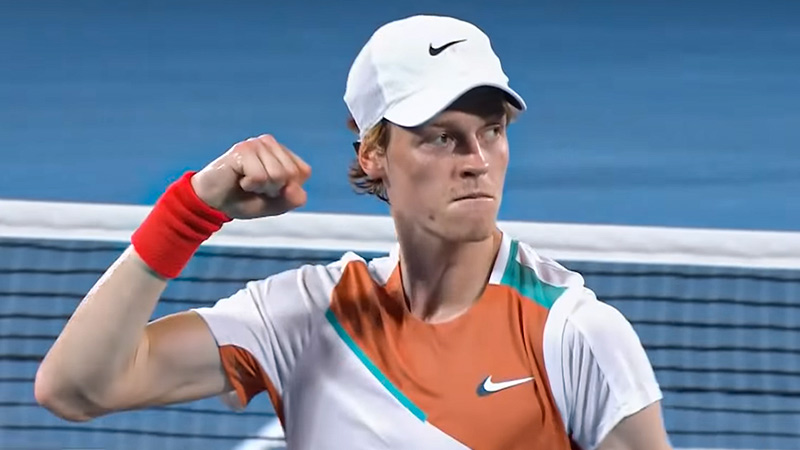
Jannik Sinner’s strength extends far beyond traditional muscle power. As a multiple-time Grand Slam champion and former ATP World No. 1, Sinner combines explosive power, exceptional speed, balance, and mental resilience to dominate modern tennis.
His success comes from efficient movement, precise swing mechanics, and highly developed athletic conditioning rather than brute force alone.
His powerful groundstrokes, aggressive baseline positioning, and rapid court coverage allow him to pressure opponents consistently.
Furthermore, his ability to remain composed during demanding rallies and five-set battles highlights his psychological strength. Together, these physical, tactical, and mental qualities make Sinner one of tennis’s most formidable competitors.
The Biomechanics of Power Generation
                 [LEG DRIVE & LOWER BODY STABILITY]
                                 │
                                 ▼
                     [COMPACT SWING ACCELERATION]
                                 │
                                 ▼
                 [CLEAN CONTACT EARLY ON THE RISE]
                                 │
                                 ▼
              [DEVASTATING PACE + HEAVY TOP-SPIN]
Compact Swing Geometry and Angular Acceleration
Modern tennis shows that excessive backswing can reduce timing and consistency. Sinner’s groundstroke mechanics demonstrate how compact strokes can maximize power while minimizing wasted motion. His forehand and backhand use efficient swing paths, helping him accelerate rapidly into contact.
- Repeatable Contact Point Alignment: A shorter racquet path promotes consistent positioning and clean contact, even under intense time pressure.
- Explosive Angular Racquet Head Speed: His compact loop enables rapid shoulder and torso rotation, transferring energy efficiently into powerful, topspin-heavy shots.
These mechanics allow Sinner to strike aggressively from virtually any baseline position.
Lower Body Engagement and Kinetic Transfer
Tennis pace comes from the kinetic chain, transferring energy through the legs, hips, and trunk. Sinner’s groundstrokes rely on explosive leg drive, lowering his center of mass before driving upward into impact.
- Heavy Topspin Generation: Leg drive accelerates the racquet upward, creating topspin that keeps shots inside the court.
- Clean Ball Striking on the Rise: Momentum helps him attack balls early and convert incoming pace into power.
- Stroke Stability Under Pressure: Strong glutes, quadriceps, and hamstrings provide stability.
Tactical Dominance and Spatial Geometry
| Tactical Dimension | Traditional Baseline Execution | Sinner’s High-Efficiency Execution | Strategic Impact |
|---|---|---|---|
| Court Position | 1 to 2 meters behind the baseline | Hugging or inside the baseline | Eliminates spatial recovery time for opponents |
| Contact Point | Dropping ball / at apex | Cleanly on the rise | Absorbs and redirects incoming kinetic force |
| Swing Path | Extended backswing loop | Compact, explosive path | Minimizes mechanical delay under high speed |
| Tempo Control | Reactive rhythm trading | Offensive time suffocation | Forces early opponent positioning errors |
Baseline Proximity and Spatial Control
In modern elite tennis, spatial control directly dictates tactical supremacy. Players who retreat deep behind the baseline offer their opponents wider court angles, longer ball flight times, and additional recovery margins.
Sinner employs a high-density spatial strategy by standing close to the baseline during active rallies. By maintaining proximity to the baseline, he asserts immediate spatial dominance. This aggressive positioning fundamentally alters the geometry of the point:
COURT GEOMETRY COMPARISON:

Deep Positioning (Passive):
Opponent Shot ──────────────► [Long Flight Path] ──────────────► Player Retreated Deep

Baseline Proximity (Sinner):
Opponent Shot ──────► [Short Flight Path] ──► [Early Contact]
By refusing to cede baseline territory, he shortens the court distance required for his own shots to land, forcing opponents into defensive running patterns deep behind their own end lines.
Reaction Time Compression and Ball Redirection
Taking the ball early on the rise demands exceptional coordination, tracking, and balance. Sinner uses this skill near the baseline to reduce opponents’ recovery time and maintain relentless pressure:
- Time Suffocation: He limits recovery time before opponents can reset.
- Kinetic Redirection: He redirects incoming pace efficiently.
- Forced Unforced Errors: Constant pressure causes rushed preparation, late contact, and mistakes.
This aggressive timing makes Sinner exceptionally difficult to play against.
Movement Physics and Athletic Conditioning
┌───────────────────────────────────────────────────────────┐
│              ALPINE SKIING FOUNDATION                     │
│  - Ankle / Knee Lateral Loading    - Eccentric Balance    │
└─────────────────────────────┬─────────────────────────────┘
                              │
                              ▼
┌───────────────────────────────────────────────────────────┐
│              DYNAMIC COURT RECOVERY                       │
│  - Low Center of Gravity       - Wide Footwork Base│
└─────────────────────────────┬─────────────────────────────┘
                              │
                              ▼
┌───────────────────────────────────────────────────────────┐
│              EFFICIENT KINETIC RECOVERY                    │
│  - Effortless Court Coverage  - Rapid Direction Changes│
└───────────────────────────────────────────────────────────┘
Skiing Foundations and Lateral Movement Balance
An athlete’s movement develops through early activities. Sinner’s exceptional footwork is partly influenced by his competitive skiing background, which transfers valuable movement skills to tennis:
- Eccentric Quad Strength and Edge Control: Skiing builds lateral stability, helping him load the outside leg during direction changes.
- Ankle Flexibility and Dynamic Balance: Variable terrain develops precise foot adjustments and balance.
- Lateral Slide Recovery: Skiing teaches friction control, aiding smooth court sliding, controlled contact, and rapid recovery.
Low Center of Gravity and Effortless Court Coverage
nner maintains a low, stable center of gravity during rapid movement. His wide stance, bent knees, and steady torso improve efficiency, speed, and balance.
- Effortless Court Coverage: Stable positioning reduces wasted energy and unnecessary movement.
- Immediate Acceleration and Deceleration: Pre-loaded legs enable rapid multi-directional movement.
- Balanced Impact Positioning: A low base provides stability when stretched wide, supporting powerful defensive counter-shots.
Psychological Resilience and Decision Dynamics
              HIGH-PRESSURE SCENARIO (e.g., Break Point)
                                 │
                                 ▼
              [RECHARGED EMOTIONAL COMPOSURE]
                                 │
                                 ▼
             [STEADY TACTICAL SHOT SELECTION]
                                 │
                                 ▼
             [UNWAVERING HIGH-FOCUS EXECUTION]
                                 │
                                 ▼
              OPTIMAL PERFORMANCE UNDER FATIGUE
Emotional Regulation and On-Court Demeanor
Mental strength in elite sport is not always shown through aggression. Sinner demonstrates remarkable emotional control, maintaining composure whether leading comfortably or facing crucial points. This consistency provides key benefits:
- Preservation of Fine Motor Control: Staying calm reduces tension, helping maintain precise racquet control.
- Cognitive Clarity Under Stress: Emotional stability supports clear tactical thinking during pressure moments.
- Psychological Pressure on Opponents: His calm demeanor offers few signs of frustration, increasing pressure on rivals.
Tactical Consistency in Five-Set Battles
Winning major championship matches requires sustaining peak performance over extended time horizons, often stretching past three or four hours of continuous athletic output.
Sinner maintains high focus and steady shot selection even in high-pressure, grueling five-set matches. Where less disciplined competitors succumb to physical fatigue and begin taking reckless, low-percentage risks, his mental resilience enables him to adhere strictly to his tactical principles:
- Unwavering Target Selection: He continues targeting high-yield court zones, avoiding emotional decision-making or panicky shot choices under stress.
- High Concentration Retention: Five-set tennis is defined by micro-moments—a single lapse in concentration on a 30-40 point can decide an entire set. His capacity to sustain intense focus over long spans ensures high execution during critical key points.
- Physical Energy Conservation: By managing his emotional energy and moving efficiently, he retains necessary stamina reserves for deciding fifth sets.
Comprehensive Performance Matrix
To fully synthesize how these individual strengths combine into a complete championship profile, the following matrix outlines the interaction between his biomechanical attributes, athletic execution, and match results:
┌────────────────────────────────────────────────────────────────────────┐
│                   SINNER PERFORMANCE MATRIX                            │
├───────────────────┬────────────────────────────┬───────────────────────┤
│ GAME DIMENSION    │ KEY MECHANIC               │ MATCH IMPACT          │
├───────────────────┼────────────────────────────┼───────────────────────┤
│ Power Generation  │ Compact swings & explosive │ Heavy pace & spin     │
│                   │ leg drive              │ off both wings    │
├───────────────────┼────────────────────────────┼───────────────────────┤
│ Spatial Control   │ Baseline proximity &       │ Suffocates opponent   │
│                   │ taking ball early      │ reaction time     │
├───────────────────┼────────────────────────────┼───────────────────────┤
│ Movement Physics  │ Skiing background & low    │ Effortless court      │
│                   │ center of gravity      │ coverage          │
├───────────────────┼────────────────────────────┼───────────────────────┤
│ Mental Toughness  │ Calm demeanor & steady     │ Elite performance in  │
│                   │ shot selection         │ five-set matches  │
└───────────────────┴────────────────────────────┴───────────────────────┘
Practical Lessons for Player Development
Competitors, coaches, and tennis enthusiasts can extract valuable technical principles from Sinner’s modern approach to game development. While his natural athletic gifts are elite, the underlying structural habits are highly instructional.
PLAYER DEVELOPMENT ROADMAP:

  ┌─────────────────────────────────────────────────────────┐
  │ 1. ADAPT COMPACT SWINGS                                 │
  │    Shorten backswing loops; emphasize torso rotation    │
  └────────────────────────────┬────────────────────────────┘
                               │
                               ▼
  ┌─────────────────────────────────────────────────────────┐
  │ 2. ENGAGE LOWER BODY KINETIC DRIVE                      │
  │    Load through knees; push upward into impact      │
  └────────────────────────────┬────────────────────────────┘
                               │
                               ▼
  ┌─────────────────────────────────────────────────────────┐
  │ 3. MASTER BASELINE PROXIMITY                            │
  │    Refuse unneeded ground; take ball on rise        │
  └────────────────────────────┬────────────────────────────┘
                               │
                               ▼
  ┌─────────────────────────────────────────────────────────┐
  │ 4. DEVELOP EMOTIONAL DISCIPLINE                         │
  │    Maintain steady focus in high-stress moments     │
  └─────────────────────────────────────────────────────────┘
Shortening Backswings for High-Velocity Play
Many developing tennis players believe that taking a bigger backswing is the key to hitting the ball harder. In reality, large backswing loops make timing difficult against fast incoming pace.
Actionable Drill: Practice baseline groundstrokes starting with racquet preparation already half-completed. Focus on generating pace through rotational hip turn and lower-body thrust rather than long arm extensions.
Training Upward Force and Leg Drive
To hit a heavy ball that stays in court, lower-body engagement is mandatory.
Actionable Drill: Work on loading into a deep knee bend before initiation of the forward stroke. Drive upward explosively through the legs during contact to develop a heavier, spin-loaded ball trajectory.
Developing Baseline Presence and Early Contact
Learning to take the ball early requires building confidence in timing and court positioning.
Actionable Drill: Position footwork target markers directly on or inside the baseline during practice rallies. Commit to hitting every ball on the rise, accepting initial timing errors as an investment in long-term spatial control.
6.4 Cultivating Emotional Composure Under Pressure
Mental resilience can be trained through deliberate practice habits.
Actionable Drill: During practice sets, practice maintaining identical body language and pre-serve routines regardless of whether points are won or lost. Train the mind to focus exclusively on execution and shot selection.
Conclusion
Jannik Sinner’s status as an elite Grand Slam champion and former ATP world No. 1 reflects a complete athletic framework built on four essential pillars: power, speed, movement, and mental resilience.
His strength extends far beyond physical force, combining efficient mechanics with exceptional court intelligence.
- Devastating Kinetic Power: Compact strokes and explosive leg drive generate tremendous pace and spin.
- Relentless Spatial Dominance: Baseline positioning and early contact reduce opponents’ reaction time.
- Fluid Movement Mechanics: Skiing-based skills and a low center of gravity support efficient court coverage.
- Elite Mental Resilience: Calm discipline maintains focus and decision-making during demanding matches.
Together, these qualities define Sinner’s modern, complete approach to elite tennis.