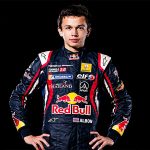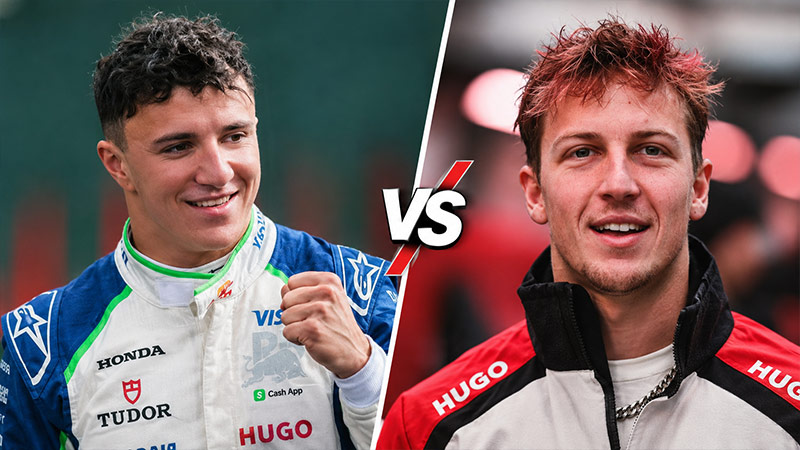
Few debates inside the Red Bull driver programme run hotter than this one. Isack Hadjar and Liam Lawson reached Formula 1 within two years of each other, shared a garage at Racing Bulls, and have spent the last two seasons being measured against each other and against Max Verstappen.
One got the call to the senior team for 2026. The other survived a brutal two-race spell at Red Bull Racing in 2025, a public demotion, and a rebuild that won over much of the paddock.
So, is Isack Hadjar actually better than Liam Lawson? The honest answer depends on what you value most: single-lap speed, racecraft, consistency, or how a driver responds when the pressure peaks.
The quick answer
On current evidence, Isack Hadjar holds a narrow edge. He finished ahead of Lawson when they were teammates in 2025, took a podium at Zandvoort as a rookie, and earned the seat alongside Verstappen for 2026.
That edge is smaller than the headlines suggest. Lawson’s gap to the Verstappen benchmark sits close to Hadjar’s, his wheel-to-wheel racing ranks among the toughest in the midfield, and his biggest setback came in a car that has defeated several drivers before him.
Put simply: Hadjar is the stronger bet on raw speed today. Lawson is the more battle-hardened racer, and the case against him is weaker than his early 2025 stint made it look.
Two very different roads to Formula 1
Liam Lawson’s path was long and varied. The New Zealander won the 2019 Toyota Racing Series, finished runner-up in DTM in 2021 after leading into the final weekend, took third in Formula 2 in 2022, and was runner-up in Japan’s Super Formula in 2023.
That mix of machinery, from GT cars to high-downforce single-seaters, helps explain his adaptability. He also learned F1 the hard way, as a substitute. Lawson stepped in for an injured Daniel Ricciardo in 2023, scoring his first points with ninth in Singapore, then returned for the final six races of 2024.
Isack Hadjar’s route was more direct. The Frenchman, nicknamed “le Petit Prost” for his likeness to Alain Prost, finished runner-up in Formula 2 in 2024 and moved straight into a full-time Racing Bulls seat for 2025.
His debut weekend in Melbourne ended with a crash on the formation lap. Rather than define him, that moment became the starting point for one of the strongest rookie seasons in recent memory.
2025: the season they shared a garage
The cleanest comparison came in 2025. After Red Bull moved Lawson out of the senior team following just two rounds, he returned to Racing Bulls from the Japanese Grand Prix onwards, directly alongside Hadjar.
Hadjar set the tone for much of that season. He scored in Japan and Monaco, and delivered the standout result of either driver’s career so far: third place at the 2025 Dutch Grand Prix. He finished the year ahead of Lawson in the championship, and that body of work earned him the seat next to Verstappen.
Lawson’s season was about recovery. He needed a few weekends to settle back in, then produced strong results, including sixth in Austria and fifth in Azerbaijan after qualifying third in Baku. That form persuaded Red Bull to keep him at Racing Bulls for 2026.
One caveat matters here. Hadjar built his season from round one, while Lawson joined mid-stride after a confidence-sapping start. In a team where setup knowledge compounds race by race, that difference in timing is worth weighing.
Qualifying pace and the Verstappen benchmark
Every Red Bull driver is ultimately judged against one yardstick: Max Verstappen. It is the toughest benchmark on the grid, and it explains why so many capable drivers have struggled in the second Red Bull seat.
On single-lap pace, recent analysis of each driver’s average gap to Verstappen puts Hadjar slightly ahead. Hadjar trails by about 0.232 seconds on average, against roughly 0.277 seconds for Lawson. That is a difference of around 0.045 seconds, less than half a tenth.
Two lessons stand out:
- Hadjar’s edge is real. Over a lap, he has been the marginally quicker driver, and he was more often the faster Racing Bulls car on Saturdays in 2025.
- The edge is tiny. At many circuits, half a tenth separates neighbouring grid slots, not a front-runner from a back-marker.
Lawson also has peak laps that match anyone in the midfield. His third place on the 2025 Baku grid, in a Racing Bulls car, shows that his one-lap ceiling is far higher than his early Red Bull qualifying results implied.
Racecraft, consistency and handling pressure
If qualifying favours Hadjar, Sunday is where Lawson makes his strongest case. His defending is firm, precise and unafraid, and he has repeatedly held off quicker cars in the midfield. Rivals know that passing Lawson rarely comes cheap.
Hadjar’s racing has matured fast. His Zandvoort podium was built on composure rather than chaos: he started near the front, stayed out of trouble and kept experienced drivers behind him. For a rookie, managing a race from that position is a strong signal of temperament.
Pressure is the third test, and both drivers have passed it in different ways:
- Hadjar bounced back from his Melbourne formation-lap crash with points within weeks, showing real mental resilience.
- Lawson faced something arguably harder: being dropped after two races, then rebuilding his reputation in public, under constant scrutiny.
On consistency, Hadjar has the steadier record across a full season. On adversity, Lawson has more proof that he can absorb a heavy blow and come back stronger.
The 2026 picture: new rules, new roles
For 2026, Red Bull promoted Hadjar to partner Verstappen, while Lawson stayed at Racing Bulls alongside rookie Arvid Lindblad. New technical regulations, plus Red Bull’s first in-house power unit developed with Ford, reshuffled the competitive order and made every driver comparison harder to read.
The season has added a twist. With Hadjar reported to be sidelined by a wrist injury, Lawson was called back into the senior Red Bull seat. Accounts of that spell describe resilient, combative drives, including seventh place at Zandvoort, before he returned to Racing Bulls.
That stint matters for this debate. It suggests Lawson’s 2025 Red Bull struggles said more about timing, preparation and a notoriously difficult second car than about his ceiling. Meanwhile, his midfield form at Racing Bulls has drawn strong praise, even as questions about his long-term future linger.
Hadjar vs Lawson at a glance
| Category | Isack Hadjar | Liam Lawson |
|---|---|---|
| Nationality | French | New Zealander |
| Born | 28 September 2004, Paris | 11 February 2002, Hastings |
| Feeder series highlight | 2024 Formula 2 runner-up | 2022 Formula 2 third; 2023 Super Formula runner-up |
| F1 debut | 2025 Australian GP weekend | 2023 Dutch GP, as a substitute |
| Best F1 finish (through 2025) | 3rd, 2025 Dutch GP | 5th, 2025 Azerbaijan GP |
| 2025 teammate battle | Ahead on points | Behind on points |
| Average gap to Verstappen | About 0.232 s | About 0.277 s |
| 2026 seat | Red Bull Racing | Racing Bulls, plus a reported Red Bull stand-in spell |
| Signature strength | Single-lap speed, consistency | Racecraft, defending, resilience |
The table shows the pattern in a few seconds: Hadjar leads the head-to-head numbers, while Lawson’s experience and racing qualities keep the gap narrow.
The case for each driver
Paddock opinion splits along clear lines, and both camps have strong arguments.
The case for Hadjar
- He beat Lawson head-to-head when they drove the same car in 2025.
- He holds a small but consistent single-lap edge against the Verstappen yardstick.
- He has already turned a strong weekend into a podium.
- At 22, his best years are still ahead, which makes him a natural long-term investment for Red Bull.
The case for Lawson
- His gap to Verstappen is close to Hadjar’s, which undercuts the idea of a big talent gap.
- His racecraft and defending rank among the toughest in the midfield.
- He was promoted to Red Bull Racing with only 11 grands prix behind him, into a car few teammates have mastered.
- He has rebuilt his reputation under heavy scrutiny, a quality that tends to age well in Formula 1.
The verdict: who is actually better?
Right now, Isack Hadjar is the better-rated driver, and the evidence supports that. He won the only direct comparison, he is marginally quicker over a lap, and Red Bull backed him with the most demanding seat in the sport.
But “better” is not the same as “far better”. The gap between them is measured in hundredths of a second and a handful of points, not in class. Lawson’s racecraft, resilience and reported form as a stand-in show a driver whose ceiling was underestimated in early 2025.
If you need one driver for a single qualifying lap, pick Hadjar. If you need someone to defend a points position for 20 laps under pressure, Lawson is a serious contender. A longer run in comparable machinery will give the final answer.
Conclusion
Isack Hadjar is the better driver on today’s evidence, but only just. He beat Lawson as a teammate, holds a slight qualifying edge, and earned the seat alongside Verstappen. Those are genuine achievements, earned on track rather than through hype.
Liam Lawson, however, is far from the driver his brief 2025 Red Bull stint suggested. His gap to the benchmark is close, his racecraft is elite in the midfield, and his comeback shows rare resilience.
The fairest verdict is that Hadjar leads on speed while Lawson leads on battle-hardened racing. Over the next few seasons, stability and comparable machinery will settle the question. Until then, both drivers deserve far more credit than the loudest online takes on either side allow.