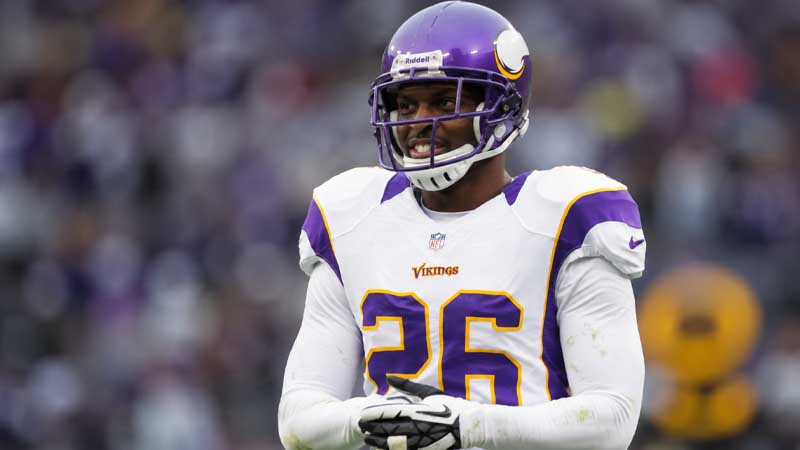
The question of football immortality often begins and ends with the doors of Canton, Ohio.
When evaluating the career of Antoine Winfield Sr., fans and analysts frequently find themselves at a crossroads between statistical benchmarks and the intangible impact of a player who redefined his position.
While his name is etched into the history of two storied franchises, his absence from the Pro Football Hall of Fame remains a point of intense debate for defensive purists.
To be clear: Antoine Winfield Sr. is not currently in the Pro Football Hall of Fame. However, his exclusion from the Hall of Fame does not diminish a career defined by an unusual blend of longevity, physicality, and technical excellence that spanned over a decade of high-level NFL competition.
Fourteen Years of Perimeter Dominance
Longevity in the National Football League is a rare commodity, particularly at the cornerback position, where speed typically declines with age.
Antoine Winfield Sr. defied these biological trends, maintaining a starting-caliber presence for 14 seasons.
His career was split between two primary eras: his formative years with the Buffalo Bills and his veteran leadership years with the Minnesota Vikings.
Drafted in the first round of the 1999 NFL Draft out of Ohio State, Winfield arrived in Buffalo with high expectations. He immediately proved that his smaller stature was no deterrent to his physical style of play.
During his tenure in Buffalo, he became the blueprint for the “scrappy” cornerback—a player who could mirror elite receivers but was equally comfortable crashing the line of scrimmage to stop a running back in his tracks.
In 2004, Winfield transitioned to the Minnesota Vikings, where his career reached new heights of national recognition. It was in the purple and gold that he solidified his status as a defensive anchor.
Over his 14-year career, he demonstrated a remarkable ability to adapt as the league shifted from a run-heavy philosophy to the modern passing explosion.
The Art of the Tackle: A Cornerback Who Played Like a Linebacker
The most significant argument for Winfield’s greatness lies in his unique archetype. He is widely regarded by fans and professional analysts as one of the best tackling cornerbacks of his era.
In a league where cornerbacks are often criticized for “business decisions”—avoiding high-speed collisions with larger ball carriers—Winfield was an anomaly.
His tackling wasn’t merely about effort; it was a display of masterclass mechanics. Despite being roughly 180 pounds, he was known for bringing down power runners with a low center of gravity and impeccable timing.
This physicality made him a vital asset in “nickel” packages, where he often moved inside to the slot to handle both shifty receivers and heavy-hitting running plays.
Statistically, Winfield’s tackle numbers were staggering for a defensive back, often rivaling the production of starting linebackers.
This specific skill set provided his defensive coordinators with immense tactical flexibility, allowing them to disguise coverages and blitzes because they knew their cornerback could hold the edge against the run.
Accolades and Franchise Immortality
A Hall of Fame resume is often built on the foundation of individual accolades and team-specific recognition.
Winfield’s trophy case is notable, though perhaps leaner than some of the “lock” Hall of Famers like Deion Sanders or Rod Woodson.
His peak performance was recognized by his peers and the media through three consecutive Pro Bowl selections.
These selections came during a period of intense competition at the cornerback position, proving that his impact was recognized at the highest level of the game.
Beyond national honors, Winfield earned a permanent place in franchise history. In 2010, he was named one of the 50 Greatest Vikings, an honor that places him among the elite players in the history of a franchise known for legendary defensive units.
This recognition is significant because it reflects his standing among those who watched him every week; for the Minnesota faithful, Winfield was the heartbeat of the secondary for nearly a decade.
The Hall of Fame Debate: The Statistical Logjam
If Winfield was so respected and impactful, why hasn’t he received a gold jacket? The answer lies in the traditional metrics used by the Hall of Fame selection committee.
- The Interception Bias: Historically, cornerbacks are judged primarily on their ability to take the ball away. While Winfield was a consistent playmaker, his career interception totals do not match the eye-popping numbers of “ball hawks” who typically dominate Hall of Fame conversations.
- The Role of the “Shutdown” Corner: The Hall of Fame often prioritizes cornerbacks who “delete” a side of the field in man-to-man coverage. Winfield’s value was more holistic—he was a defensive weapon who impacted every facet of the game, including the run, which is sometimes undervalued in the modern passing-focused evaluation process.
- Postseason Success: While Winfield played on several competitive teams, he lacks the signature Super Bowl moment or championship ring that often pushes “fringe” candidates over the edge into immortality.
Despite these hurdles, there is a growing movement in sports analytics to value “defensive stops” and “tackles for loss” by defensive backs.
As these metrics become more mainstream, Winfield’s case for the Hall of Fame may be revisited by the Senior Committee in future years.
A Legacy Beyond the Field
Today, the Winfield name continues to resonate in the NFL. His son, Antoine Winfield Jr., has emerged as a premier safety for the Tampa Bay Buccaneers, carrying forward the same reputation for physicality and high football IQ that defined his father’s 14 seasons.
This multi-generational impact speaks to the “football family” pedigree that Antoine Sr. established through years of disciplined, hard-hitting play.
Winfield Sr.’s legacy is one of professional reliability. He was the player coaches used as film study for young rookies to teach them how to wrap up on a tackle.
He was the veteran presence who understood the nuances of the game, from reading a quarterback’s eyes to anticipating a screen pass.
Conclusion: The Measure of a Professional
The career of Antoine Winfield Sr. serves as a reminder that greatness is not always defined by a single plaque in a museum.
It is defined by 14 years of showing up, playing through pain, and executing a difficult job with more physicality and precision than almost anyone else in the world.
Whether or not he ever receives the call from Canton, his place in the “hall of fame” of the fans in Buffalo and Minnesota is secure.
He remains the gold standard for what a professional cornerback should be: a player who is as dangerous against the run as he is against the pass, and a teammate whose consistency was the bedrock of his defense.
For those who value the grit and technical mastery of the defensive side of the ball, Antoine Winfield Sr. will always be a legend.
His 14-season journey stands as a testament to the enduring power of toughness and the lasting impact of a player who truly mastered the art of the tackle.