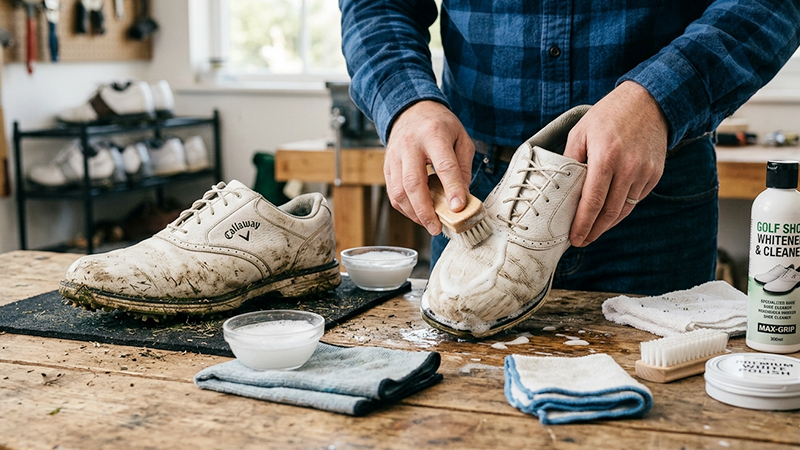
Golf shoes go through a lot. Early morning dew, wet grass, sand traps, mud, and hours of walking under the sun can quickly turn your bright white golf shoes into dull, stained footwear.
Since white golf shoes are a classic style choice on the course, keeping them clean isn’t just about appearance—it also helps extend their lifespan.
If you’re wondering how to whiten golf shoes and bring them back to their original shine, this complete guide will walk you through everything you need to know, step by step.
Why Do White Golf Shoes Turn Yellow or Dirty?
White golf shoes are a timeless choice on the course, but they are also highly prone to visible stains and discoloration. Because white reflects light and shows contrast easily, even minor dirt or fading becomes noticeable over time.
Grass Stains and Dirt Buildup
Golf courses are full of natural elements like grass, soil, and sand. As you walk the course, these materials cling to your shoes. Grass contains natural pigments that can leave greenish stains, while dirt gradually dulls the bright white surface.
Exposure to Moisture and Mud
Morning dew, wet fairways, and unexpected rain can soak into shoe materials. When moisture mixes with dirt, it creates stubborn stains. If shoes are not cleaned promptly, mud can dry and leave permanent discoloration.
Oxidation from Sunlight and Air
Over time, exposure to oxygen and UV rays can cause white materials—especially rubber soles and synthetic uppers—to yellow. This natural chemical reaction is one of the most common reasons white shoes lose their brightness.
Sweat and Improper Drying
Sweat and body oils can seep into shoe linings, leading to staining. Additionally, drying shoes improperly after wet rounds can trap moisture, which encourages yellowing and material breakdown.
Step 1: Identify the Material of Your Golf Shoes
Not all golf shoes are made from the same material. Before cleaning, check the manufacturer’s label or website to determine whether your shoes are:
- Leather
- Synthetic leather
- Mesh or knit
- Waterproof-treated material
Different materials require slightly different cleaning approaches. Using the wrong method could damage the surface.
Step 2: Gather the Cleaning Supplies
You don’t need expensive products to whiten golf shoes. Most supplies are likely already in your home.
Here’s what you may need:
- Soft brush or old toothbrush
- Mild dish soap
- Baking soda
- White vinegar
- Hydrogen peroxide (for tougher stains)
- Magic eraser
- Microfiber cloth
- Warm water
- Paper towels
- Shoe trees or newspaper
Optional:
- Leather conditioner (for leather shoes)
- Whitening shoe cleaner
Step 3: Remove Loose Dirt and Debris
Before applying any cleaning solution, remove surface dirt.
- Take out the laces and insoles.
- Tap the shoes together to shake off loose debris.
- Use a soft brush to remove dried mud and dirt from the uppers and soles.
- Clean the spikes or cleats thoroughly if your shoes have them.
This step prevents dirt from spreading during deeper cleaning.
Step 4: Clean the Uppers (Leather or Synthetic)
Method 1: Soap and Water (Basic Cleaning)
For light dirt and general dullness:
- Mix warm water with a few drops of mild dish soap.
- Dip a soft cloth or brush into the solution.
- Gently scrub the surface in circular motions.
- Wipe away soap residue with a damp cloth.
- Dry with a clean towel.
Allow the shoes to air dry completely.
Method 2: Baking Soda and Vinegar (For Whitening)
For yellowing or deeper stains:
- Mix one tablespoon of baking soda with two tablespoons of white vinegar.
- Add a small amount of warm water to form a paste.
- Apply the paste to stained areas using a toothbrush.
- Let it sit for 20–30 minutes.
- Gently scrub again and wipe clean with a damp cloth.
This natural solution helps lift stains and brighten white surfaces.
Method 3: Hydrogen Peroxide (For Stubborn Yellowing)
Hydrogen peroxide works well for oxidized yellow spots.
- Mix equal parts hydrogen peroxide and water.
- Apply lightly with a cloth or cotton pad.
- Let it sit for 10–15 minutes.
- Wipe clean and allow to air dry.
Be careful not to overuse hydrogen peroxide, especially on leather, as it can dry out the material.
Step 5: Cleaning Mesh or Knit Golf Shoes
Mesh shoes require extra care.
- Mix mild soap and warm water.
- Use a soft brush to gently scrub the fabric.
- Avoid soaking the shoes.
- For whitening, mix baking soda with hydrogen peroxide to form a paste.
- Apply gently and let sit in indirect sunlight for 30 minutes.
- Rinse lightly with a damp cloth.
Never put mesh golf shoes in a washing machine unless the manufacturer specifically allows it.
Step 6: Clean the Soles
Dirty soles can make even clean uppers look dull.
- Use a magic eraser for scuff marks on midsoles.
- Scrub with soap and water to remove grass stains.
- Use a toothpick or brush to clean between spikes.
Whitening the soles can significantly improve the overall look of the shoes.
Step 7: Clean or Replace the Laces
Often, laces are the most discolored part.
To clean laces:
- Soak them in warm water with baking soda.
- Add a small amount of laundry detergent.
- Let sit for one hour.
- Rinse thoroughly and air dry.
If laces are severely yellowed, replacing them is an inexpensive way to make your golf shoes look brand new.
Step 8: Dry the Shoes Properly
Drying is just as important as cleaning.
- Never use direct heat like hair dryers or radiators.
- Stuff shoes with paper towels or newspaper to maintain shape.
- Let them air dry in a well-ventilated area.
- Avoid direct sunlight for leather shoes, as it can cause cracking.
Improper drying can cause yellowing and material damage.
Step 9: Condition Leather Golf Shoes
If your shoes are leather, conditioning is essential.
After cleaning:
- Apply a small amount of leather conditioner.
- Buff gently with a soft cloth.
- Allow it to absorb fully.
This step restores moisture and prevents cracking, especially after using cleaning solutions.
Preventing Yellowing in the Future
Whitening golf shoes is great, but prevention is even better.
Here’s how to keep them white longer:
1. Clean After Every Round
Wipe off dirt immediately after playing. The longer stains sit, the harder they are to remove.
2. Store Properly
Keep shoes in a cool, dry place. Avoid humid areas like car trunks.
3. Use a Protective Spray
Waterproof sprays help prevent moisture penetration and staining.
4. Rotate Shoes
If you play frequently, consider owning two pairs and alternating between them.
5. Avoid Harsh Chemicals
Strong bleach can damage materials and cause uneven whitening.
Can You Use Bleach to Whiten Golf Shoes?
Bleach is often seen as a quick fix for whitening shoes, but it’s not the best option for golf footwear. While it may brighten white surfaces temporarily, it can also cause long-term damage if used improperly.
Temporary Whitening Effect
Bleach can remove surface stains and make shoes appear whiter at first. However, this effect is usually short-lived. Over time, bleach can react with shoe materials and actually cause yellowing, especially on synthetic fabrics and rubber soles.
Risk of Material Damage
Golf shoes are made from materials like leather, synthetic leather, mesh, and waterproof-treated fabrics. Bleach is a harsh chemical that can weaken stitching, dry out leather, and cause cracking. It may also break down adhesives that hold the shoe together.
Damage to Waterproof Coatings
Many golf shoes feature waterproof membranes or coatings to keep your feet dry. Bleach can strip away these protective layers, reducing the shoe’s performance and durability on wet courses.
If You Still Decide to Use It
If you choose to use bleach, always dilute it heavily with water and test it on a small hidden area first. Apply sparingly and avoid soaking the shoe to minimize potential damage.
When to Consider Professional Cleaning
If your golf shoes are expensive or severely stained, professional shoe cleaning services may be worth considering. This is especially true for premium leather golf shoes or limited-edition pairs.
How Often Should You Whiten Golf Shoes?
The frequency depends on how often you play.
- Occasional golfers: Every few months
- Weekly golfers: Light cleaning after each round, deep whitening monthly
- Tournament players: Clean after every round
Regular maintenance reduces the need for aggressive whitening treatments.
Final Thoughts
Keeping your white golf shoes bright and clean doesn’t have to be complicated. With simple household ingredients like baking soda, vinegar, and mild soap, you can effectively remove stains and restore their fresh appearance.
The key is consistency. Regular cleaning, proper drying, and preventive care will keep your golf shoes looking sharp round after round.
A clean pair of white golf shoes not only enhances your appearance on the course but also reflects the attention to detail that golf is all about.
Now that you know exactly how to whiten golf shoes, you can step onto the green with confidence—looking as crisp as your swing feels.