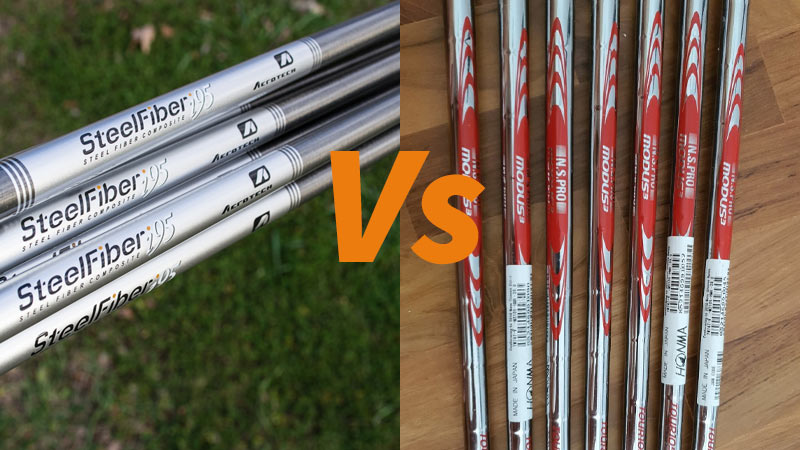
Two of the most popular “modern middleweights” in iron shafts live in very different worlds: Aerotech SteelFiber i95 is a graphite-core composite wrapped with steel fibers, while Nippon N.S. PRO Modus³ Tour 105 is a premium, tour-proven steel shaft built around Nippon’s signature smooth bend profile.
Golfers often cross-shop them because both land in that sweet spot where you can keep control but still gain some speed and comfort compared with traditional 120–130g steel.
Below is a practical, golfer-focused breakdown of how they differ—and how to decide which one belongs in your irons.
Construction: “hybrid composite” vs. “pure steel.”
SteelFiber i95: graphite core + steel fiber wrap
SteelFiber’s identity is its graphite core with an outer layer of steel fibers, aiming to blend graphite’s vibration-damping with steel-like stability and dispersion control.
Reviews and retailers consistently describe it as a transition-friendly option for golfers who want less harsh impact without giving up precision.
That construction is also why SteelFiber is frequently recommended for players who deal with hand, wrist, or elbow discomfort, or who simply want a smoother feel on mishits. Plugged In Golf, for example, specifically notes the i95’s vibration reduction and smooth response.
Modus³ Tour 105: Nippon’s “smooth, traditional” steel profile
The Modus³ Tour 105 is designed to bring Modus feel to a lighter package—steel, but tuned for tempo and consistent loading. Nippon’s own positioning emphasizes its tour validation and “traditional, smooth bend profile.”
Plugged In Golf’s review also highlights the extremely smooth feel and consistent performance that the Modus line is known for.
In plain terms: SteelFiber i95 is “comfort + stability via composite tech,” while Modus 105 is “classic steel feedback + smooth loading.”
Weight and basic specs: they’re close, but not identical
SteelFiber i95
SteelFiber i95 is marketed around ~95 grams, placing it in the lighter midweight range for iron shafts.
Retail spec listings commonly show torque in the mid-2s (varies by version/flex), which is typical for graphite/composite designs.
Modus³ Tour 105
Modus 105 is typically ~103g (R), ~106.5g (S), ~112g (X) depending on flex, and it’s generally described as mid flight / mid spin.
What that means on the course: Modus 105 is usually a touch heavier in equivalent “stiff-ish” builds than i95, and that extra mass can subtly help some players with tempo and face control—while the lighter i95 can help others with speed and reduced fatigue.
Feel and feedback: where these shafts separate most
SteelFiber i95 feel: “smoother, quieter, less sting.”
If you’ve played steel your whole life, SteelFiber i95 often feels like the club got less harsh without turning “whippy.” Many golfers describe it as smooth and responsive once swingweight/build are dialed.
Because the composite core damps vibration, mishits tend to feel less punishing—great for comfort, but some purists say you lose a bit of that razor-sharp “steel feedback.”
Modus 105 feels: “buttery steel with clear feedback.”
Modus 105 is famous for being smooth for steel, loading in a way that feels rhythmic rather than boardy. Nippon repeatedly emphasizes the smooth bend profile, and independent testing notes the consistent, smooth sensation through impact.
You still get the crisp information that steel transmits—especially helpful if you rely on feel to manage distance windows and trajectory.
Quick takeaway:
- If comfort and vibration reduction matter: SteelFiber i95 tends to win.
- If you love “classic steel feedback” but want lighter weight: Modus 105 is a go-to.
Launch, spin, and trajectory tendencies
This is where people get tripped up: you can’t pick trajectory from a name alone, because head loft/CG, your delivery (handle forward, AoA, dynamic loft), and build specs (length, lie, swingweight) often overwhelm “mid launch” labels.
That said, the general positioning is:
SteelFiber i95: often described as mid flight / mid spin, with stability
Retail listings commonly describe the i95 as medium trajectory and medium spin.
Many players also report that SteelFiber can feel stout relative to its flex label if you have a quick transition—meaning it can keep flight from ballooning when you really go after it. (Forum anecdotes aren’t lab data, but they show up often enough to be worth noting.)
Modus 105: mid flight / mid spin with a stable tip section
Modus 105 is also generally categorized as mid flight, mid spin, and some product descriptions call out a stiffer tip section paired with softer butt/mid characteristics for feel and tempo.
Practical difference you might see:
- Golfers who deliver the club aggressively and fight height/spin sometimes find SteelFiber’s composite stability helps keep things tighter.
- Golfers who want steel consistency but a smoother load and slightly easier speed often love Modus 105’s balance.
5) Dispersion and consistency: both can be excellent—if fit correctly
It’s tempting to declare one “more accurate,” but fit beats brand. Still, here’s the pattern fitters often see:
SteelFiber i95 dispersion strengths
SteelFiber’s pitch is “steel-like control with graphite comfort,” and many golfers choose it specifically because they want a composite shaft that doesn’t feel loose or spray-y.
Retailers market it as maintaining “pinpoint accuracy” and consistent distance control while improving vibration reduction.
In short: if you’ve tried graphite and hated the dispersion, SteelFiber is often the graphite-family shaft that changes minds.
Modus 105 dispersion strengths
Modus 105 earns loyalty because it’s predictable and repeatable—especially for players with a steady tempo. It’s built to provide that Modus “same swing, same result” quality in a lighter weight than Tour 120.
Key build note: SteelFiber i95 is light enough that swingweight can get too low in some builds unless the fitter plans for it—Plugged In Golf specifically flags building correctly for optimal feel.
With Modus 105, swingweight is often easier to land in a familiar zone because it’s steel and slightly heavier.
Who should choose which?
Choose SteelFiber i95 if you:
- Want less vibration/impact stress (hands/wrists/elbows) but still care about tight dispersion.
- Are moving from heavier steel and want a lighter build without going “full soft graphite.”
- Like a smooth feel but don’t want the shaft to feel overly active through impact.
Common player profile: moderate-to-fast swing, maybe quick transition, wants comfort without losing control.
Choose Modus³ Tour 105 if you:
- Love the feel of steel and want clear feedback for strike and distance control.
- Want a lighter steel option that still feels stable and “tour-ish.”
- Prefer a smooth loading sensation and consistent performance without changing materials.
Common player profile: tempo-driven swinger, wants classic steel response with less weight than 120g+ shafts.
The smartest way to decide (without guessing)
If you can only do two quick tests, do these:
- Compare 7-iron carry + peak height + offline dispersion (10 balls each)
You’re looking for a pattern—tighter oval, repeatable strike—not one “best” shot. - Pay attention to fatigue and mishit penalty
If SteelFiber keeps your hands happier and your misses stay playable, that’s not “soft”—that’s fit. If Modus feedback helps you flight it and manage distance better, that’s also fit.
Because both shafts sit in the “mid launch/mid spin” neighborhood on paper, the real separator is usually how you load the shaft and whether you benefit more from damping (SteelFiber) or feedback (Modus).