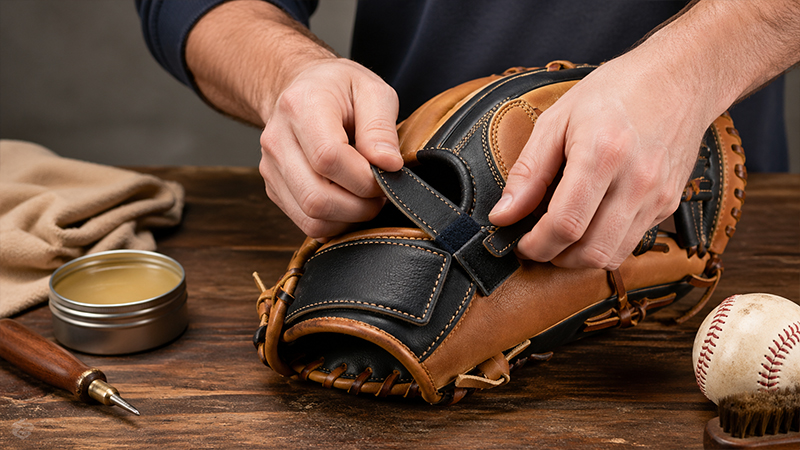
In the high-stakes world of competitive baseball, the difference between a game-saving catch and an error often comes down to a matter of inches—or even half-inches.
For elite athletes and dedicated parents alike, the equipment is an extension of the body. However, a common frustration plagues even the most premium equipment, such as the Rawlings R9 series: the dreaded “slipping” glove.
When a glove feels loose at the wrist, it doesn’t just affect comfort; it compromises the player’s control, reaction time, and safety.
The Core Problem: Why Your Glove Wrist Strap Fails
The primary search intent for most players involves fixing a glove that feels unstable. In the community, this is frequently seen with youth players or those using specific models where the factory lacing isn’t tight enough for smaller hands.
The Performance Impact of “Slippage”
A glove that slips—like the Rawlings R9 mentioned in community discussions—forces the player to constantly readjust their hand during play.
This micro-distraction can be the difference between a successful transfer and a dropped ball. Furthermore, a loose wrist strap prevents the glove from closing on the “sweet spot” consistently.
Identifying the Need for Adjustment
If you can shake your hand and the glove moves independently of your wrist, you have a fitment issue. While some might suggest a new glove, the more sustainable and professional approach is a custom adjustment of the existing lacing.
The Essential Toolkit: Professional vs. DIY Solutions
Achieving a professional-grade fit requires the right tools. While many “all-in-one” kits found at big-box retailers like Dick’s or Scheels are often described as “not great,” they can provide the basics if you are in a pinch. However, for a truly elite result, you must look toward specialized implements.
1. The Professional Choice: The Perma-Lok Needle
Serious glove craftsmen favor the Perma-lok needle. This tool allows the lace to be threaded directly into the needle, providing a streamlined profile that glides through existing leather holes without causing unnecessary stretching or damage.
2. The Master’s Secret: Piano Wire
Shigeaki Aso, the master craftsman for Wilson, is renowned for using piano wire to pull laces through tight spaces. The thin, high-tensile strength of the wire allows for incredible precision, especially when navigating the multi-layered leather of the wrist pull-strap.
3. The Household “Hacker” Kit
If you find yourself in the dugout or at home without professional tools, the community has developed ingenious workarounds that meet functional standards:
- Folded Cable Ties: Folding a small tie-wrap or cable tie in half creates a makeshift loop.
- Thick Guitar Strings: Similar to piano wire, a heavy-gauge guitar string can be used to “hook and pull” the lace backwards through the hole.
- Needle-Nose Pliers: Essential for gripping and pulling the lace through once it has been started.
Material Science: Selecting the Right Laces
Not all leather laces are created equal. To maintain the structural integrity and aesthetic of a high-end glove, you must understand the specifications of lacing material.
1. Lace Width Standards
Professional relacers adhere to a strict width protocol to ensure the glove remains flexible yet secure:
- 3/16” Width: This is the industry standard for the wrist, palm, and heel of the glove. It provides enough strength to hold the wrist tight without being so bulky that it restricts movement.
- 1/4” Width: Reserved for the web and fingers, where the highest impact and tension occur.
2. Sourcing Premium Leather
Reliability is key. Brands like TOFL have earned a reputation for providing high-quality laces and needles that are easily accessible via Amazon or their direct website.
When selecting laces, look for “Tannery Run” or “Pro Grade” lace to ensure the leather doesn’t snap under the high tension required for a tight wrist fit.
Step-by-Step: The “No-Cost” Adjustment Method
Before purchasing new materials, many gloves can be fixed simply by utilizing the “original” equipment. This is a high-value insight for those who want to maintain the glove’s color-matching laces.
The Relocation Technique
- Analyze the Current Path: Look at how the laces currently exit the wrist band.
- The “One Hole” Rule: Most gloves have secondary holes or enough space to move the lacing up by one set of holes.
- Execute the Pull: Use your needle-nose pliers or a wire loop to move the lace to the tighter setting. Even an adjustment of a half-inch can radically transform the feel of the glove.
- Preserve the Lace: If you are reusing laces, be extremely careful with the amount of lace you leave at the ends. You need enough length to tie a secure knot once the adjustment is complete.
Advanced Techniques: The “X-Pattern” and the “Aso Method”
For the player seeking a bespoke feel, the standard factory lacing may not be sufficient.
The “Aso Method”
Named after Shigeaki Aso, this method focuses on a direct, tight pull that eliminates all dead space between the hand and the glove’s back.
It often involves threading the lace through the wrist strap in a way that minimizes bulk while maximizing tension.
The “X-Pattern” for Perfect Tension
Some players find that a standard tight relace feels too restrictive, almost “choking” the hand. In these cases, the X-pattern (popularized by “Dirty” 30) is the gold standard.
- The Benefit: The X-pattern allows the leather to distribute tension across a wider surface area of the wrist.
- The Result: It can make a glove feel slightly more “open” and comfortable while still being significantly more secure than the factory setting.
The Youth Solution: The Wristband Hack
For parents of youth players using a Rawlings R9 or similar model that is simply too large for a developing hand, lacing might only solve part of the problem.
Filling the Gap
If the wrist strap is at its tightest setting and the glove still slips, the wristband method is a highly effective “short-term solution”.
By having the player wear a standard sweat-wicking wristband on their glove hand, you effectively increase the circumference of the wrist, allowing the glove to “bite” onto the arm more securely. This prevents the glove from flying off during a high-velocity play.
Enhanced FAQ: Expert Insights for Glove Longevity
Q: Can I tighten my wrist strap without any special tools?
A: Yes. While a lacing needle is preferred, you can use a folded cable tie or even a piece of wire to pull the lace through the holes backwards. Needle-nose pliers are also highly recommended for the final tightening.
Q: Does tightening the wrist strap affect the glove’s “break-in”?
A: Absolutely. A tighter wrist strap changes the leverage your hand has over the glove. It is often recommended to re-break in the glove slightly after a major lacing adjustment to ensure the “hinges” of the glove still align with your hand.
Q: What is the best lace brand for a professional finish?
A: Community experts frequently recommend TOFL for both their laces and their lacing needles. They offer a balance of durability and ease of use that surpasses generic kits found in most sporting goods stores.
Q: Should I use 1/4″ or 3/16″ lace for the wrist?
A: You should use 3/16″ lace for the wrist. Using a 1/4″ lace in the wrist area can make the glove feel unnecessarily stiff and may be difficult to thread through the smaller holes of the wrist strap.
Conclusion: Achieving “Happy Little Wrists”
The goal of any glove adjustment is to reach a state of “Happy Little Wrists”—a term coined by the lacing community to describe a perfectly fitted, secure, and comfortable glove.
Whether you are using a professional Perma-lok needle or a DIY guitar string, the ability to customize your gear is a hallmark of a serious ballplayer.
Don’t settle for a glove that slips. By mastering these lacing techniques, you ensure that your equipment is ready for the most demanding plays on the diamond.