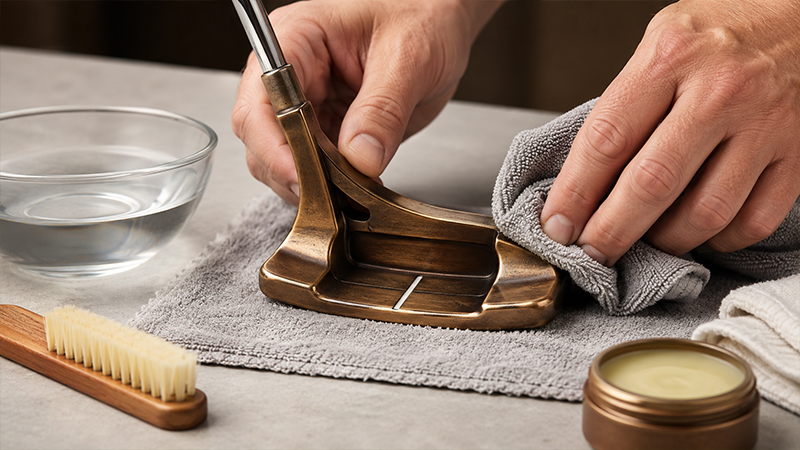
Maintaining a bronze Ping putter requires an understanding of the materials used and the specific results you wish to achieve.
These clubs are frequently made from Manganese Bronze, a material chosen for its functional properties on the golf course. This guide provides detailed instructions on how to clean these putters safely while preserving their integrity.
Understanding Manganese Bronze and Patina
Before beginning the cleaning process, it is necessary to identify the current state of the metal and your desired outcome.
Manganese Bronze is designed to undergo a natural oxidation process, which results in a dark, aged appearance known as a patina.
The primary reason for this design was to reduce glare during play. Many golfers prefer this dark look because it provides a matte finish that does not reflect sunlight into the eyes.
However, other users prefer to restore the club to a bright finish, often described as looking like a “new penny”. Deciding between these two looks is the first step in the restoration process.
Identifying Your Putter Material
Safety is the most important factor when handling vintage Ping putters. You must determine if your club is made of Manganese Bronze or Beryllium Copper (BeCu).
The Importance of Beryllium Copper Identification
Some vintage models were manufactured using Beryllium Copper. These clubs are often explicitly labeled as “BeCu”. If you determine that your putter is made of Beryllium Copper, you must follow strict safety protocols.
You must not sand or grind Beryllium Copper. The dust generated by these actions is toxic when inhaled and can lead to serious lung diseases.
For these specific clubs, only non-abrasive cleaning methods should be used to avoid any risk of airborne particles.
Identifying Collector Items
Before cleaning, check the back of the putter for specific stamps. If the putter has a “Scottsdale” stamp, it may possess a high collector value.
Within the community of enthusiasts, it is often recommended to leave the natural patina on these rare models. Removing the aged finish on a Scottsdale model can potentially reduce its market value.
General Precautions for Cleaning Bronze
Regardless of the method you choose, there are universal rules to prevent damaging the metal. Manganese bronze is a relatively soft material and can be easily marked.
- Avoid Steel Wool: Do not use steel wool or harsh SOS pads. These materials are too abrasive and will leave visible scratches on the surface of the bronze.
- Use Soft Brushes: When scrubbing is required, use a soft plastic-bristle brush, such as a toothbrush, to prevent surface damage.
- Immediate Drying: Bronze is susceptible to spotting if left wet. Always have a microfiber cloth ready to dry the club thoroughly after any liquid treatment.
Method 1: The Coca-Cola Soaking Technique
The “Coke Soak” is a common DIY method used to remove heavy oxidation without using harsh industrial chemicals. This method is effective for those who want to reveal the original bright metal hidden under years of darkening.
Step 1: Surface Preparation
You must first remove any loose dirt, sand, or oils from the club head. Use warm water and standard dish soap for this initial wash. If oils from the hands or grass remain on the metal, the soaking solution may not reach the surface evenly, leading to a splotchy finish.
Step 2: The Soaking Process
Place the putter head in a container and fill it with Coca-Cola until the entire metal surface is submerged. No part of the bronze must be exposed to the air during this time to ensure a consistent color change.
Step 3: Timing and Monitoring
The duration of the soak depends on the level of oxidation and your personal preference. The soak can last anywhere from 1 hour to 24 hours. Periodically check the club to see the progress. A longer soak will generally result in a shinier surface.
Step 4: Final Cleaning
Once the desired brightness is achieved, remove the club and rinse it with clean water. You will likely see loosened debris or “black crud” on the surface.
Use a soft plastic brush to scrub these areas until the metal is clear. Dry the putter immediately with a microfiber cloth to prevent new spots from forming.
Method 2: Professional Chemical Polishing
For those seeking a mirror-like finish or a faster result than soaking, chemical polishes are an effective option. Products such as Brasso or the liquid version of Bar Keeper’s Friend are suitable for this task.
Application Process
Apply a small amount of the liquid cleaner to a soft cloth. Work the solution into the bronze using circular motions. This consistent pressure helps break down the oxidation layer more quickly than a soak.
Detailing the Grooves
Putter heads often feature intricate lettering and deep grooves that can trap oxidation. Use a plastic-bristle toothbrush to work the chemical cleaner into these hard-to-reach areas. This ensures that the entire club head has a uniform shine.
Post-Polish Protection
Because the bronze has been stripped of its oxidation, it will begin to darken again almost immediately when exposed to air.
To slow this re-oxidation process, you can apply a light coat of a metal protectant or Renaissance Wax. This creates a barrier between the metal and the environment, preserving the shine for a longer period.
Method 3: The Natural Vinegar and Salt Solution
If you prefer to avoid commercial chemicals or sodas, a natural solution using household ingredients can be utilized. This method is less aggressive than commercial polish but more active than a standard water wash.
Creating the Mixture
Mix one part vinegar with three parts warm water. Add one tablespoon of salt to the liquid and stir until dissolved. The acidity of the vinegar combined with the salt acts as a cleaning agent for the bronze.
Soaking and Scrubbing
Submerge the putter head in this solution for a few hours. After soaking, use a mixture of baking soda and a plastic brush to scrub the metal.
The baking soda acts as a very mild abrasive that helps polish the metal to a “brand-new” appearance without causing the deep scratches associated with steel wool.
Professional Restoration Options
There are instances where a putter may be too heavily damaged, or the owner may prefer a factory-standard finish.
In these cases, the club can be sent back to PING for professional restoration. This service provides a factory-grade finish and is generally considered to be an affordable option for maintaining the club’s longevity.
Summary of Maintenance Steps
To keep a bronze Ping putter in optimal condition, regular maintenance is required. If you choose to keep the patina, a simple wash with soap and water is sufficient to remove dirt.
If you prefer the bright look, choosing one of the soaking or polishing methods described above will allow you to maintain that “new penny” shine.
Always remember to identify the metal to ensure safety, avoid abrasive tools that can scratch the soft bronze, and dry the club thoroughly after every cleaning session.
Would you like me to create an infographic summarizing these three cleaning methods and the safety warnings?