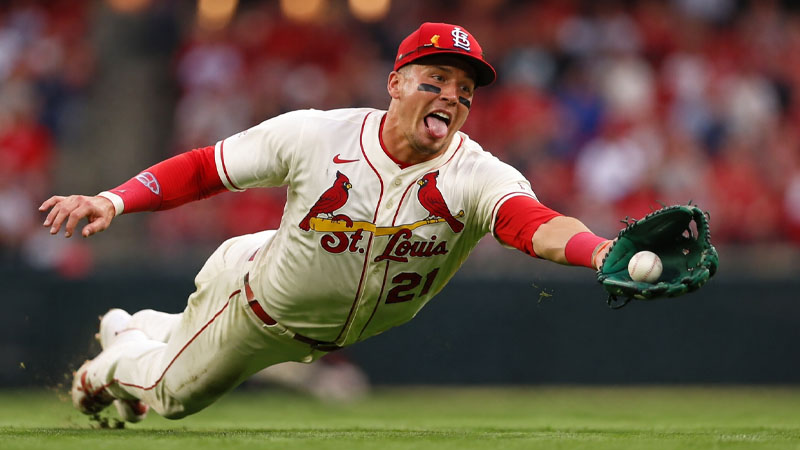
Catching a ball with one hand is one of the most visually impressive yet fundamentally critical skills in sports.
Whether you are snaring a line drive in baseball, reeling in a high-pointing pass along the football sideline, fielding a sharp chance in cricket, or securing a tricky rebound on the basketball court, single-handed control separates casual players from elite athletes.
Mastering this skill requires more than raw intuition or quick reflexes. It demands an understanding of biomechanics, eye tracking, hand-eye coordination, dynamic balance, and force absorption.
This guide breaks down the physical mechanics, sport-specific adaptations, progressive drill sequences, and physical conditioning necessary to make single-handed catches consistent, predictable, and automatic.
The Biomechanics of the Single-Handed Catch
To understand why a ball stays in your hand rather than bouncing off your palm, you must understand the physics of impact.
When a moving ball collides with a stationary hand, the kinetic energy of the ball must dissipate quickly without transferring excess force back into the ball’s core, which causes pops, drops, and bobbles.
       [ Falling / Incoming Ball ]
                   │
                   ▼
       ┌────────────────────────┐
       │   1. Eye Alignment     │  Maintain foveal gaze on the ball's center
       └───────────┬────────────┘
                   │
                   ▼
       ┌────────────────────────┐
       │ 2. Spatial Hand Prep   │  Fingers spread, thumb opposed, palm relaxed
       └───────────┬────────────┘
                   │
                   ▼
       ┌────────────────────────┐
       │ 3. Impact Point & Give │  Retract wrist/elbow upon touch to absorb force
       └───────────┬────────────┘
                   │
                   ▼
       ┌────────────────────────┐
       │ 4. Finger Wrap & Tuck  │  Fingertips secure seams; arm secures to body
       └────────────────────────┘
Kinetic Energy and Cushioning
When catching two-handed, the body distributes kinetic force across a larger surface area and two independent arm structures. In a single-handed attempt, all deceleration occurs within a single kinetic chain: the fingers, wrist, forearm, elbow, and shoulder joint.
If your arm is rigid upon impact, the ball strikes an unyielding barrier. According to Newton’s third law, the force exerted by your stiff hand against the ball pushes back with equal magnitude, pushing the ball away from your grasp.
To prevent this rebound, your arm must act as a soft hydraulic piston, giving ground at the precise millisecond of touch to extend the time of impact and reduce peak stopping force.
Foveal Vision and Eye Tracking
Your eyes process motion using two primary modes: peripheral vision (detecting movement across a wide field) and foveal vision (focusing sharply on a specific detail). Many dropped balls occur because athletes switch from foveal tracking to peripheral scanning just before impact—looking up at oncoming defenders, the boundary line, or the next play.
To hold onto the ball consistently with one hand:
- Maintain dedicated foveal focus on the center or seams of the ball until it is firmly locked into your grip.
- Avoid turning your head away prematurely.
- Keep your chin steady to prevent micro-disruptions in depth perception.
Step-by-Step Fundamentals of Core Technique
Executing a clean single-handed catch relies on four foundational steps. Missing any single phase dramatically increases the likelihood of a dropped ball or finger injury.
Step 1: Visual Lock-On
Begin tracking the trajectory as early as possible. Keep your head stable and your eyes aligned with the flight path. Rather than looking at the general shape of the ball, attempt to visually lock onto a specific seam, logo, or point of rotation. This high-resolution focus forces your central nervous system to calculate spatial distance, speed, and trajectory with millimeter precision.
Step 2: Open and Cup the Hand
As the ball approaches, extend your arm toward the meeting point without locking your elbow joint. Spread your fingers outward as wide as comfortable to maximize your catching surface area.
- Keep your thumb stretched outward, away from your index finger, to create a broad “webbing pocket.”
- Keep your palm slightly concave rather than completely flat. A flat palm creates a hard bounce surface, whereas a cupped hand directs force inward toward the pads of the fingers.
Step 3: Give with the Impact
The moment the ball touches your skin, begin your absorption motion. Flex your wrist slightly backward and allow your elbow to fold inward toward your body.
- Think of your hand as a net catching a falling weight.
- The goal is not to meet the ball aggressively in mid-air, but to yield to its velocity, matching its direction for a fraction of a second as your fingers close.
Step 4: Fingertip Squeeze and Tuck
Fingertips provide the friction and gripping force necessary to halt spin and hold the ball. The palm acts as a backstop, but the fingers secure the catch.
- Flex all five digits rapidly upon contact.
- Once the ball is clamped, immediately pull your arm back toward your ribcage or core to shield it from external contact or dislodgement.
Sport-Specific Variations and Techniques
While the core mechanics of visual tracking and force absorption remain universal, different sports demand specialized single-handed catching techniques due to ball geometry, material, speed, and equipment constraints.
Baseball and Softball (Barehanded and Outfield Catches)
In baseball and softball, single-handed catches occur both with a leather glove and barehanded (such as a barehand pick by a third baseman on a slow roller).
         Above the Waist                      Below the Waist

           Fingers UP                           Fingers DOWN
             \   /                                 /   \
              \ /                                 /     \
            [ Ball ]                            [ Ball ]
- Above-the-Waist Catches: Position your palm facing forward with fingers pointing upward. The thumb points inward toward your body centerline.
- Below-the-Waist Catches: Flip your hand orientation so fingers point downward toward the ground. The pinky finger acts as the outer guide edge, with the palm facing upward to cradle low-flying balls.
- Barehand Mechanics: Never attempt to catch a hard baseball in the center of your palm barehanded. Aim to absorb contact along the soft pads of the fingers near the upper palm junction, immediately wrapping your fingers around the seams.
Football (Wide Receiver Single-Handed Snares)
Reeling in a football with one hand is common for wide receivers working near sideline boundaries or battling tight coverage.
- High-Pointing the Football: When extending upward, position your dominant hand so your fingers create a semi-circle contour matching the pointed shape of the football.
- Attacking the Tip: Aim to make contact with the nose (front tip) of the football using your thumb and index finger. Controlling the front nose halts forward momentum instantly.
- Gloves and Tacky Surfaces: Modern receiver gloves provide significant friction, but relying solely on grip material leads to poor technique. Focus on soft wrist mechanics regardless of glove texture.
Cricket (Slip Catcher and Outfield Snags)
Cricket balls are heavy, hard, and laced with a raised seam, making single-handed catching both physically demanding and high-risk for finger injuries.
- Soft Hands Concept: Cricket commentators frequently stress using “soft hands.” This refers to keeping the forearm muscles entirely relaxed prior to impact so the wrist and hand yield naturally upon contact.
- Gully and Slip Fielding: When diving laterally, keep your fingers pointing sideways or downward away from the direction of ball flight. Pointing fingers directly toward an incoming cricket ball can cause joint dislocation or fractures.
Basketball (One-Handed Rebounds and Passes)
Basketballs are larger and heavier, requiring wide hand span and finger strength to secure with a single arm.
- Palming Force: Secure high rebounds at the absolute peak of your jump by extending your fingers wide and snapping your wrist downward to drag the ball back toward your chest.
- Outlet Receptions: When catching a full-court pass on the run, extend your arm in line with the ball’s travel, giving backward as you run forward to match speed.
Common Faults and How to Correct Them
Even experienced athletes develop bad habits that lead to dropped balls or awkward catches. Below are the most common mechanical errors and practical fixes.
Fault 1: “Fighting” the Ball
- The Error: Reaching out forcefully to smack or meet the ball in mid-air with a rigid, locked arm.
- Why it Fails: Generates excessive opposing kinetic force, causing the ball to rebound sharply off the palm.
- The Fix: Practice catching soft items (foam balls or light rubber balls) while standing with your back against a wall. This physical barrier forces you to absorb the ball close to your torso rather than reaching straight out.
Fault 2: Palm Contact Without Finger Engagement
- The Error: Allowing the ball to strike the hard center of the palm before closing the fingers.
- Why it Fails: The palm lacks the friction needed to hold a moving ball instantly.
- The Fix: Perform fingertip catching drills. Focus on grabbing balls using only the first two knuckles of each digit, keeping the ball elevated slightly away from the center palm skin.
Fault 3: Early Eye Disengagement
- The Error: Shifting vision downfield or toward oncoming movement right before contact.
- Why it Fails: Micro-movements of the head alter visual processing, leading to poor spatial alignment during the final 6 inches of flight.
- The Fix: Mark letters or numbers on a tennis ball with a dark marker. Call out the visible number or letter out loud the moment you make contact. This guarantees sustained visual focus straight into your hand.
Progressive Drill Matrix for Building Mastery
Developing reliable single-handed catching requires a progressive approach. Master lower-level drills before moving to high-speed or complex athletic situations.
┌────────────────────────────────────────────────────────┐
│ LEVEL 1: Wall Rebounds & Self-Tosses                   │
│ Focus: Isolation, palm cushioning, basic visual lock   │
└───────────────────────────┬────────────────────────────┘
                            │
                            ▼
┌────────────────────────────────────────────────────────┐
│ LEVEL 2: Tennis Ball Reaction Drops                    │
│ Focus: Rapid hand deployment, finger clamping speed    │
└───────────────────────────┬────────────────────────────┘
                            │
                            ▼
┌────────────────────────────────────────────────────────┐
│ LEVEL 3: Off-Axis Throw & Distraction Catches           │
│ Focus: Tracking through field clutter & peripheral noise│
└───────────────────────────┬────────────────────────────┘
                            │
                            ▼
┌────────────────────────────────────────────────────────┐
│ LEVEL 4: Dynamic & Lateral Movement Catches            │
│ Focus: Full athletic integration on the run            │
└────────────────────────────────────────────────────────┘
Level 1: Stationary Self-Tosses
- Setup: Stand upright holding a tennis ball or small training ball in your target catching hand.
- Execution: Toss the ball 3–5 feet directly above your head. Track it with your eyes, keep your hand cupped, and catch it soft-handed near chin height.
- Volume: 3 sets of 20 repetitions per hand.
Level 2: Wall Rebounds with Hand Alternation
- Setup: Stand 6–8 feet away from a smooth brick or concrete wall.
- Execution: Throw a small rubber bounce ball against the wall at varying heights. Catch the rebound using only your dominant hand for one set, then switch to your non-dominant hand for the next.
- Variation: Throw underhand, overhand, and sidearm to generate diverse bounce angles.
- Volume: 4 sets of 15 catches per hand.
Level 3: Partner Reaction Drops
- Setup: Stand facing a partner who holds a ball at shoulder height approximately 3 feet away from you.
- Execution: Your partner drops the ball without warning. Your goal is to react quickly, drop your hand, and snag the ball before it hits the ground or after a single bounce.
- Volume: 15 drops per hand.
Level 4: Off-Axis Dynamic Catches
- Setup: Jog forward along a straight line while a partner throws passes from various angles (behind, above, and across your body).
- Execution: Secure the pass using only one hand without breaking your running stride. Immediately pull the ball into your chest after every catch.
- Volume: 10 forward-running catches per side.
Physical Conditioning for Grip Strength and Wrist Stability
A successful single-handed catch relies heavily on local muscular endurance and structural stability throughout your hand, wrist, and forearm. If your grip strength is weak, even perfect mechanics will fail against high-velocity balls.
       Flexor Digitorum Depth & Superficialis
                 (Finger Flexion Force)
                           │
                           ▼
                 ┌───────────────────┐
                 │  Hand Grip Unit   │
                 └─────────┬─────────┘
                           │
                           ▼
              Extensor Carpi Radialis/Ulnaris
                 (Wrist Joint Stability)
Key Muscle Groups Involved
- Flexor Digitorum Profundus & Superficialis: Forearm muscles responsible for flexing your four fingers tightly around an object.
- Flexor Pollicis Longus: Muscles that control thumb flexion, enabling strong pinch grip against the fingers.
- Extensor Carpi Radialis & Ulnaris: Stabilize the wrist joint, keeping it from bending backward excessively during high-impact catches.
Recommended Grip & Forearm Exercises
1. Rice Bucket Digs
- Fill a 5-gallon bucket with uncooked white rice.
- Submerge your hand fully into the rice with fingers extended.
- Open and close your hand into a tight fist repeatedly against the resistance of the grains.
- Prescription: 3 sets of 45 seconds per hand.
2. Plate Pinches
- Take two smooth weight plates (5–10 lbs each) and sandwich them together with the smooth sides facing outward.
- Pinch the top edges between your thumb and four fingers.
- Lift the plates off the ground and hold them at your side for time.
- Prescription: 3 sets of 30–45 second holds per side.
3. Towel Pull-Ups or Hangs
- Drape two heavy gym towels over a pull-up bar.
- Grab one towel in each hand using a full grip.
- Perform bodyweight pull-ups or perform dead hangs to build immense isometric forearm and finger strength.
- Prescription: 3 sets to near failure.
Mental Focus and Reaction Time Training
Physical ability accounts for only part of single-handed catching success; neurological processing speed dictates how quickly you can position your hand accurately.
Visual Tracking Drills
- Strobe Glasses Training: Modern athletic performance programs use digital vision-restricting glasses that flicker between clear and opaque states. Training with restricted visual input forces the brain to process trajectory data much faster with less available visual information.
- Color-Coded Ball Drills: Use balls painted with two or three distinct color zones. Have a partner throw the ball with heavy spin. You must call out the dominant visible color before making a single-handed catch.
Managing Environmental Noise
In real competition, single-handed catches rarely happen in calm environments. Crowd noise, physical defender contact, lighting shifts, and poor weather introduce external friction.
To build mental composure:
- Train catching drills while a partner applies light, controlled physical pressure to your non-catching arm or torso.
- Practice under damp or rainy conditions using wet balls to build adaptability to low-friction situations.
- Maintain a deliberate, rhythmic breathing pattern during drills to keep your muscle tension low and your reaction times high.
Equipment and Gear Considerations
Using appropriate gear can enhance safety and success while developing your single-handed catching skill.
+------------------+-------------------------------------------------+
| Gear Type        | Key Benefit & Selection Tip                     |
+------------------+-------------------------------------------------+
| Tacky Receiver   | Maximizes friction on synthetic football covers |
| Gloves           | Select thin, high-flex palm materials           |
+------------------+-------------------------------------------------+
| Padded Baseball  | Reduces impact sting during repetitive drills   |
| Inner Gloves     | Ideal for cold-weather barehand practice        |
+------------------+-------------------------------------------------+
| Weighted Skill   | Increases hand muscle engagement during warmups |
| Balls            | Use lightweight foam/tennis balls initially     |
+------------------+-------------------------------------------------+
When building technique, avoid over-relying on high-friction gloves early in your development. Practice barehanded with soft tennis balls or foam balls to build proper cushion mechanics first.
Once your physical tracking and force-absorption mechanics are locked in, adding gloves provides a clean performance boost without hiding flawed technique.
Diagnostic Troubleshooting Guide
Use this simple diagnostic chart to identify and correct issues with your single-handed catching consistency.
                           [ Ball Dropped ]
                                  │
                   ┌──────────────┴──────────────┐
                   ▼                             ▼
        [ Ball Bounces OFF Palm ]     [ Ball Slips OUT of Fingers ]
                   │                             │
         ┌─────────┴─────────┐         ┌─────────┴─────────┐
         ▼                   ▼         ▼                   ▼
   (Stiff Arm)         (Late Sight)  (Weak Grip)    (Early Pullaway)
         │                   │         │                   │
         ▼                   ▼         ▼                   ▼
    Focus on elbow     Lock eyes on   Incorporate    Secure ball to
    flexion upon       seams until    plate pinch    chest before
      contact            impact         drills        turning body
By systematically working through these fundamental mechanics, visual tracking principles, physical conditioning exercises, and targeted drills, you can transform single-handed catching from a risky gamble into a reliable athletic asset. Dedicated, daily repetition with proper form creates the neuromuscular pathways required to pull off remarkable catches when the game is on the line.
Recommended Next Steps
To continue improving your skills and athleticism, explore these detailed practice routines and athletic conditioning frameworks:
- Daily 10-Minute Hand-Eye Routine: A structured, quick warm-up plan you can perform anywhere using a tennis ball and a flat wall.
- Position-Specific Field Drills: Customized drills tailored for receivers, outfielders, cricket fielders, or basketball players.
- Complete Grip and Forearm Strength Program: A comprehensive conditioning program designed to build joint stability and grip endurance.