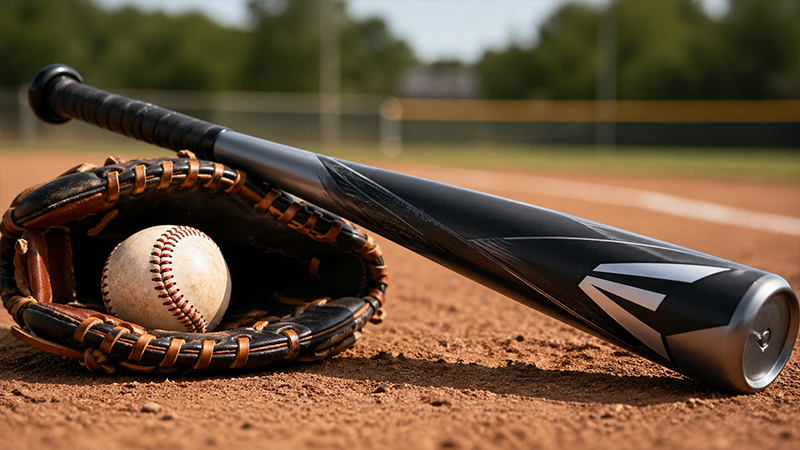
The Easton Mako is a legendary piece of engineering in the world of composite bats, renowned for its massive barrel and elite performance.
However, pulling a Mako straight out of the wrapper and heading to a high-stakes game is a recipe for underwhelming results or, worse, a cracked investment.
To unlock the explosive power this bat is capable of, you must follow a disciplined break-in procedure.
This guide provides a detailed, step-by-step roadmap to ensure your Easton Mako reaches its peak “ping” and maximum distance while maintaining its structural integrity for seasons to come.
Understanding the “Why”: The Science of Composite Flex
Unlike alloy bats that are “hot” immediately, composite bats like the Easton Mako are constructed from layers of high-grade carbon fiber. In their brand-new state, these fibers are tightly bound and stiff.
The break-in process is essentially a controlled way to loosen these internal fibers, allowing the barrel to flex more efficiently upon impact. This flex creates the “trampoline effect” that sends balls flying further.
If you skip this process, the bat will feel “dead,” and hitting high-velocity pitches with a stiff barrel increases the risk of the material becoming brittle and cracking.
Pre-Break-In Essentials: Tools and Environment
Before you take your first swing, you must set the stage correctly. The environment and the equipment you use are just as important as the swings themselves.
1. The Temperature Rule
Never attempt to break in your Easton Mako if the temperature is below 60°F (15°C). Composite materials react poorly to the cold; the resin between the fibers can become brittle, leading to immediate damage upon impact. Always wait for a warm day or use an indoor facility to ensure the material remains resilient.
2. Real Baseballs Only
One of the most common mistakes players make is heading to a commercial batting cage that uses yellow dimpled balls.
These balls are significantly denser than standard baseballs. Hitting these with a new Mako can crack the barrel or drastically reduce its lifespan before it ever sees a real game. Only use real, high-quality baseballs for your break-in session.
3. Controlled Impact: Tee and Soft Toss
For the initial stages, you should avoid live pitching. Using a batting tee or soft toss allows you to control exactly where the ball hits the barrel, ensuring you are working the entire surface area without the unpredictability of a 70mph fastball.
The 300-Swing Success Formula: A Step-by-Step Schedule
A proper break-in requires between 150 and 300 swings. You cannot rush this; it is a gradual progression of power designed to settle the composite layers.
Phase 1: The Foundation (Swings 1–100)
During the first 100 swings, your goal is not distance—it is consistency.
- Power Level: Use roughly 50–60% of your maximum effort.
- Focus: Use a tee to hit line drives into a net or across the field. The goal is to start the “loosening” process of the fibers without putting them under extreme stress.
Phase 2: Building Momentum (Swings 100–200)
Once you’ve established a foundation, it’s time to ramp up the intensity.
- Power Level: Increase your swing speed to 75% effort.
- Focus: You may move from a tee to soft toss during this phase. You will begin to feel the barrel start to give a bit more as the “pop” begins to develop.
Phase 3: Reaching Peak Performance (The Final Swings)
The final stretch is where the bat truly becomes game-ready.
- Power Level: Move to 100% full-effort swings.
- Focus: Concentrate on hitting hard line drives. This high-intensity impact finalizes the compression of the barrel. By the end of this phase, the bat should be fully optimized for competition.
The Golden Rule of Rotation: The 1/4 Turn Technique
The most critical technical aspect of breaking in an Easton Mako is barrel rotation. If you hit the ball in the same spot repeatedly, you will create “weak spots” or uneven compression, which can lead to premature cracking or “dead” sections of the barrel.
After every single swing, you must rotate the bat exactly 1/4 turn (approximately 1/4 inch of the barrel’s circumference).
This ensures that every millimeter of the composite material is conditioned equally. This discipline is what separates a bat that lasts one season from a bat that lasts three.
Common Pitfalls and Pro-Tips
To protect your investment, keep these “don’ts” in mind during the first few weeks of ownership:
The “No-Sharing” Policy
It is tempting to let teammates try out your shiny new Mako. However, you should avoid sharing the bat until the 300-swing break-in is complete.
Other players may not remember to rotate the barrel after every swing, which can compromise the evenness of the break-in.
Avoid Artificial Shortcuts
You may hear “old-school” advice about putting a bat in a vice to compress the barrel manually. Do not do this. This can cause severe, irreversible structural damage to the composite layers.
The Sound of Success
How do you know when you’re done? A new Mako often produces a dull “thud” upon impact. As the fibers loosen, this sound will transform into a distinct, sharp “ping”.
When you hear that change and notice a significant increase in the distance your hits are traveling, the bat is ready for the cleanup spot in your lineup.
Conclusion: Patience Equals Power
Breaking in an Easton Mako requires patience and discipline. By following the 150–300 swing progression starting at 50% power and reaching full effort, you unlock the bat’s maximum distance.
Remember the golden rule: rotate the barrel 1/4 turn after every hit to ensure even compression. Protect your investment by avoiding cold weather under 60°F and staying away from dense, dimpled cage balls.
Once that dull thud transforms into a sharp ‘ping,’ you will know the composite fibers have reached peak flex.
This careful preparation ensures your Mako is game-ready, delivering elite performance while maintaining structural integrity. Now, take the field and let your hard work pay off during your game.