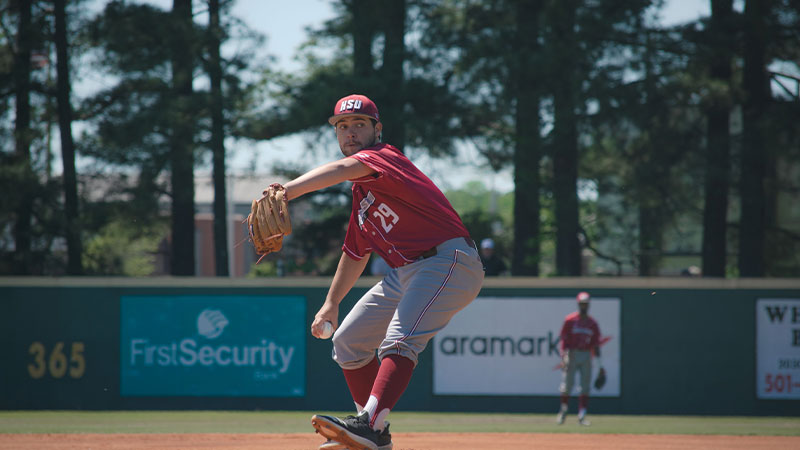
If you have ever sat behind home plate or watched a Major League Baseball game on television, you have likely witnessed a peculiar ritual: after almost every single play, the umpire tosses the current baseball out of play, and a brand-new, perfectly pristine sphere is handed over to the pitcher.
To the casual observer, this might look like an incredible waste of equipment. After all, a baseball is a carefully crafted, leather-stitched object that costs around twenty dollars to manufacture. Why discard something that appears perfectly fine after just a few moments of action?
The short answer is precision, safety, and fairness. In the modern era of professional athletics, a major league baseball lasts an average of just 5 to 7 pitches before it is permanently removed from the game.
Some balls do not even make it through a single pitch if they graze the dirt or clip a bat.
This deep dive explores the fascinating science, strict regulations, and rigorous logistics behind why baseballs are replaced at such a staggering rate.
The Anatomy of an MLB Baseball
To understand why baseballs have such a short lifespan on the field, we first need to look at what goes into making them.
Every ball used in a Major League Baseball game is manufactured by Rawlings in Costa Rica under strict quality control guidelines.
A standard league-approved baseball features:
- A Cork and Rubber Core: Often referred to as the “pill,” this cushioned center gives the ball its bounce and elasticity.
- Wool and Cotton Windings: Layers of tightly wound yarn are wrapped around the core by automated machinery and skilled hands to achieve the regulation size, weight, and density.
- Cowhide Cover: Two figures-eight-shaped pieces of white cowhide are hand-stitched together using exactly 108 raised red cotton stitches.
Despite this robust construction, the moment a baseball leaves the box, it is subjected to extreme forces.
When a professional pitcher throws a fastball at 95 miles per hour, or a slugger connects with an exit velocity of 110 miles per hour, the ball undergoes immense stress.
The leather stretches, the core compresses, and the exterior encounters friction against bats, gloves, dirt, and grass.
Why Baseballs Are Replaced So Fast
The decision to swap out a baseball is not made lightly, but it is governed by strict rules enforced by the umpires and the league. Several critical factors dictate why a ball’s tenure on the field is so brief.
1. The Quest for an Uncompromised Grip
The relationship between a pitcher and the baseball is delicate. To throw a breaking ball, slider, or splitter with precision, the pitcher relies entirely on friction between their fingers and the raised red seams of the ball.
Even minor imperfections alter this dynamic. If a ball picks up a tiny scuff, a smudge of dirt, or moisture from sweat and rosin, it can slip differently off the pitcher’s fingertips.
This loss of control can lead to erratic pitches, wildness, or unintended movement. To maintain a level playing field and protect batters from dangerous, unpredictable pitches, any ball that loses its pristine surface texture is immediately replaced.
2. The Impact of Dirt, Bats, and Cleats
During the course of a normal play, a baseball is exposed to harsh elements.
- The Bat: Wood bats generate immense friction. When a bat connects with a baseball, it often leaves a distinct wood mark or grass stain on the white leather cover.
- The Dirt: If a pitch bounces in the dirt before reaching home plate, or if a foul ball rolls into the infield dirt, the abrasive soil instantly ruins the smooth leather finish.
- Player Contact: Sweat, pine tar, sunscreen, and dirt from the players’ hands transfer onto the ball upon contact.
MLB actually has a unique ritual to combat factory-slick leather before a game even begins. Every single baseball is rubbed by hand using a special, secret mud sourced from a muddy hole in the Delaware River.
This “Rubbing Mud” removes the factory sheen and provides a tacky grip. However, once that mud layer is worn away or altered during play, the ball’s usefulness drops significantly.
3. Maintaining Fair Play and Preventing “Doctoring”
In the early days of baseball, teams kept balls in play for as long as possible to save money. This era, known as the Dead-ball Era, gave rise to infamous practices where pitchers would intentionally scuff, spit on, sand down, or discolor baseballs to make them move unpredictably (such as the notorious spitball).
To eliminate cheating and ensure absolute transparency, modern rules dictate that umpires must constantly monitor the condition of the ball.
By swapping out baseballs frequently, the league ensures that neither pitchers nor hitters can alter the equipment to gain an unfair competitive advantage.
By the Numbers: How Many Balls Are Used in a Game?
When you multiply the rapid turnover rate across an entire nine-inning contest, the numbers add up quickly.
- Per Pitch: A single baseball lasts an average of 5 to 7 pitches.
- Per Inning: A typical half-inning features roughly 15 to 20 pitches, translating to about 3 to 4 baseballs used.
- Per Game: Across a full nine-inning game, umpires will typically cycle through 70 to 120 baseballs.
During high-stress situations—such as a postseason elimination game, a gritty battle with full counts, or a game played in rainy conditions—that number can easily spike toward the higher end of the spectrum.
Wet weather is particularly demanding on baseballs, as moisture ruins the leather and increases the frequency of replacements.
What Happens to Retired Baseballs?
With thousands of baseballs being pulled out of play every single week across the league, a natural question arises: Where do they all go?
Fortunately, these retired baseballs are far from trash. While they are no longer suitable for a Major League Baseball game, they still have plenty of life left in them.
1. Practice Squads and Minor Leagues
A baseball that has seen five pitches in the majors is still structurally sound. Teams routinely collect these slightly used balls and ship them down to their minor league affiliates, spring training facilities, or batting practice cages.
Players can hit thousands of practice balls during batting practice sessions, making these retired professional balls immensely valuable for organizational development.
2. Memorabilia and Collectibles
Major League Baseball operates a robust authentication program. Special balls—such as those used during milestone home runs, historic strikeouts, or postseason games—are carefully cataloged, stickered with a tamper-evident hologram, and preserved.
Fans can purchase these authenticated pieces of history directly through official MLB memorabilia outlets.
3. Recycling and Crafting
Unauthenticated used balls that do not make the cut for minor league training are often repurposed.
Some are donated to youth leagues and community outreach programs, while others are sent to craftsmen who transform the stitched leather into wallets, keychains, and decorative art pieces for fans.
The Evolution of Baseball Management
The way baseballs are managed has changed dramatically over the decades. In the infamous 1920 game between the New York Yankees and the Cleveland Indians, a single baseball was used for the entire afternoon until it was so filthy, soft, and grass-stained that Ray Chapman could not see it coming out of the pitcher’s hand, resulting in a tragic and fatal injury.
That watershed moment forever changed how the sport approaches equipment safety. Today, the protocol of constantly introducing fresh balls keeps players safer and ensures that the game remains a pure test of athletic skill rather than a battle against damaged gear.