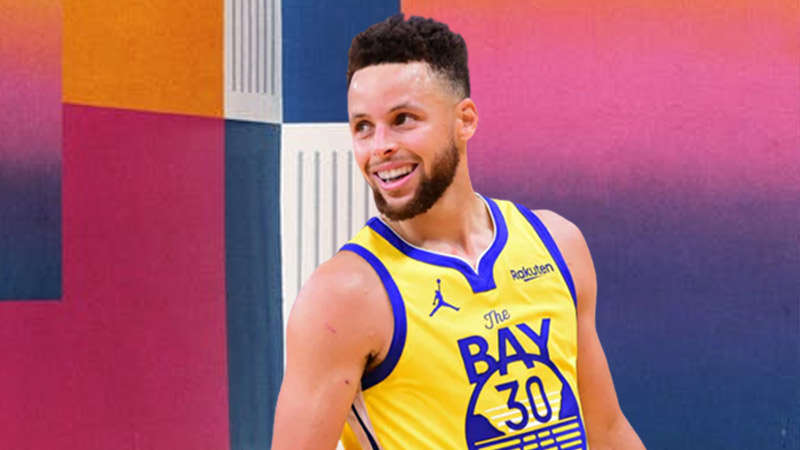
Stephen Curry fundamentally changed how basketball is played at every level of the sport by shifting the focus from vertical dominance to horizontal spacing.
Before his rise, the game was defined by rigid positional roles and a deep skepticism toward jump-shooting teams.
Curry shattered these conventions, proving that elite perimeter shooting could be the focal point of a championship offense rather than a secondary tool.
From professional arenas to local recreation centers, his unprecedented range and efficiency have forced a total redesign of defensive strategies and player development standards. He didn’t just break records; he redefined the sport’s geometry.
The Strategic Evolution: Redrawing the 94-Foot Map
The most immediate answer to how has stephen curry influenced others lies in the physical expansion of the basketball court.
In the traditional era, defenses largely focused on protecting the paint and the mid-range area, but Curry’s ability to hit shots from 30 feet and beyond forced a radical tactical shift.
Teams must now defend players the moment they cross half-court, a phenomenon often referred to as “Curry’s Gravity”.
This gravity pulls defenders away from the basket, creating massive lanes for teammates and rendering traditional, congested defensive schemes obsolete.
The Death of the Plodding Center
One of the most significant casualties of the Curry era is the traditional “plodding” center. Previously, centers were valued for their size and ability to protect the rim or score with their back to the basket.
However, the Warriors’ use of small-ball lineups—most notably with Draymond Green at center—unlocked a faster, more spaced-out style of play. Today, centers who cannot defend the perimeter or provide floor spacing are considered liabilities.
The modern “big man” must be agile enough to switch onto guards and, increasingly, skilled enough to shoot from deep themselves.
The Analytics Revolution and Shot Selection
While analytics and “Moneyball” concepts were already beginning to permeate the NBA, Curry served as the perfect avatar for this transition.
Statistical analysis proved that three-pointers were significantly more efficient than mid-range shots, even if the shooting percentage was lower.
Curry’s success normalized the “off-the-dribble” and transition three-pointer, which were once considered the worst shots in basketball.
Coaches who previously would have benched a player for taking a 30-foot shot now demand that their guards have that range in their arsenal.
Positional Era vs. Modern Era Comparison
| Feature | Pre-Curry Era (Prior to 2015) | Modern Curry Era (Post-2016) |
|---|---|---|
| Primary Shot Source | Mid-range fadeaways and post-ups | High-volume 3PT and shots at the rim |
| Defensive Focus | Protecting the paint and mid-range | Defending from 30+ feet out |
| Center Role | Post-up scoring and rim protection | Switch-ability and floor spacing |
| Guard Priority | Distributing and penetrating | High-volume perimeter shooting |
| Spacing Style | 2 Bigs in the paint | 5-Out or 4-Out “Space and Pace” |
Transforming Player Development and Training Standards
Stephen Curry’s influence extends far beyond the scoreboard; it has fundamentally altered how athletes at all levels train.
Because his success is built on skill, coordination, and relentless movement rather than just raw size or verticality, he has provided a blueprint for the “shorter” or less naturally gifted athlete to dominate the game.
This shift has led to a democratization of basketball skills where traditional height-based training is disappearing in favor of universal guard skills.
Guard Skills for All Positions
In the modern game, the specialization of skills based on height has eroded. Centers and forwards are now routinely practicing long-range shooting and advanced ball-handling drills that were once reserved for point guards.
The expectation is that every player on the floor must be a threat from the perimeter to maintain the necessary spacing for a high-efficiency offense.
This “positionless” basketball movement means that youth players are being developed as well-rounded athletes rather than being pigeonholed into the “post” simply because they reached a certain height early in life.
Cognitive and Cardiovascular Conditioning
Curry’s influence is also seen in the specific types of drills that have become mainstream. He popularized the use of advanced hand-eye coordination tools, such as strobe-light glasses and multi-tasking dribbling drills, to sharpen his spatial awareness.
Furthermore, his “relentless” off-ball movement has set a new standard for cardiovascular endurance. Players no longer just train for explosive bursts; they train for continuous movement through a maze of screens to mimic Curry’s ability to tire out defenders and create open looks.
- Universal Shooting: Everyone from the point guard to the center is expected to have a 3-point shot.
- Off-Ball Gravity: Players are taught to move constantly to stress the defense, even without the ball.
- Logo Range: Training now includes practicing shots from 25–30 feet to make standard three-pointers feel easier.
- Advanced Neuromuscular Drills: Use of sensory deprivation and reactive tools is now common in elite skill development.
The Cultural Shift: From the NBA to Global Pickup Games
The cultural impact of Stephen Curry is perhaps the most visible aspect of his legacy. His influence has permeated the global youth consciousness, changing how kids play in parks and schoolyards across the world.
Unlike the eras of Michael Jordan or Kobe Bryant, where the “ideal” shot was a mid-range fadeaway or a contested dunk, the modern youth player is obsessed with the “logo 3” and side-step pull-ups.
This shift has empowered a new generation of players to see skill as the ultimate equalizer.
Accessibility and the “Average” Athlete
Curry’s physical stature—standing at 6’3” and lacking the overwhelming athleticism of a LeBron James—has made his success feel more attainable to the average person.
He proved that you can become an all-time great by mastering a singular, repeatable skill: shooting.
This has had a profound effect on youth participation, as children who might not have the genes to be seven feet tall now believe they can still have a massive impact on the game through dedication to their craft.
Global Phenomenon and the “Night Night” Effect
The “Curry Effect” is not limited to the basketball court; it has become a staple of global sports culture. His signature “Night Night” celebration has been emulated by professional athletes in soccer, football, and track and field, signaling the end of a contest.
Furthermore, his success transformed Under Armour into a billion-dollar industry player in the basketball space, showing his massive commercial influence.
Whether it is kids at a local gym launching shots from half-court or pro athletes using his celebrations, Curry has redefined what it means to be a “cool” and dominant force in sports.
Tactical Origins: From Spoelstra to Kerr’s Vision
To understand how has stephen curry influenced others, one must also look at the coaching lineage that allowed his talent to flourish. While Curry was a “shooting anomaly,” it required a specific tactical environment to unlock his full potential.
When Steve Kerr took over the Warriors, he looked at how Erik Spoelstra used Chris Bosh as a “small-ball” center in Miami to clear the paint.
Kerr realized that by keeping the paint clear and utilizing Draymond Green’s playmaking, he could give Curry the room he needed to “light the floor on fire” from deep.
The Normalization of the Green Light
Before Curry, coaches were notoriously strict about shot selection. Taking a three-pointer in transition or early in the shot clock was often seen as a waste of a possession.
Former Warriors coach Mark Jackson, like 99% of coaches at the time, believed that too many threes killed the flow of the game. Kerr’s “green light” philosophy—allowing players to shoot from anywhere if they were open—is now the standard across the NBA.
This shift in coaching philosophy has migrated down to college and high school levels, where the freedom to “jack up 3s” is now seen as a viable and statistically sound strategy.
The James Harden vs. Stephen Curry Influence
There is an ongoing debate about whether players like Luka Dončić or Trae Young are truly “Curry clones” or if they are more influenced by James Harden’s isolation style.
While many young stars utilize Harden’s step-back and “iso-dribble” mechanics, they are only able to find the space for those moves because of the “Curry Effect”.
Curry’s ability to space the floor 30 feet out is what opened up the lanes for the modern isolation game to exist. Even if a player’s individual highlights look like Harden, the environment they play in was built by Curry.
Frequently Asked Questions
Did Stephen Curry “ruin” basketball for youth players?
While some argue that children are now attempting “logo shots” before mastering the basics, others believe he has improved the game by emphasizing skill and shooting over raw size.
The audacity seen in modern pickup games is a direct result of Curry making extreme range seem possible.
Why is the “Curry Effect” considered a revolution in geometry?
It redefined the boundaries of the court. Defenses used to start at the three-point line; now they must start at half-court. This horizontal expansion of the game’s “geometry” creates more room for every other offensive action.
Was the 3-point revolution inevitable without Curry?
Analytics and coaches like Mike D’Antoni were already pushing for more threes, but Curry’s unprecedented success and back-to-back MVPs accelerated the timeline significantly.
He provided the proof-of-concept that a jump-shooting team could indeed win championships.
How did he change the role of the center?
He effectively ended the era of the “plodding center.” Modern centers must now be able to defend the perimeter and often shoot threes themselves to keep the floor spaced.
The Future of the Game
The legacy of Stephen Curry is permanently etched into the hardwood of every basketball court in the world.
By proving that skill, range, and “gravity” could overcome traditional physical advantages, he has paved the way for a more inclusive, exciting, and statistically efficient version of the sport.
As the next generation of athletes—developed in the “Curry Era”—reaches the professional ranks, we will likely see even more versatile, positionless basketball that continues to push the boundaries of what is possible.
Curry didn’t just change the game; he flipped it on its head and forced the world to look at 94 feet of space in an entirely new way.