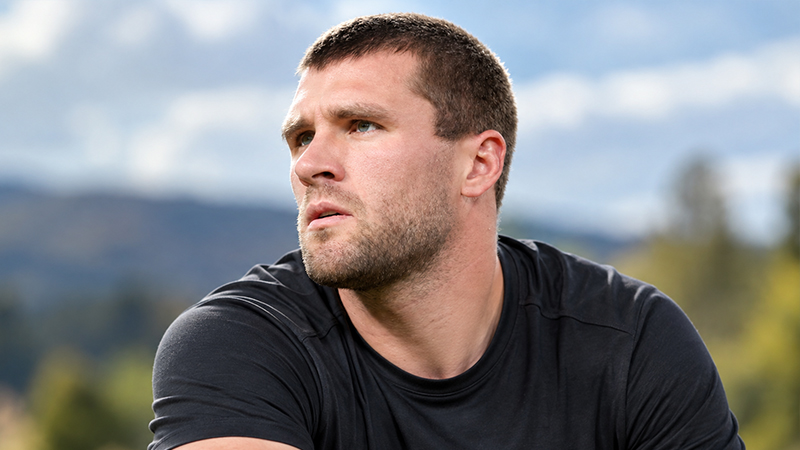
The intersection of elite athletic performance and advanced rehabilitative medicine recently came under intense scrutiny following an incident involving Pittsburgh Steelers linebacker T.J. Watt.
During a routine treatment session at the team’s facility, the reigning defensive powerhouse suffered a partially collapsed lung, medically identified as a pneumothorax.
This complication did not occur during a high-impact collision on the field but rather during a dry needling procedure intended to manage muscle tension.
This analysis examines the specific physiological mechanics of the injury, the clinical profile of dry needling, and the nuanced risk-reward balance inherent in treating high-level athletes with invasive manual therapies.
The Clinical Incident: How the Puncture Occurred
The procedure being performed on Watt was dry needling, a technique where fine, solid filament needles are inserted into muscular tissue to alleviate pain and neuromuscular dysfunction. The session in question targeted Watt’s upper back or rib area.
The primary cause of the injury was a needle being inserted too deeply into the thoracic region. In the human torso, the lungs are encased in a thin, airtight membrane known as the pleura.
When a needle penetrates this lining, it creates an opening that allows air from the lung or the external environment to leak into the chest cavity, known as the pleural space.
This accumulation of air creates a pressure imbalance that prevents the lung from fully expanding, leading to a partial or total collapse.
Following the mishap, Watt experienced significant discomfort at the practice facility and was subsequently hospitalized for testing and observation.
Defining Dry Needling: Mechanics and Intent
To understand why this procedure is a staple in professional sports, it is necessary to define its clinical application.
Dry needling is a targeted intervention using thin needles to address “trigger points,” tendons, or connective tissue. Unlike traditional injections, it is labeled “dry” because the needles are solid and do not deliver any medication or fluid.
The Neuromuscular Response
The primary goal of the technique is to stimulate a local neuromuscular response, often manifesting as a brief muscle twitch. This “reset” helps normalize muscle activity, reduce persistent spasms, and improve overall range of motion.
In elite sports, this is frequently used as one component of a broader recovery plan that includes therapeutic exercise, movement retraining, and manual mobility work.
The Distinction from Acupuncture
While dry needling and acupuncture utilize identical needles, their clinical foundations differ significantly. Traditional acupuncture is based on the concept of restoring the flow of “chi” or energy throughout the body via specific meridian points.
Conversely, dry needling is rooted strictly in Western anatomical principles. Practitioners target specific musculoskeletal structures—such as the rotator cuff or rhomboids—based on a deep understanding of human anatomy rather than energy pathways.
The Paradox of the Elite Athlete: Why Size Increases Risk
In the case of an athlete like T.J. Watt, unique physiological factors may have contributed to the likelihood of a complication. Medical practitioners often note that working on a “massive unit” of a football player presents distinct challenges in gauging needle depth.
The Challenge of Hypertrophy
Elite athletes possess significant muscle hypertrophy—dense, thick muscle layers. While it might seem that more muscle provides a larger buffer before reaching vital organs, it can actually make it more difficult for a clinician to accurately palpate and sense the underlying structures.
If a practitioner overestimates the depth of the muscle or fails to account for the proximity of the ribcage, the needle can easily bypass the target tissue.
Anatomical Variance
Furthermore, human anatomy is not uniform. The apex of the lung—the very top portion—can actually rise above the level of the clavicle (collarbone) in some individuals.
This specific area is frequently near the upper trapezius, a common site for dry needling in athletes with shoulder or neck tension. If a practitioner is unaware of this elevation, a routine needle insertion in the upper back can inadvertently enter the lung field.
Safety Analysis: Re-evaluating “Rare” Complications
The medical literature generally characterizes dry needling as having an extremely low rate of serious complications. A landmark study reviewing over 7,600 treatments performed by physical therapists reported zero major adverse events.
Most side effects are minor, such as localized bruising, temporary soreness, or a “muscle ache” similar to that felt after an intense workout.
The Statistical Reality vs. Clinical Observations
However, the incident with T.J. Watt has brought forward a debate regarding how “rare” these events truly are. Some clinical reports suggest that as the popularity of dry needling rises, the frequency of complications like pneumothorax may be underreported.
For instance, certain health systems have reported clusters of up to seven pneumothorax cases specifically linked to needling techniques performed near the ribs.
This suggests that while the overall percentage of injuries remains low, the risk is highly concentrated in specific anatomical regions—specifically the neck, shoulder, and chest.
Consequently, many practitioners now argue that pneumothorax should be explicitly mentioned as a considerable risk during the informed consent process when treating the thoracic region.
Risk Mitigation and Professional Standards
For a complication like this to occur at a professional facility, it suggests a deviation from standard safety protocols. Expert practitioners adhere to “golden rules” of anatomy to prevent lung injury.
Needle Angles and Positioning
When treating muscles over the ribcage, such as the rhomboids or middle trapezius, the needle should never be inserted perpendicular to the ribs.
If the needle slips off the bone at a 90-degree angle, it can travel directly into the lung tissue. Instead, needles should be directed tangentially—at a shallow angle—to ensure they remain within the muscular layer.
The Use of Technology
In a professional setting, the failure to use available diagnostic tools is often viewed as a missed opportunity for safety.
Given that NFL teams have access to advanced imaging, ultrasound guidance can be used during dry needling in high-risk areas to visualize the needle depth in real time.
Using ultrasound virtually eliminates the guesswork associated with needling near the pleural lining.
The Efficacy of Dry Needling: Why Athletes Take the Risk
Despite the high-profile nature of Watt’s injury, dry needling remains a preferred treatment for athletes because of its documented benefits in pain management and mobility.
These studies indicate that the technique is particularly effective at:
- Improving Range of Motion: Helping athletes regain functional movement after a strain or spasm.
- Enhancing Balance: Improving proprioceptive feedback in injured joints.
- Managing Chronic Conditions: Providing relief for persistent issues like cervicogenic headaches, plantar fasciitis, and chronic low back pain where other methods have failed.
It is important to note, however, that while dry needling is highly effective for injured athletes, research shows it has little to no significant benefit for healthy athletes in a post-exercise recovery context.
Looking Forward: Recovery and Best Practices
A pneumothorax, while alarming, is typically not life-threatening if managed promptly. For an athlete like Watt, treatment usually involves observation or, in more severe cases, a chest tube to allow the air to escape and the lung to re-expand.
Most patients recover within a short period of hospitalization and can return to physical activity once the pleural seal has healed.
Lessons for Patients and Practitioners
The T.J. Watt incident serves as a critical case study for both the medical community and the public. It highlights the necessity of:
- Extensive Training: Ensuring that practitioners are not only certified but possess a deep mastery of human anatomy.
- Anatomical Caution: Avoiding high-risk areas or utilizing shallow needling angles and ultrasound guidance near the thoracic cavity.
- Informed Decision Making: Athletes and patients must be educated on the specific risks associated with treating the chest and shoulder regions, allowing them to make an informed choice regarding their recovery plan.
Final Analysis
The case of T.J. Watt illustrates that no medical intervention is entirely without risk, particularly when performed in complex anatomical zones.
While dry needling continues to dominate the landscape of sports medicine due to its efficacy in treating pain and mobility issues, the “Watt complication” serves as a reminder that anatomical knowledge and technical precision are the only safeguards against rare but significant adverse events.
For the elite athlete, the goal remains a swift return to play; for the practitioner, the first rule remains “do no harm”.