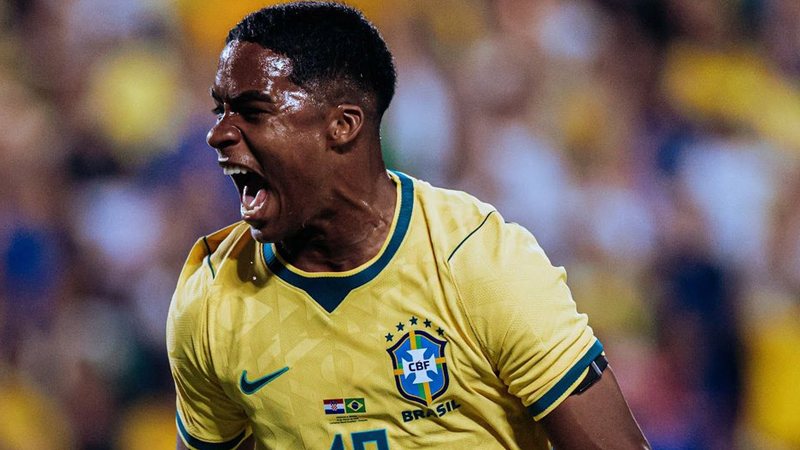
Endrick Felipe Moreira de Sousa has rapidly become a central figure in global football, sparking intense curiosity regarding his background.
Born on July 21, 2006, in Taguatinga, Brazil, his identity is deeply rooted in the rich tradition of South American excellence. As the newest sensation at Real Madrid CF, understanding his nationality and early development is essential for fans and analysts alike.
This profile explores the origins of a player destined to lead the Brazil National Football Team into a new era, examining the cultural and professional factors that define his trajectory from Taguatinga to the Bernabéu.
The Brazilian Identity: Understanding Endrick’s Heritage
The question of Endrick’s nationality is straightforward: he is a Brazilian citizen. However, in the context of elite professional football, being “Brazilian” carries a weight of expectation and a specific tactical pedigree that influences market valuation and scouting reports.
Endrick’s arrival on the world stage represents the latest chapter in a long-standing legacy of talent exported from the Federal District to the most prestigious leagues in Europe.
The Significance of Taguatinga and the Federal District
Endrick was born in Taguatinga, which is located within the Federal District of Brazil. This region, while not as traditionally famous for football as São Paulo or Rio de Janeiro, has increasingly become a hub for high-level technical development.
The geography of a player’s upbringing often dictates their early access to coaching and competitive environments.
For Endrick, his Brazilian roots provided the foundation for the “Ginga” style—a blend of technical flair and physical resilience that defines his playing style at Real Madrid CF.
Cultural Impact of the Brazilian “Wonderkid” Label
In the global football market, the term “Brazilian wonderkid” is more than a descriptor; it is a brand. By the time Endrick joined the Brazil National Football Team (CBF), he was already carrying the hopes of a nation.
His nationality links him to legends like Pelé, Ronaldo, and Ronaldinho, creating a narrative of historical continuity. This cultural backdrop is a critical component of his professional identity, influencing how he is managed both on and off the pitch.
Professional Profile and Vital Statistics
To fully appreciate the rise of Endrick Felipe Moreira de Sousa, one must look at the data points that define his young but prolific career.
His move to Spain was not merely a transfer but a strategic acquisition by a club known for securing the world’s most promising talents before they reach their peak.
The following table provides a concise breakdown of the key biographical data for Endrick:
| Category | Details |
|---|---|
| Full Name | Endrick Felipe Moreira de Sousa |
| Nationality | Brazilian |
| Date of Birth | July 21, 2006 |
| Place of Birth | Taguatinga, Federal District, Brazil |
| Current Club | Real Madrid CF |
| International Team | Brazil National Football Team (CBF) |
The Strategic Move to Real Madrid CF
The transition from Brazilian domestic football to the Spanish capital is a path well-trodden but fraught with challenges. Real Madrid’s decision to sign Endrick reflects a data-driven confidence in his ability to adapt to European tactical systems.
While his nationality is Brazilian, his professional development is now being shaped by the elite infrastructure of Valdebebas. This blend of South American raw talent and European discipline is the hallmark of a modern footballing superstar.
The International Trajectory: Representing the Seleção
Endrick’s commitment to the Brazil National Football Team (CBF) is a defining aspect of his career. In an era where many players possess dual nationalities and must choose their international allegiance, Endrick’s path has always been singular.
His goal is to return the Seleção to the pinnacle of world football, a task that requires both individual brilliance and a deep understanding of the collective Brazilian philosophy.
Leadership and the Next Generation of the CBF
As he integrates further into the national team, Endrick is expected to take on a leadership role despite his age. The Brazil National Football Team is currently undergoing a transitional phase, moving away from older icons and looking toward the 2006-born generation.
Endrick’s nationality and his early exposure to high-stakes matches at Real Madrid make him the ideal candidate to spearhead this evolution.
Market Dynamics and International Standing
Beyond the pitch, Endrick’s nationality plays a pivotal role in his commercial appeal. Brazil is one of the largest consumer markets for football, and a successful “Number 9” for the national team commands significant sponsorship power.
Analysts suggest that his affiliation with both Real Madrid and the CBF creates a unique synergy, making him one of the most marketable athletes under the age of 21 globally.
This economic factor is a crucial element for stakeholders to consider when evaluating his long-term career value.
Analyzing the Global Football Ecosystem
The rise of Endrick Felipe is a case study in how modern football operates as a globalized industry.
While his roots are firmly in Taguatinga, his career is a product of international scouting, complex financial agreements, and cross-continental brand management. This intersection of local identity and global professionalization is what sets elite talents apart.
The Scouting Revolution in South America
Real Madrid’s investment in Endrick is part of a broader trend of European clubs scouting directly from the Brazilian youth ranks. By identifying talent in places like the Federal District, clubs can secure players at a stage where their growth potential is highest.
This strategy minimizes the risk of losing out to competitors once the player reaches a “proven” status in the domestic league.
Adapting to the European Lifestyle
While Endrick remains a proud Brazilian national, his daily life is now centered in Madrid. This requires a significant cultural adjustment, from language to dietary habits and climate.
Success for a young player often depends as much on their off-field adaptation as their on-field performance. Real Madrid has historically been excellent at providing a support structure for Brazilian players, ensuring that their transition is seamless.
Frequently Asked Questions About Endrick
What is Endrick’s full legal name?
His full name is Endrick Felipe Moreira de Sousa. In professional football, he is commonly referred to by his mononym, Endrick, following the traditional Brazilian naming convention for athletes.
Where exactly was Endrick born?
He was born in Taguatinga, which is a city within the Federal District of Brazil. This location is near the nation’s capital, Brasília, and played a significant role in his early athletic development.
Which international team does Endrick play for?
Endrick represents the Brazil National Football Team, often referred to as the CBF (Confederação Brasileira de Futebol). He has been identified as a key player for the future of the national squad.
How old is Endrick currently?
Endrick was born on July 21, 2006. As of mid-2024, he is 17 years old, making his achievements at Real Madrid and the national team even more remarkable.
Conclusion: The Future of a Global Icon
In summary, Endrick’s nationality is a foundational element of his identity, but his impact transcends borders. From the streets of Taguatinga to the lights of the Santiago Bernabéu, his journey reflects the aspirations of millions of young athletes in Brazil and beyond.
As he continues to develop his skills at Real Madrid CF and lead the Brazil National Football Team, the footballing world will undoubtedly watch with bated breath.
Endrick Felipe Moreira de Sousa is not just a player; he is a symbol of the enduring power of Brazilian football in the 21st century.
His story is a testament to the fact that with talent, discipline, and the right professional environment, a young boy from the Federal District can reach the very top of the world’s most popular sport.