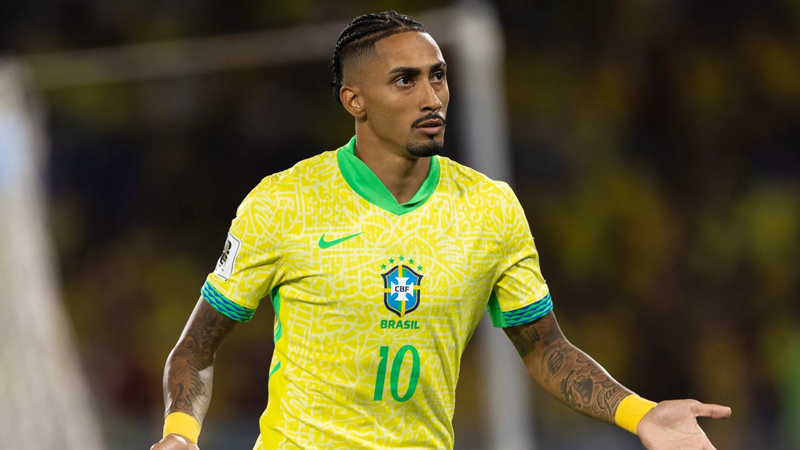
Raphael Dias Belloli, known across the globe by the mononym Raphinha, is a premier talent whose identity is fundamentally linked to South American football excellence.
For those inquiring about Raphinha’s nationality, he is a Brazilian national. Born in the city of Porto Alegre, he has risen through the professional ranks to become a cornerstone of the Brazil National Team, often referred to as the Seleção.
This comprehensive profile explores his heritage, the cultural significance of his origins, and the professional trajectory that has established him as a global representative of Brazilian sporting prowess.
Raphinha is a citizen of Brazil, a nation synonymous with footballing history and elite technical skill. His status as a Brazilian international is not merely a matter of documentation but a core component of his professional identity on the world stage.
Throughout his career in various top-flight European leagues, he has consistently maintained his allegiance to the yellow and green of his home nation, embodying the flair and creative spirit that fans expect from the country’s most gifted athletes.
The Cultural Identity of Raphael Dias Belloli
To understand the athlete, one must first understand the man behind the moniker. While the footballing world recognizes him as “Raphinha,” his full legal name is Raphael Dias Belloli.
This name carries with it the linguistic and familial traditions of his homeland, where naming conventions often reflect deep-seated heritage.
In the context of global sports, the use of a single name—or a diminutive version of a name—is a storied tradition in his country, often signifying a player’s connection to their community and their journey from local pitches to international stadiums.
The Significance of the “Raphinha” Mononym
In Brazilian culture, the suffix “-inha” is often used as a diminutive, translating to “little.” For Raphael Dias Belloli, the transition to Raphinha was a natural progression within the footballing ecosystem of his youth.
This naming tradition has been shared by some of the greatest players in history, such as Ronaldinho (little Ronaldo).
For Raphinha, this name represents more than just a brand; it is a link to his childhood in Porto Alegre and the technical foundation he built before reaching the elite levels of the sport.
Porto Alegre: The Birthplace of a Star
Raphinha was born in Porto Alegre, Brazil, a city with a unique and intense sporting atmosphere. Porto Alegre is the capital of the Rio Grande do Sul state, a region known for producing players with a distinct blend of traditional Brazilian skill and a robust, competitive edge often referred to as the “Gaúcho” style.
Unlike the tropical coastal regions, Porto Alegre’s culture is influenced by its proximity to the southern borders of the continent, resulting in a footballing philosophy that values both artistry and physical resilience.
This regional background is evident in Raphinha’s high-intensity work rate and his ability to thrive in the physically demanding leagues of Europe.
Professional Milestones and the Seleção
The ultimate validation for any player of his nationality is the opportunity to represent the Brazil National Team, the Seleção.
Raphinha’s inclusion in this elite squad is a testament to his consistency and his ability to perform under the immense pressure that comes with wearing the five-star crest.
For many fans, his performances for the national team are the primary metric by which his career is judged, as the expectations for Brazilian wingers are among the highest in professional sports.
Representing the Brazil National Team
Since his debut, Raphinha has become a fixture in the national team setup. His role within the Seleção often involves providing width and creative spark on the right flank, a position historically occupied by some of the game’s most iconic figures.
Representing his country allows Raphinha to showcase his Brazilian identity on a global platform, particularly during major tournaments such as the FIFA World Cup and the Copa América.
His commitment to the national cause is frequently highlighted by his emotional connection to the anthem and his dedication to maintaining Brazil’s status as a global powerhouse.
Key Biographical Data
| Category | Information |
|---|---|
| Full Name | Raphael Dias Belloli |
| Nationality | Brazilian |
| Birthplace | Porto Alegre, Brazil |
| Date of Birth | December 14, 1996 |
| National Team | Brazil (Seleção) |
Technical Analysis of a Brazilian Winger
Raphinha’s playing style is a direct reflection of his nationality and the training he received during his formative years in South America. Brazilian wingers are traditionally known for their dribbling ability, pace, and “Joga Bonito” (play beautifully) philosophy.
However, Raphinha has evolved this archetype to meet the demands of the modern, high-pressing game found in the top European tiers.
The Fusion of Flair and Tactical Discipline
While Raphinha possesses the explosive acceleration and trickery associated with his heritage, he is equally respected for his tactical intelligence. Modern football requires wingers to be diligent in their defensive duties, a trait that Raphinha has mastered.
This fusion of South American flair and European tactical discipline makes him a versatile asset for any manager. His ability to track back and support his full-back while remaining a constant threat on the counter-attack is a hallmark of his professional maturity.
Impact of the December 14, 1996 Birth Date
Born on December 14, 1996, Raphinha belongs to a generation of athletes who have bridged the gap between traditional scouting and data-driven performance.
His age places him in the prime of his physical capabilities, allowing him to maintain the high-velocity sprints required for his position.
From an analytical perspective, his birth date also aligns him with a specific cycle of the Brazil National Team, where he is viewed as a leader for the younger prospects entering the squad.
The Journey from South America to European Elite
The path from Porto Alegre to the top of European football is a well-trodden one for talented Brazilians, but Raphinha’s specific journey is a masterclass in professional progression.
After developing his skills in his home country, he sought the challenge of European competition, eventually making a name for himself in some of the most prestigious leagues in the world, including the Premier League and La Liga.
Early Development and Migration
Raphinha’s early years in Brazil provided him with the technical “DNA” that defines his game. However, his decision to move to Europe was a pivotal moment that refined his skills.
By competing in various environments, he was forced to adapt to different styles of play, from the tactical nuances of the Portuguese league to the sheer physicality of English football.
This journey has not only enhanced his skill set but has also solidified his reputation as a global ambassador for Brazilian talent.
Dominating the Global Stage
Regardless of the club he represents, Raphinha’s nationality remains his most prominent identifier. Whether he is scoring decisive goals or providing assists in continental competitions, he is consistently viewed through the lens of his Brazilian heritage.
This identity provides him with a unique level of marketability and fan engagement, as supporters worldwide are drawn to the “samba” style of play that he naturally exhibits.
His success in Europe is a source of pride for his hometown of Porto Alegre and a reminder of the depth of talent available in the Brazilian footballing landscape.
Identity in the Modern Era: Beyond the Pitch
In the current era of football, a player’s nationality often extends beyond the field into their social and cultural influence. Raphinha is no exception, using his platform to represent his country and his community.
His story is one of perseverance and the pursuit of excellence, serving as an inspiration to young athletes in Brazil who dream of following in his footsteps.
A Symbol of National Pride
For many in Brazil, Raphinha represents the modern success story. He is an athlete who has remained grounded in his roots while achieving the highest levels of professional success.
His involvement with the national team is more than just a job; it is a point of pride for a nation that sees football as an essential part of its cultural fabric.
By consistently performing at the highest level, he ensures that the Brazilian flag remains prominent in the global sporting conversation.
Future Outlook and Legacy
As Raphinha continues his career, his legacy will likely be defined by his contributions to the Seleção and his ability to maintain his high standards across different leagues.
His nationality will always be the starting point for any discussion regarding his career, but his impact on the game will be measured by the titles he wins and the influence he has on the next generation of Brazilian wingers.
He is a player who understands the weight of his heritage and carries it with grace and determination.
Frequently Asked Questions
Is Raphinha a Brazilian citizen?
Yes, Raphinha is a Brazilian citizen. He was born in Porto Alegre, Brazil, and has officially represented the nation in international football competitions.
What is Raphinha’s full legal name?
His full name is Raphael Dias Belloli. “Raphinha” is a common professional mononym used in the world of sports.
Has Raphinha played for any other national team?
No, Raphinha has only represented the Brazil National Team (Seleção) at the international level. His loyalty to his birth nation has been a consistent aspect of his career.
When was Raphinha born?
Raphinha was born on December 14, 1996. This puts him in the prime years of his athletic career.
Does he have dual nationality?
While some Brazilian players acquire European passports to assist with club registration, Raphinha’s sporting nationality and primary identity are exclusively Brazilian.
Conclusion: The Essence of a Brazilian Star
In summary, Raphinha is an quintessential example of the modern Brazilian footballer. From his birth in Porto Alegre to his role as a leading figure in the Brazil National Team, his identity is deeply intertwined with the culture and history of his homeland.
Raphael Dias Belloli has successfully translated the technical brilliance of his nationality into a career that spans the most competitive leagues in the world.
As he continues to represent the Seleção, fans can expect Raphinha to remain a vital part of the global footballing landscape. His blend of skill, tactical awareness, and national pride makes him a unique talent whose story is still being written.
For anyone following his journey, it is clear that his Brazilian roots are the foundation upon which his incredible professional success is built. Through his actions on and off the pitch, he remains a dedicated ambassador for Porto Alegre and the entire nation of Brazil.