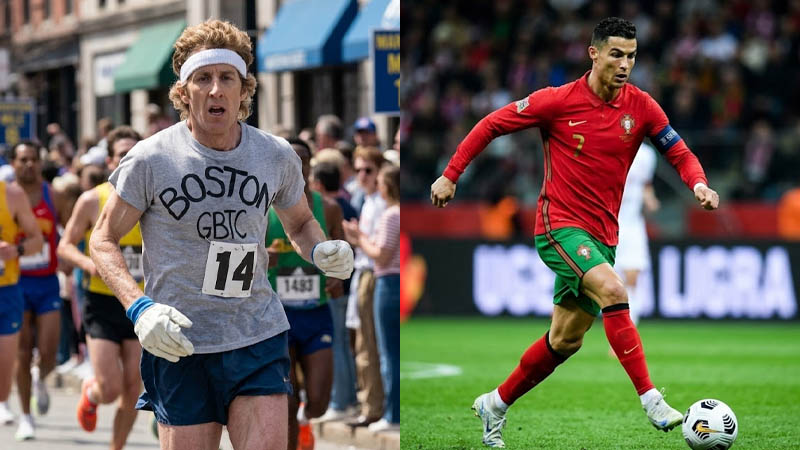
The pursuit of athletic excellence often transcends specific sports, finding a common thread in the relentless drive for longevity.
While Bill Rodgers and Cristiano Ronaldo represent vastly different eras and disciplines—marathon running and global football—their legacies are defined by an identical mastery of endurance.
Rodgers, the amateur king of the 1970s roads, and Ronaldo, the multi-billionaire icon of the modern pitch, both reached the pinnacle of their respective worlds through a shared psychological grit.
This analysis explores how these two legends redefined peak performance, navigating the evolution of professional sports from solitary amateurism to global commercial dominance.
The Intersection of Two Sporting Legacies
At first glance, a comparison between a 1970s marathoner and a modern football superstar might seem unusual, yet contemporary events have brought their names into a shared cultural space.
The connection is rooted in the universal language of respect that elite competitors share across generations and borders.
Addressing the Brendan Rodgers Connection
Modern search interest often stems from a viral moment in May 2026 involving Portuguese superstar Cristiano Ronaldo and football manager Brendan Rodgers.
During the Saudi Pro League campaign, a deeply personal conversation between Ronaldo, then playing for Al-Nassr, and Brendan Rodgers, managing Al-Qadsiah, captured global attention.
The interaction revealed a long-standing bond; decades earlier, a young Ronaldo took the time to meet Rodgers’ late mother during his tenure at Chelsea, demonstrating a level of character that mirrors his professional discipline.
Defining Global Icons
Bill Rodgers, known affectionately as “Boston Billy,” became the face of the American running boom, proving that human endurance could be pushed to limits previously thought impossible.
Decades later, Cristiano Ronaldo (CR7) has applied a similar work ethic to football, maintaining a level of fitness that has allowed him to dominate a high-impact team sport well into his late thirties and early forties.
Both athletes reached the #1 world ranking in their respective primes, cementing their status as the gold standard for their crafts.
Comparative Analysis of Elite Performance
Understanding the magnitude of these two careers requires looking at their achievements side-by-side.
While their tools differ—one relies on a pair of running shoes and an open road, the other on a ball and a meticulously groomed pitch—the results are remarkably similar in terms of global dominance.
| Attribute | Bill Rodgers | Cristiano Ronaldo |
|---|---|---|
| Primary Sport | Marathon & Distance Running | Football (Soccer) |
| Era of Dominance | Late 1970s – Early 1980s | 2000s – 2020s |
| Primary Moniker | “Boston Billy” / “King of the Roads” | “CR7” |
| Signature Feats | 4x Boston & 4x NYC Marathon Winner | 5x Ballon d’Or Winner; UCL All-time Scorer |
| Peak Ranking | Ranked #1 in the World (1975, 1977, 1979) | Regularly #1 or #2 globally for 15+ years |
Expansion on Dominance
Bill Rodgers’ peak coincided with a transformative era for distance running. His ability to win both the Boston and New York City Marathons four times each remains a feat of consistency that few have ever replicated. In a similar vein, Ronaldo’s longevity is unprecedented in modern football.
While most players see a decline in their early thirties, Ronaldo has continued to break records, becoming the all-time leading scorer in the Champions League and maintaining a global ranking that has rarely dipped below the top two for over a decade.
From Amateur Purity to Global Commercialism
The most striking contrast between Rodgers and Ronaldo lies in the economic landscape of their eras. This shift reflects the broader transformation of sports from a local or national pastime into a massive, multi-billion-dollar global industry.
Bill Rodgers and the Era of Pure Sport
Bill Rodgers operated during the 1970s running boom, a time when distance running was largely an amateur pursuit.
Despite his status as the world’s top-ranked marathoner, Rodgers received no prize money or massive salaries for his record-breaking performances.
He competed for the intrinsic value of the challenge and the prestige of the race, often working a “day job” or running a small shop to support his athletic career.
Cristiano Ronaldo and the Billionaire Athlete
In stark contrast, Cristiano Ronaldo represents the pinnacle of the commercialized athlete. He is recognized as football’s first billionaire player, a status achieved through a combination of massive club contracts and a global personal brand.
His landmark deal with Saudi Arabia’s Al-Nassr is a testament to his value not just as a player, but as a marketing entity capable of shifting the focus of the entire sport to new markets.
While Rodgers ran for records, Ronaldo plays for both records and a commercial empire that spans continents.
The Psychological Landscape of a Champion
Endurance is as much a mental battle as a physical one. Both Rodgers and Ronaldo have demonstrated an elite psychological profile that allows them to endure pain, maintain focus, and repeat high-level performances over decades.
The Solitary Quest of the Marathoner
For Bill Rodgers, success was a solitary quest. Marathon running requires an athlete to conquer a 26.2-mile course relying entirely on their own stamina and internal dialogue.
There are no teammates to provide a reprieve and no substitutions to offer rest. Rodgers captured the public imagination because he embodied the “loneliness of the long-distance runner,” facing the physical toll of the road with quiet, individual grit.
Collective Excellence and Leadership
Cristiano Ronaldo’s endurance is channeled through a team dynamic. While his individual work ethic is legendary—often being the first to arrive and last to leave training—his success is measured by his ability to carry elite clubs and the Portugal national team to silverware.
His career is a balance of individual brilliance and the leadership required to elevate those around him in the pursuit of team trophies.
Overcoming Adversity and International Legacy
The path to greatness is rarely linear. Both athletes have faced significant setbacks and “gaps” in their careers that tested their resolve and forced them to adapt their strategies for longevity.
Olympic Heartbreak and Political Interference
Despite his world-class status, Bill Rodgers’ Olympic career is marked by misfortune. He qualified for two U.S. Olympic teams but faced significant hurdles. In 1976, he competed while injured and finished in 40th place.
More devastatingly, he missed the 1980 Moscow Olympics entirely due to the United States’ boycott of the games. These missed opportunities represent a “what if” in his career, contrasting sharply with his dominance in major city marathons.
Record-Breaking Longevity on the World Stage
Cristiano Ronaldo has managed to avoid many of the pitfalls that sidelined his predecessors. His international career is defined by historic longevity; he has headlined Portugal’s roster for a record sixth World Cup.
While his ultimate glory has often come in club football and the UEFA European Championships, his ability to stay fit and relevant for six consecutive World Cup cycles is an anomaly in the history of the sport. This durability is the hallmark of his “long game” strategy.
The Science and Discipline of Lasting Impact
Longevity in sports is rarely an accident; it is the result of evolving methodologies in training, recovery, and psychological preparation. By comparing these two icons, we see a clear progression in how athletes manage their bodies.
Evolution of Training Methodologies
In Rodgers’ era, the approach was often “high volume,” with runners logging immense weekly mileage on varied terrain to build aerobic capacity.
For Ronaldo, the focus has shifted toward a holistic “bio-hacking” approach, involving cryotherapy, hyperbaric chambers, and highly specific nutritional plans to ensure muscle recovery.
The Common Denominator: Professionalism
Regardless of the technology available, the common denominator between Rodgers and Ronaldo is an unwavering professionalism.
Rodgers’ dominance as the “King of the Roads” was fueled by the same fire that keeps Ronaldo competitive in the Saudi Pro League today. They both treated their bodies as instruments, fine-tuned for a singular purpose: to stay at the top longer than anyone else.
Frequently Asked Questions About These Athletic Icons
How did the name confusion between Bill and Brendan Rodgers start?
The confusion typically arises from the shared last name and the viral interaction between Cristiano Ronaldo and manager Brendan Rodgers in 2026.
While Brendan is a prominent football manager, Bill Rodgers is the legendary American marathoner who dominated the 70s.
Did Bill Rodgers ever play professional football or soccer?
No, Bill Rodgers’ professional career was entirely dedicated to distance running and the marathon. He is most famous for his four victories at both the Boston and New York City Marathons.
Is Cristiano Ronaldo the first billionaire in sports?
While other athletes have reached billionaire status (such as Michael Jordan), Ronaldo is recognized specifically as football’s first billionaire player, largely due to his massive playing contracts and the “CR7” brand.
How many World Cups has Cristiano Ronaldo played in?
As of the latest records, Ronaldo has been named to Portugal’s roster for a record sixth World Cup, a testament to his unprecedented longevity in the sport.
The Shared Legacy of Persistence
Whether running through the streets of Boston or leading a team in Riyadh, Bill Rodgers and Cristiano Ronaldo prove that greatness is not just about a single moment of triumph, but about the ability to endure.
They represent the “long game” of athletics—the discipline to keep showing up, era after era, until a legacy is built that transcends the sport itself.
Their careers serve as a blueprint for any professional: success is a marathon, not a sprint, even if you happen to be playing football.