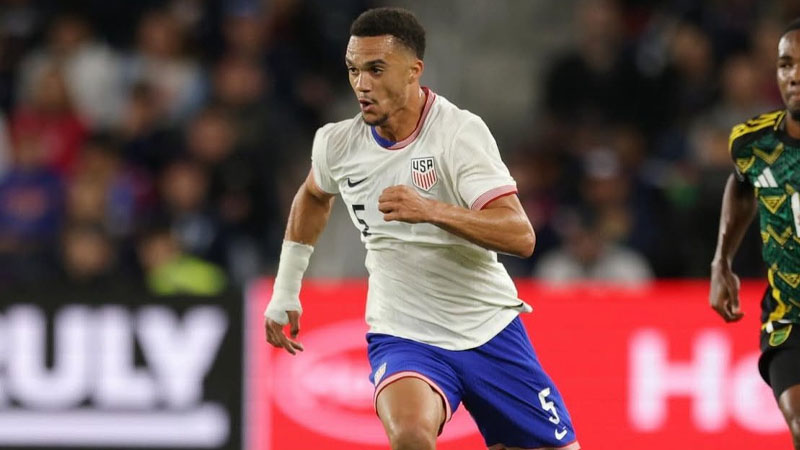
In the elite world of international soccer, players often acquire nicknames from fans or the media, but few have an identity as deeply ingrained as Antonee Robinson.
The Fulham and USMNT left-back is almost exclusively known as “Jedi” to his teammates, coaches, and family. This isn’t a marketing gimmick or a locker-room joke; it is a persona he adopted as a five-year-old child and never let go.
Understanding why this “speed demon” prefers a Star Wars moniker over his birth name offers a fascinating glimpse into the psychological makeup of a world-class athlete who values authenticity above all else.
The Childhood Genesis of a Galactic Moniker
The transition from “Antonee” to “Jedi” began in Milton Keynes, England, under the tactical guidance of his father, who served as his first soccer coach.
His father had established a unique tradition within his youth teams to inspire young players to emulate the legends of the game.
The Father’s Coaching Methodology
Robinson’s father believed in giving his players nicknames based on world-class footballers to foster a sense of ambition and identity on the pitch.
For instance, one player under his tutelage was assigned the name “Dybala” while playing as a center-half. Another teammate was known as “Valdes,” after the legendary Barcelona goalkeeper.
This creative environment meant that on Robinson’s youth team, every child was playing under a mantle of greatness, which helped build their confidence and technical aspirations from a very young age.
A Five-Year-Old’s Final Decision
When it came time for a five-year-old Antonee to receive his official team nickname, his father expected him to choose a soccer icon like Thierry Henry.
However, the young Robinson was already deeply immersed in the lore of the Star Wars franchise, including its movies, costumes, and games. Instead of choosing a striker to emulate, he boldly declared, “I want to be called Jedi”.
This wasn’t a passing phase; it was a definitive choice that would rewrite his personal and professional narrative for the next two decades.
A Permanent Identity: When Antonee Becomes a Stranger
For Robinson, the name “Antonee” has become a secondary identifier that feels increasingly foreign in his daily life. Over the years, the nickname has transitioned from a childhood preference to a core component of his adult identity.
The Psychological Disconnect
Robinson has been remarkably candid about his internal relationship with his birth name, stating that he actually feels “weird” when people call him Antonee.
This psychological disconnect is common among individuals who have operated under a pseudonym or nickname since their formative years.
He has publicly confirmed that he has a strong preference for being called “Jedi,” as it aligns more closely with how he perceives himself both as a person and a professional athlete.
Universal Adoption by Inner Circles
The true power of this identity is seen in its universal adoption by those closest to him. His teammates and coaches at both the club and international levels refer to him exclusively as “Jedi” or “Jed”.
Perhaps most interestingly, his fiancé, his parents, and his brother have all transitioned to using the nickname in their daily private lives.
This level of commitment from his family proves that “Jedi” is no longer just a “stellar” sobriquet for the media; it is the name of the man himself.
Bringing the “Force” to the Professional Stage
Scaling from youth soccer in Milton Keynes to the Premier League and the World Cup required Robinson to back up his unique name with world-class performances.
His career trajectory has been defined by steady growth and the establishment of himself as a “pivotal” player for the United States.
| Career Phase | Key Teams | Role & Impact |
|---|---|---|
| Academy Years | Everton FC | Developed as a technical fullback under the Jedi moniker. |
| Professional Loans | Bolton & Wigan | Proved his durability and speed in the English second division. |
| Premier League | Fulham FC | Established as one of the league’s top attacking defenders. |
| International Stage | USMNT | Became a fixed starter and defensive anchor for Gregg Berhalter. |
The Attacking Fullback Archetype
In the modern game, fullbacks are expected to be “slaloming flankers” who can “bomb down the sideline” with reckless abandon. Robinson fits this description perfectly, utilizing his “galactic” speed to overlap attackers and create numerical advantages.
He is frequently described as a “speed demon” and is consistently among the fastest players in the American squad.
This physical dominance allows him to knock the ball beyond defenders and outpace them with ease, a trait that fans often equate to the supernatural agility of a Jedi Knight.
Tactical Importance for the USMNT
Robinson’s importance to the national team cannot be overstated, as he has earned over 30 caps since his debut in 2018.
During major tournaments like the World Cup, his partnership with other attacking fullbacks like Sergino Dest has been a primary tactical weapon for the United States.
His ability to provide width and high-quality crosses while maintaining defensive recovery speed makes him one of the “first names” on the team sheet.
The Public Perception: A Point of Fan Contention
While most fans and commentators embrace the nickname as a fun piece of sports trivia, it has occasionally sparked debate on social media.
The polarized views on “Jedi” reflect broader cultural conversations about maturity and personal branding in professional sports.
The Social Media Critique
On platforms like Reddit, some users have expressed that they find an adult professional athlete using a childhood Star Wars nickname to be “dumb” or “weird”.
Critics argue that if a typical person in a standard office environment requested to be called “Jedi,” they would likely face ridicule.
These individuals often suggest that clinging to a name chosen at age five is an odd choice for a public figure in a high-stakes industry.
The “Balling Out” Defense
Conversely, the majority of the sporting community supports Robinson’s right to his identity, often citing his high-level performance as the ultimate justification.
Supporters argue that as long as a player “balls out” and excels at every level of their career, they have earned the ability to be called whatever they want.
Some fans even argue that Robinson is currently the best left-back in the Premier League, and his excellence on the pitch renders any criticism of his name irrelevant.
Strategic Brand Value and Engagement
From a branding perspective, the name “Jedi” offers Robinson a level of recognition and marketability that a common name like Antonee cannot provide. It allows for creative engagement from teams and sponsors, such as the USMNT celebrating his birthday with “galaxy far, far away” references.
- Distinctiveness: In a sea of professional athletes, having a unique, movie-themed identity makes him instantly memorable to casual fans.
- Authenticity: Because the name originated organically in his childhood rather than a boardroom, it resonates as a genuine part of his personality.
- Fan Connection: The nickname provides a “point of contact” for fans of both soccer and pop culture, broadening his appeal.
- Media Utility: Pundits and writers frequently use the name for headlines and puns, further cementing his place in the sports lexicon.
Frequently Asked Questions
Is “Jedi” actually on his birth certificate?
No, his legal name is Antonee Robinson, though he is often listed as “Antonee ‘Jedi’ Robinson” on official team rosters and social media.
How did his schoolteachers react to the name?
From the age of five, Robinson consistently introduced himself as Jedi to everyone, including his teachers at school, which ensured the name stuck throughout his education.
Does he have other nicknames?
While “Jedi” is the primary moniker, those very close to him sometimes shorten it to “Jed” for convenience. Some fans on social media have jokingly referred to him as “the underwear model” or compared his voice to Paul Hollywood.
Has the Star Wars connection ever led to official collaborations?
While he hasn’t had a formal movie role, his teams often use Star Wars imagery and themes when promoting his matches or celebrating his milestones.
Conclusion: Embracing the Force
Antonee Robinson’s journey from a young boy in Milton Keynes to a Premier League stalwart is a testament to the power of a self-defined identity.
By rejecting a traditional soccer nickname in favor of something that represented his true passions, he created a brand that is both unique and enduring.
Whether he is “slaloming” past defenders or representing the United States on the global stage, he does so as “Jedi,” a name that has become synonymous with elite speed and unwavering authenticity.
As he continues his career at Fulham and beyond, this “stellar” sobriquet is likely to remain one of the most recognizable and discussed names in world football for (light) years to come.