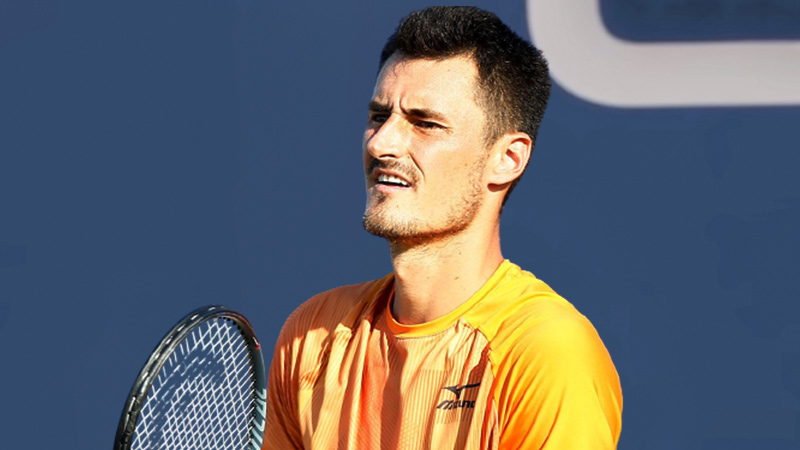
Bernard Tomic is globally famous for the sharp contrast between his historic success as a teenage prodigy and his later reputation for match-tanking and public controversy.
He first gained international attention by becoming the youngest-ever Australian Open boys’ singles champion at age 15 and reaching the Wimbledon quarterfinals at just 18.
However, his fame shifted toward notoriety due to a career-high ranking of 17 being overshadowed by records for the fastest ATP loss, admissions of being “bored” during matches, and public boasts about his wealth.
Today, his legacy remains a fascinating study of talent versus temperament in professional sports.
The Historic Rise of an Australian Tennis Prodigy
The initial wave of fame surrounding Bernard Tomic was rooted in genuine athletic brilliance and record-breaking performances that positioned him as the successor to legends like Lleyton Hewitt.
Before his public persona shifted, he was celebrated primarily for his on-court achievements and a style of play that baffled the elite of the tennis world.
Record-Breaking Junior Dominance
Tomic’s entry into the global consciousness began with a dominant junior career that remains one of the most successful in the history of the sport.
At just 15 years and 3 months old, he became the youngest male player ever to win the Australian Open boys’ singles title in 2008. He followed this achievement by securing the 2009 US Open junior title, eventually peaking at World No. 2 in the ITF junior rankings.
His junior record of 107 wins against only 26 losses established an expectation of greatness that would follow him into the professional ranks.
The 2011 Wimbledon Breakthrough
The height of Tomic’s early professional fame arrived during a magical run at Wimbledon in 2011. Entering the tournament as an 18-year-old qualifier, he defied expectations by reaching the quarterfinals, eventually falling to Novak Djokovic.
This feat made him the youngest male player to reach the final eight at the All England Club since Boris Becker in 1986. This specific milestone solidified his status as a “prodigious teenage tennis phenom” and suggested a future at the very top of the ATP rankings.
An Unorthodox and Genius Playing Style
Unlike the modern era of power-hitters, Tomic became famous for a “finesse” game that relied on high tennis IQ and unorthodox mechanics.
He utilized low-bounce backhand slices, sudden drop shots, and flat groundstrokes to disrupt the rhythm of his opponents.
This “lazy” rhythm was an intentional strategy designed to throw heavy hitters off balance, leading many commentators to label his tactical approach as genius even when his physical intensity appeared lacking.
Why is Bernard Tomic Called the “Tank Engine”?
As his career progressed, Tomic’s fame took a darker turn, earning him the derogatory nickname “Tomic the Tank Engine”.
This notoriety stems from multiple high-profile incidents where he appeared to intentionally lose matches or provide substandard effort when frustrated, a practice known in the tennis world as “tanking”.
| Incident | Year | Event | Details |
|---|---|---|---|
| The 28-Minute Record | 2014 | Miami Masters | Lost 6-0, 6-1 to Jarkko Nieminen in 28 minutes and 20 seconds, the fastest loss in ATP history. |
| The Upside-Down Racquet | 2016 | Madrid Open | Held his racquet by the strings during a match point against Fabio Fognini, allowing an ace to pass. |
| The “Boredom” Admission | 2017 | Wimbledon | Admitted in a press conference that he felt “bored” during a straight-sets loss. |
| The 50% Effort Boast | 2017 | Sunday Night | Confessed that his career average effort was only about 50%, claiming he achieved success without trying. |
Controversial Quotes and the “Millions” Persona
Beyond his physical performance on the court, Tomic became famous for his verbal delivery and a public persona that often seemed designed to alienate the average sports fan.
His responses to criticism frequently centered on his financial success, creating a narrative of a transactional athlete who viewed the sport merely as a high-paying job.
The Transactional View of Professional Sports
Tomic has been exceptionally candid about his lack of passion for tennis, a rarity in elite athletics. He has stated on record, “I didn’t choose this life. It was chosen for me,” and has consistently referred to his career as simply “a job” rather than a calling.
This admission, combined with his claim that he has never truly loved the sport, contributed to his reputation as a “wasted talent” in the eyes of many traditionalists.
Boasts of Wealth and Financial Success
When faced with media scrutiny regarding his work ethic or declining ranking, Tomic famously pivoted to his bank account as a shield.
After failing to qualify for the 2018 Australian Open, he told reporters, “I just count my money, man. That’s all I do. I count my millions”.
This defensive posture, while perhaps a coping mechanism, further cemented his status as a polarizing figure who valued prize money over competitive legacy.
Family Conflict and Institutional Feuds
The drama surrounding Bernard Tomic extended far beyond the white lines of the tennis court.
His career has been heavily influenced by a volatile relationship with his father and coach, as well as a perpetual state of conflict with national tennis organizations.
The Volatile Influence of John Tomic
A significant portion of Tomic’s public narrative involves his father, John Tomic, whose behavior often overshadowed his son’s matches.
The most infamous incident occurred in 2013 when John was banned from the ATP tour for headbutting Bernard’s hitting partner, Thomas Drouet, resulting in a broken nose for Drouet.
This family turmoil added a layer of complexity to Bernard’s career, with many observers questioning the psychological toll of such a turbulent support system.
Public Battles with Tennis Australia
Tomic has been in a near-constant state of war with Tennis Australia and its leading figures. He famously engaged in a bitter feud with Davis Cup Captain and Australian icon Lleyton Hewitt, alleging corruption and favoritism within the national organization.
These disputes led to his exclusion from national team selection, despite the fact that he was once a dedicated patriot with a stellar 17–4 singles record in Davis Cup play.
Analyzing the Statistical Reality of His Career
While the headlines often focus on his “tanking” and quotes, a deeper look at the data reveals an athlete who was remarkably efficient and calm under pressure. His career statistics provide a necessary counter-balance to the narrative of a player who “didn’t try”.
- Career-High Ranking: He reached No. 17 in the world in January 2016.
- ATP Titles: He captured 4 singles titles in Sydney, Bogotá (twice), and Chengdu.
- Clutch Performance: Tomic holds an impressive 8–3 record in 5th sets (72.7% win rate) and a winning tie-break record of 109–95.
- Elite Victories: Despite his reputation, he secured 8 career victories against Top-10 opponents.
- Prize Money: His career earnings exceed $6.7 million USD, validating his claims of financial success.
Bernard Tomic in 2026: The Final Comeback
As of early 2026, the narrative of Bernard Tomic is undergoing a surprising transformation. After seeing his ranking plummet past No. 800 due to injuries and a total loss of motivation, the 33-year-old has returned to the “grind” of the professional circuit.
The Gritty Journeyman Phase
In a sharp departure from the “bad boy” antics of his 20s, the current version of Tomic is characterized by resilience. He has spent the last few years playing in lower-level ITF and Challenger tournaments to rebuild his ranking.
By early 2026, he fought his way back up to world No. 184 and competed in the qualifiers for the Australian Open.
A Shift in Perspective
Recent admissions suggest a changed man who has realized the importance of the sport he once claimed to hate. He has stated that he now understands he “needs” tennis in his life, signaling a serious final attempt to climb back into the top tier of the sport.
This late-career shift from “wasted talent” to “gritty journeyman” adds a final, unexpected chapter to his already famous legacy.
Frequently Asked Questions About Bernard Tomic
Why did Bernard Tomic lose his racquet sponsor?
In 2017, after losing at Wimbledon, Tomic admitted in a press conference that he felt “bored” and lacked motivation. His primary racquet sponsor, Head, dropped him immediately following these comments, citing his lack of professionalism.
What is the fastest match Bernard Tomic ever played?
Tomic holds the record for the shortest recorded men’s singles match in the history of open-era professional tennis. In 2014, he lost to Jarkko Nieminen at the Miami Masters in just 28 minutes and 20 seconds.
How many Grand Slam titles did Bernard Tomic win?
While Tomic never won a senior Grand Slam title, he was a highly successful junior, winning the 2008 Australian Open and 2009 US Open boys’ singles titles. His best result in a professional Grand Slam was reaching the Wimbledon quarterfinals in 2011.
Is Bernard Tomic still representing Australia?
While he had a successful Davis Cup career for Australia with a 17–4 record, his relationship with Tennis Australia remains strained. In recent years, he has primarily competed as an individual on the ATP and Challenger tours rather than representing the national team.
Conclusion: A Legacy of Unfulfilled Potential or Resilience?
The fame of Bernard Tomic is ultimately a story of duality. To some, he remains the ultimate “bad boy” and a symbol of wasted natural ability.
To others, his statistical achievements and 2026 comeback attempt represent a complex individual who has survived intense public scrutiny and family turmoil to remain a fixture in professional tennis.
Whether he reaches the Top 100 again or not, his impact on the sport’s cultural history is undeniable.