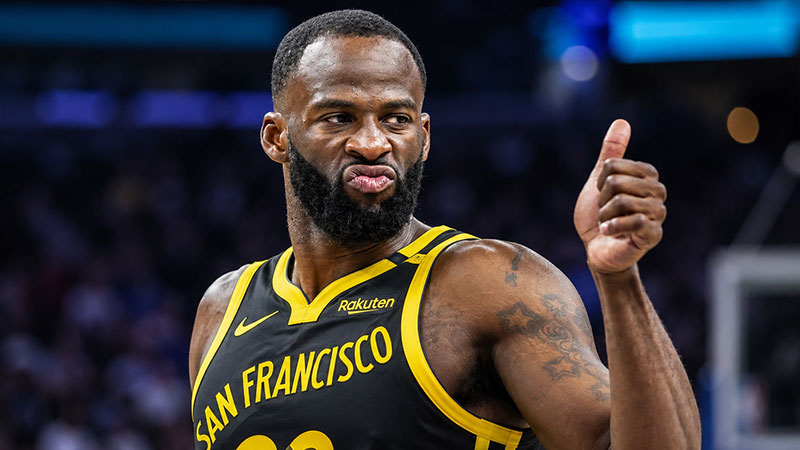
Draymond Green famously declared himself the greatest defender in NBA history, sparking a firestorm of debate across the basketball world.
While traditionalists often point to towering rim protectors or lockdown perimeter specialists, Green’s claim is rooted in a fundamental shift in how the game is played and defended.
He has not only mastered the physical requirements of the sport but has pioneered a new era of defensive versatility and cerebral leadership.
To understand why he is the best defender, one must look beyond basic box scores and examine the intricate geometry and psychology he employs on every possession.
The Evolution of Defensive Dominance
The debate surrounding Draymond Green often pits his modern versatility against the historical dominance of traditional centers and wings.
While legends like Hakeem Olajuwon and Bill Russell patrolled the paint with verticality, Green has thrived by mastering the “switch everything” scheme that defines the current NBA landscape.
This transition represents a shift from localized defense to a holistic, team-wide approach where one player acts as the connective tissue for the entire unit.
Redefining Versatility in the Modern Era
Green is frequently described as the greatest “switch-army-knife” defender to ever play the game. Unlike specialized defenders of the past, he possesses the rare ability to guard all five positions flawlessly during a single defensive sequence.
Standing at 6’6″, he is undersized by traditional power forward standards, but his massive 7’1″ wingspan and elite core strength allow him to battle 7-footers in the post while maintaining the lateral quickness to stifle elite guards on the perimeter.
This multi-positional capability effectively neutralized the traditional advantages of size and speed during the Warriors’ dynasty.
The Small-Ball Revolution and the Death Lineup
The emergence of the Golden State Warriors’ “Death Lineup” was only possible because of Green’s unique defensive profile. By playing as a small-ball center, he allowed his team to deploy four playmakers and shooters without sacrificing defensive integrity.
His ability to anchor the interior against traditional bigs like Nikola Jokic, while remaining mobile enough to switch onto a primary ball-handler like Kyrie Irving, fundamentally changed the tactical blueprints used by NBA coaches.
He proved that functional size—calculated through wingspan and positioning—is more valuable than raw height in a space-oriented game.
Decoding the IQ of a Defensive Mastermind
Beyond his physical tools, Green’s greatest asset is his elite basketball intelligence, often referred to as his “Defensive BBIQ”.
He processes the game at a speed that matches or exceeds the most talented offensive players, allowing him to anticipate plays before they materialize.
This mental acuity transforms him from a mere participant into a “defensive version of Nikola Jokic,” orchestrating the floor with superhuman awareness.
Processing Speed: The Mental Edge
Analysts often compare Green’s mental processing to that of Kevin Garnett. Both players are described as “sharks” circling the action, waiting for the offense to reveal their intentions just a second too early.
Green doesn’t just react to what is happening; he actively “pierces through the noise” of deceptive offensive sets to understand the primary objective of the play.
This “horrifyingly fast” processing speed allows him to be in the right place at the right time, often blowing up a play before the ball-handler even begins their move.
Defensive Quarterbacking and Communication
Green serves as the “central node” of the defensive web, directing his teammates like a quarterback on a football field. He is known for his relentless on-court communication, vocalizing screens, switches, and defensive assignments throughout every possession.
This leadership ensures that even when a teammate makes a mistake, Green is there to shift the defense, orienting the other four players to close gaps and maintain the integrity of the scheme.
His vocal leadership is a force multiplier that elevates the defensive floor of any lineup he anchors.
Why Traditional Metrics Undervalue Draymond Green
One of the primary arguments against Green’s GOAT status is his modest average of 1.4 steals and 1.0 block per game. Critics point to these figures as evidence that he lacks the “lockdown” impact of players like Michael Jordan or Hakeem Olajuwon.
However, this perspective ignores the “preventative” nature of his game, which prioritizes stopping a shot from occurring over trying to block it once it has been taken.
Preventative vs. Corrective Defense
Green’s value is largely preventative rather than corrective. A “Superman” defender might swoop in for a highlight-reel block on a wide-open layup, but Green has likely stopped six potential layups simply by being in a perfect position to deter the initial pass or drive.
He uses positioning and “psychology” to bait offenses into taking suboptimal shots or making risky passes that he can then jump.
By staying in the play rather than chasing a highlight, he ensures the defense remains sound, proving that the best defensive plays are often the ones that never appear on a stat sheet.
Analyzing the Advanced Analytics
When moving away from raw totals and toward impact metrics, the case for Green becomes undeniable. Since 1973, he holds the fourth-highest career Defensive Box Plus/Minus (+2.76), trailing only defensive titans like David Robinson and Nate McMillan.
This metric estimates the defensive points per 100 possessions a player contributes above a league-average player.
Additionally, his defensive win shares and career averages—being the only player to exceed 5 points, 5 rebounds, 5 assists, 1 steal, and 1 block per game—highlight a level of across-the-board impact that few in history can match.
| Defensive Accolades | Total | Details |
|---|---|---|
| NBA Champion | 4 | 2015, 2017, 2018, 2022 |
| Defensive Player of the Year | 1 | 2016-17 Season |
| All-Defensive First Team | 5 | 2015-2017, 2021, 2025 |
| All-Defensive Second Team | 4 | 2018, 2019, 2022, 2023 |
| NBA Steals Leader | 1 | 2016-17 Season |
Comparing Draymond to the All-Time Legends
To solidify his place as the best, Green must be measured against the pantheon of defensive greats. While critics like Shannon Sharpe list nearly 20 players they believe are superior, many analysts see Green as a unique hybrid of several legendary archetypes.
He possesses the grit of the 1990s combined with the spatial awareness required for the modern “three-point” explosion.
The Duncan-Garnett Hybrid
Green is often described as a multi-positional version of Tim Duncan. While Duncan was a rim-protecting anchor who relied on size and elite positioning, Green applies those same principles across the entire floor.
He shares Kevin Garnett’s legendary intensity and physical speed, acting as a “shark” that disrupts offensive rhythm through sheer mental and physical pressure.
This combination of Duncan’s sound fundamentals and Garnett’s terrifying processing speed makes him a unique anomaly in NBA history.
Rodman’s Grit with Rondo’s Brain
Another compelling comparison views Green as the “demon love child” of Dennis Rodman and Rajon Rondo.
He brings Rodman’s relentless hustle and “Brillo pad” grit—constantly rubbing against opponents to wear them down—paired with Rondo’s elite basketball IQ and floor leadership.
While he may not match Rodman’s rebounding or Rondo’s highlight passes, his ability to merge these traits into a defensive package allows him to function as the “backbone” of a championship defense.
The Psychology of Defensive Deterrence
A significant portion of Draymond’s effectiveness comes from his ability to “physically bully” and mentally exhaust his opponents.
He plays every possession with a level of intensity that suggests his “contract is about to be cancelled,” a high-motor approach that forces opponents to account for him at all times.
This tenacity, combined with his reputation as a “team enforcer,” creates a psychological barrier for offensive players who know they will be met with maximum resistance.
Strategic Positioning and Baited Passes
Green is a master of the 2-on-1 and 3-on-1 fast break. Instead of simply retreating, he often fakes being out of position to bait the ball-handler into a specific pass, only to “jump the lane” at the last possible second.
This ability to manipulate the offense’s decision-making process is a hallmark of his greatness. He doesn’t just react to the offense; he dictates what the offense is allowed to do by controlling the geometry of the court.
The “Brillo Pad” Effect
Sources describe Green’s defensive style as a “Raw Brillo pad”—not fancy or flashy, but something that consistently rubs against everything an offense is trying to do. He is “entirely unafraid to get up in anyone’s face and ruin their day”.
This physical presence, coupled with his high energy, wears down opponents over the course of a game and a playoff series, proving that defensive greatness is as much about persistence as it is about physical talent.
Frequently Asked Questions (FAQ)
Is Draymond Green a better defender than Kawhi Leonard or Scottie Pippen?
While Kawhi Leonard and Scottie Pippen are legendary “lockdown” wing defenders, Green’s impact is different in scope. Pippen and Kawhi could take an individual star out of the game, but Green anchors an entire team’s defense.
He is a “switch-army-knife” who can guard 1-5, whereas Pippen and Kawhi were primarily focused on wings. Green’s value lies in his ability to read the entire floor and prevent breakdowns across the whole unit.
Why doesn’t Draymond Green have more blocks or steals?
Green’s defensive philosophy is “preventative” rather than “corrective”. He focuses on being in the correct spot to stop a shot or pass from ever happening.
By using positioning and “IQ” to force suboptimal shots, he often has a greater impact on the game’s outcome than players who chase highlight blocks but risk being out of position.
Can Draymond Green really guard centers?
Yes. Despite being 6’6″, his 7’1″ wingspan and elite core strength allow him to battle traditional big men like Nikola Jokic in the post.
His “standing reach” is identical to that of much taller players like Blake Griffin, meaning he doesn’t give up as much “functional size” as his listed height would suggest.
What makes his “Defensive IQ” so special?
His IQ involves “processing speed” and “anticipation”. He often knows what play an opponent is running before they do. He acts as a “central node,” directing his teammates and ensuring the defense remains connected through screens, misdirection, and movement.
Conclusion: The Final Verdict on a Defensive Genius
Draymond Green’s claim to being the best defender ever is not just a boast; it is a reflection of how he revolutionized the sport.
By mastering the “switch everything” era and serving as a “living demigod” of defensive IQ, he has proven that a 6’6″ forward can be the most dominant force on the court without scoring a single point.
While he may not fit the traditional mold of a “lockdown” defender or a rim-protecting giant, his ability to anchor four championships and elevate the performance of every teammate around him cements his legacy.
If the litmus test for basketball understanding is how one views Draymond Green, then the conclusion is clear: he is the premier defensive architect of the modern age.
He didn’t just play within the rules of defense; he rewrote them, proving that the greatest defenders are the ones who use their minds as effectively as their bodies.