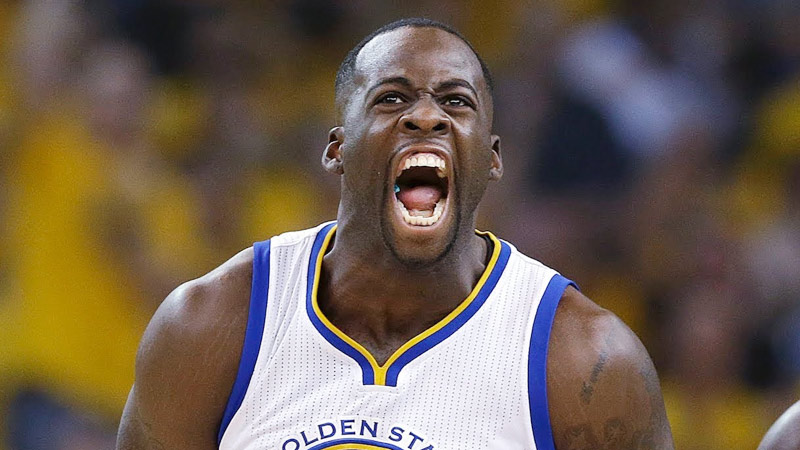
Draymond Green is a basketball anomaly. Unlike traditional superstars defined by scoring volume, Green’s value lies in his cognitive mastery and defensive versatility.
As the heartbeat of the Golden State Warriors dynasty, he serves as both a defensive coordinator and an offensive hub. His impact is rarely captured by standard box scores but is deeply felt in winning percentages and advanced tracking metrics.
To truly understand his greatness is to appreciate the nuances of spacing, communication, and elite basketball IQ. This analysis explores the technical and mental pillars that define Green’s generational impact on the modern NBA landscape.
Elite Defensive Versatility and Physical Mechanics
Draymond Green’s impact begins with a unique physical profile that defies traditional NBA positionality.
While many players are pigeonholed into specific roles based on their height, Green has spent a decade dismantling the notion that a 6-foot-6 player cannot dominate the interior.
His physical mechanics are a masterclass in leverage and functional strength, allowing him to serve as a “Death Lineup” anchor who can switch seamlessly from perimeter guards to 7-foot centers.
The Strength of a Low Center of Gravity
Though officially listed at 6-foot-6, Green possesses an incredibly strong lower body and core. This low center of gravity is his primary weapon when defending the post.
Unlike taller, leaner defenders who can be pushed off their spots, Green’s base is “strong as hell,” making it nearly impossible for larger opponents to back him down.
He uses this strength to “body up” and stone centers in the paint, effectively neutralizing their size advantage through sheer physical resistance.
By refusing to give ground, he forces opponents into difficult, contested fadeaways or contested hook shots rather than easy layups.
Wingspan as a Force Multiplier
The “secret sauce” to Green’s physical profile is his massive 7-foot-2 wingspan. This length allows him to play much larger than his height suggests, providing him with a “closing radius” that is seemingly impossible for a player of his stature.
On the perimeter, he uses this length for “gap management,” staying close enough to deter a pull-up jumper while remaining deep enough to break up a lob pass.
In the paint, he utilizes “vertical wall-ups” and precise timing to block or alter shots at the rim without needing elite vertical jump height.
This length, combined with his lateral movement, allows him to “contain” rather than “stab,” minimizing the space available to a ball-handler.
The Cognitive Engine: Basketball IQ and Anticipation
Beyond his physical tools, Green’s greatest asset is his rapid mental processing of on-court schemes. He is widely considered a basketball genius because he thinks the game two to three steps ahead of the offense.
This mental acuity allows him to be in the right place at the right time, making him the ultimate “free safety” in modern defensive history.
Mastering the Art of Help Defense
Green excels most when playing help-side defense, often intentionally roaming off weaker shooters to disrupt the opponent’s primary actions.
He has an innate ability to recognize a play as it develops, flying across the hardwood to blow up pick-and-rolls or intercept passing lanes.
His “week-side awareness” is legendary; he often identifies a teammate’s defensive lapse and rotates to take away a layup before the offense even realizes the opening existed.
This proactive approach reduces the odds of a made bucket by forcing players to alter their shots ever so slightly, which significantly impacts the game’s final score over 48 minutes.
Forcing Indecision in the Pick-and-Roll
One of Green’s most specialized skills is his ability to force a pick-and-roll ball-handler into total indecision.
He positions himself in “no-man’s land”—a spot where he is close enough to contest a floater but positioned perfectly to take away the lob to the rolling big man.
This “dancing back and forth” forces the offensive player to hesitate, often resulting in a turnover or a low-percentage, half-hearted attempt.
By playing the percentages perfectly, he shifts the advantage from the offense back to the defense in one of the most common plays in basketball.
The Vocal Defensive Coordinator: On-Floor Leadership
Green acts as an active, on-floor coach, and his vocal communication is a foundational component of the Warriors’ defensive identity.
His ability to direct teammates in real-time is often cited as his most valuable trait, as it elevates the defensive ceiling of every player on the floor with him.
| Component of Leadership | Impact on Team Defense |
|---|---|
| Vocal Direction | Constantly shouting out assignments and directing teammates into correct positions before the play initiates. |
| Play Recognition | Rapidly processing offensive sets and warning teammates about screens or cuts. |
| Trust Signal | His presence allows teammates to stay aggressive, knowing Green is behind them to “mop up” any mistakes. |
| Accountability | Demands high-level discipline and effort from the entire unit, fostering a “dawg” mentality. |
This leadership style ensures that the Warriors’ defense remains organized even during high-paced transitions.
For example, Green is often seen pointing and yelling to orchestrate “switches” or “stunts” to prevent open threes, ensuring that the most dangerous offensive threats are always accounted for.
Offensive Hub: The Invisible Playmaker
While Green has notable scoring limitations, he serves as the primary operational engine for the Warriors’ complex motion offense.
His synergy with Stephen Curry is a cornerstone of the team’s success, transforming him from a defensive specialist into an elite offensive facilitator.
Exploiting the Short Roll
When opposing teams aggressively trap or double-team Stephen Curry on the perimeter, the ball is frequently swung to Green in the “short roll”. Once he catches the ball in a 4-on-3 power-play situation, his elite vision becomes his greatest weapon.
He can instantly read the collapsing defense to throw perfect lob passes or find open shooters in the corners. This ability to make the right decision in a split second makes the Warriors’ offense nearly impossible to guard, as it punishes teams for overcommitting to Curry.
Deception and Screening
Green is a master of the “little things” on offense, such as setting high-quality screens to free up his shooters.
He often uses deceptive fakes, such as an underhand “scoop” pass, to freeze defenders and create just enough space for a teammate to get a clean look.
His “hockey assists”—the pass that leads to the assist—are frequent, as he is always looking to make the extra pass to the open man.
Furthermore, his ability to “rim run” and push the pace in transition keeps the defense under constant pressure, proving that his impact is not limited to half-court sets.
The “Know Ball” Litmus Test: Legacy and Metrics
Understanding Draymond Green’s career has become a “litmus test” for basketball fans. Those who rely solely on points per game often fail to see his value, while those who “know ball” recognize him as a generational defensive superstar whose impact is validated by both championships and advanced analytics.
Accolades and Historical Context
Green’s resume is among the most impressive for any non-primary scorer in NBA history. He is the only player in league history to maintain career averages exceeding 5 points, 5 rebounds, 5 assists, 1 steal, and 1 block per game.
His trophy case serves as a testament to his winning impact over a decade of elite competition.
- 4x NBA Champion: Anchored the defensive core of a dynasty.
- 2017 Defensive Player of the Year: Led the league in steals and defensive win shares.
- 9x All-Defensive Team Selection: Recognized consistently as a premier defender.
- Metric Dominance: Frequently tops advanced charts such as Defensive Plus-Minus (Def BPM) and D-LEBRON.
Consistency in the “Little Things”
Ultimately, what makes Green so good is his relentless motor and discipline. He makes “multiple efforts” on a single possession—stopping a drive, closing out on a shooter, and then boxing out for the rebound.
These efforts often go unnoticed in a standard box score but are the “big things” that result in defensive stops and championship rings.
Whether it is forcing a moving screen or holding up a superstar in transition, Green’s commitment to the nuances of the game is what sets him apart.
Frequently Asked Questions (FAQ)
Is Draymond Green still an elite defender?
Yes. While his physical peak may have been around 2017-2018, his help defense and defensive command are considered “arguably better than ever” due to his increased experience and mental processing speed.
How does Green defend players much taller than him?
He utilizes a combination of a very strong lower body/core to prevent being backed down and a 7-foot-2 wingspan to contest shots at their highest point. He also relies on “verticality,” jumping straight up to contest shots without fouling.
Why are his scoring numbers so low?
Green’s role in the Warriors’ system is to facilitate for elite shooters like Stephen Curry and Klay Thompson. He prioritizes screening, passing, and offensive rebounding over personal scoring, acting as the “point guard” for the frontcourt.
Can he guard all five positions?
In his prime, Green was one of the few players who could truly guard 1 through 5. While he may struggle more with lightning-fast point guards today, he remains elite at switching onto wings and defending the league’s best centers.
Conclusion: The Enduring Value of the Defensive Engine
Draymond Green’s career serves as a reminder that basketball is a game of angles, timing, and mental fortitude as much as it is a game of scoring.
By mastering the “unseen” aspects of the sport—communication, help-side rotation, and short-roll playmaking—he has carved out a legacy as one of the most impactful players of his generation.
His ability to anchor a defense while simultaneously serving as an offensive hub makes him a “1 of 1” talent. For those looking to understand the true essence of winning basketball, Draymond Green remains the ultimate case study.
His impact is the definitive proof that being “good” at basketball isn’t always about how many points you put in the basket, but how many points you prevent the other team from scoring.