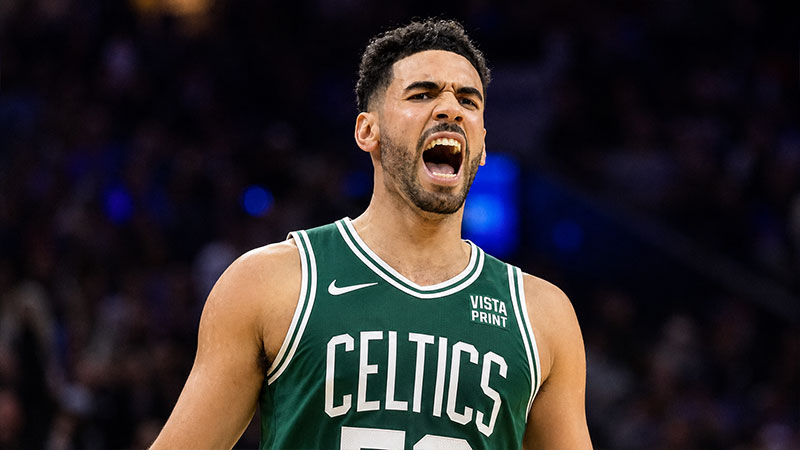
The question of what ethnicity is George Niang often surfaces among basketball fans who recognize his unique last name and his presence as a versatile forward in the NBA.
Known for his high basketball IQ and consistent perimeter shooting, Niang represents a modern era of athletes whose backgrounds span multiple continents.
Beyond the statistics and game highlights, his identity is a compelling narrative of dual heritage, blending West African roots with an American upbringing.
Understanding his background offers a deeper appreciation for his journey from Massachusetts to the professional stage, where he remains a proud representative of his diverse family history.
Understanding What Ethnicity is George Niang
To accurately define the ethnicity of George Niang, one must look at the union of two distinct cultures that shaped his life and perspective. He is a biracial individual who navigates the world as both an American and a person of direct African descent.
This dual identity is not merely a label but a foundational element of his character, influencing everything from his personal values to his professional aspirations on the global stage.
The Biracial Background of an NBA Standout
Georges Niang is biracial, born to a Senegalese father and a White American mother. This intersection of African and Caucasian heritage is a central theme of his identity.
In professional sports, where players often serve as role models for diverse communities, Niang’s background resonates with fans who share similar multicultural experiences.
His ability to embrace both sides of his lineage has allowed him to move fluidly between different cultural spaces, making him a unique figure in the league’s locker rooms and a bridge between fans in the United States and those in West Africa.
The Influence of His Father, Sidy Niang
The West African component of Niang’s heritage comes from his father, Sidy Niang. Sidy was born and raised in Senegal, a country known for its deep history, rich traditions, and growing influence in the world of basketball.
By having a father who grew up in Senegal, Georges was introduced to Senegalese culture, values, and a sense of connection to the African continent from a young age.
This connection provides him with a global perspective that many players born and raised exclusively in the U.S. might not possess, grounding his NBA success in a heritage that spans thousands of miles.
The Role of His Mother, Alison Niang
While his father provided a link to Senegal, his mother, Alison Niang, represents his American roots. Alison is a White American woman from Massachusetts.
Her influence ensured that Georges was deeply rooted in the American experience, particularly the culture of New England where he spent his formative years.
The balance between Alison’s American background and Sidy’s Senegalese upbringing created a household where two worlds coexisted, providing Georges with the tools to navigate a career in the high-pressure environment of American professional sports while maintaining a strong sense of his global identity.
The Significance of Dual Citizenship and Cultural Identity
For George Niang, heritage is not just about ancestry; it is also reflected in his legal and cultural standing. He holds dual citizenship with both the United States and Senegal. This status is more than a formality; it is a testament to his commitment to both nations.
Being a citizen of two countries allows him to move beyond the “American-only” narrative often associated with NBA players and positions him as a truly international figure in the sport.
A Massachusetts Native with Global Reach
Georges was born and raised in Massachusetts. Growing up in the United States, he was immersed in the American basketball system, from high school competition to his standout college career at Iowa State.
However, his upbringing was always framed by the dual nature of his household. While he is a product of American scouting and coaching, his identity remained tethered to his father’s homeland.
This upbringing in Massachusetts provided him with the elite training necessary for the NBA, while his home life ensured he never lost sight of his West African lineage.
Deep Pride in West African Roots
Throughout his career, Niang has frequently expressed deep pride in his West African roots. This is not a passive acknowledgment but an active part of his public persona.
In an era where many athletes are exploring their ancestry and seeking to make an impact in their ancestral homelands, Niang stands out as someone who has consistently prioritized this connection.
His pride is reflected in his interactions with fans and his vocal support for African basketball, signaling to the world that his Senegalese heritage is a vital part of who he is as a man and an athlete.
International Basketball and the Senegal National Team
One of the most significant ways an athlete can honor their heritage is by representing their country on the international stage. For Niang, this means looking toward Senegal.
His interest in playing for the “Lions of Teranga” (the nickname for the Senegalese national team) highlights the depth of his connection to his father’s country and his desire to contribute to the growth of the game in Africa.
Aspirations for the Senegal National Team
Niang has expressed a clear interest in representing the Senegal national basketball team internationally. This move would be a major milestone for both the player and the country.
For Senegal, having an established NBA veteran like Niang would provide a massive boost in talent, leadership, and international visibility.
For Niang, wearing the Senegal jersey would be the ultimate tribute to his father, Sidy, and a way to formalize his bond with the Senegalese people.
It would also allow him to compete in major FIBA tournaments, potentially including the World Cup or the Olympics, under the Senegalese flag.
Impact on the Growth of Basketball in Africa
The potential for Niang to play for Senegal goes beyond personal pride; it has the power to inspire the next generation of African athletes.
When NBA players of African descent return to play for their national teams, it raises the profile of the sport across the continent.
- Increased Visibility: An NBA presence draws more eyes to African basketball tournaments.
- Skill Transfer: Veterans like Niang bring elite training and tactical knowledge to the national roster.
- Youth Inspiration: Seeing a biracial NBA player embrace his African roots encourages young players in Dakar and beyond to pursue the sport at the highest level.
Beyond the Court: A Global Representative
George Niang’s story is part of a larger trend of NBA players embracing their global identities. In today’s league, being “international” is no longer a rarity but a standard.
Niang’s biracial background and dual citizenship place him at the forefront of this movement. He serves as a representative for those who do not fit into a single box, showing that one can be fully American and fully Senegalese at the same time.
The “Minivan” and the Global Brand
Nicknamed “The Minivan” for his reliable and steady play, Niang has built a brand that is as relatable as it is professional. This reliability on the court is mirrored by his steady commitment to his family and his roots.
In the NBA, branding is often about more than just the game; it is about the story.
Niang’s story—a biracial kid from Massachusetts who conquered the Big 12 at Iowa State and became an NBA mainstay while holding onto his African heritage—is a powerful one for global brands looking for authentic, multi-dimensional representatives.
Community Impact and Representation
The importance of representation cannot be overstated. For a young biracial child in a suburb of Boston or a teenager playing on a concrete court in Senegal, George Niang is a visible reminder that their heritage is a strength.
By being open about his parental background and his dual citizenship, Niang provides a roadmap for how to honor one’s family history while achieving success in a highly competitive field.
Summary of George Niang’s Heritage
| Category | Details |
|---|---|
| Ethnicity | Biracial (Senegalese and White American) |
| Father | Sidy Niang (Born/Raised in Senegal) |
| Mother | Alison Niang (White American from Massachusetts) |
| Citizenship | Dual (United States and Senegal) |
| Birthplace | Massachusetts, USA |
Frequently Asked Questions About George Niang’s Ethnicity
Is George Niang from Senegal?
While George was born and raised in Massachusetts, his father, Sidy Niang, is from Senegal. This gives George a direct cultural and ancestral link to the country, and he holds Senegalese citizenship alongside his American citizenship.
What is the background of George Niang’s parents?
His father, Sidy Niang, was born and raised in West Africa (Senegal). His mother, Alison Niang, is a White American woman from Massachusetts. This makes Georges biracial.
Does George Niang play for the Senegal National Team?
He has expressed a strong interest in representing Senegal internationally, though his professional schedule and various eligibility factors are always considerations.
He takes great pride in his West African roots and views international play as a way to honor that heritage.
What is George Niang’s nationality?
He holds dual nationality. He is a citizen of both the United States and Senegal.
Conclusion: A Legacy of Two Continents
George Niang is a testament to the power of dual heritage in the modern world. By successfully navigating his identity as a biracial man with deep roots in both Massachusetts and Senegal, he has created a legacy that transcends basketball.
Whether he is hitting a crucial three-pointer in an NBA game or planning his future with the Senegal national team, he carries the stories of Sidy and Alison Niang with him.
His journey answers the question of what ethnicity is George Niang with a rich, multi-layered story of family, pride, and global connection.
As the NBA continues to expand its reach and more players embrace their international backgrounds, Niang will remain a key figure in the narrative of the league’s cultural evolution.
His pride in his West African roots and his American upbringing shows that identity is not about choosing one world over another, but about successfully living in both.