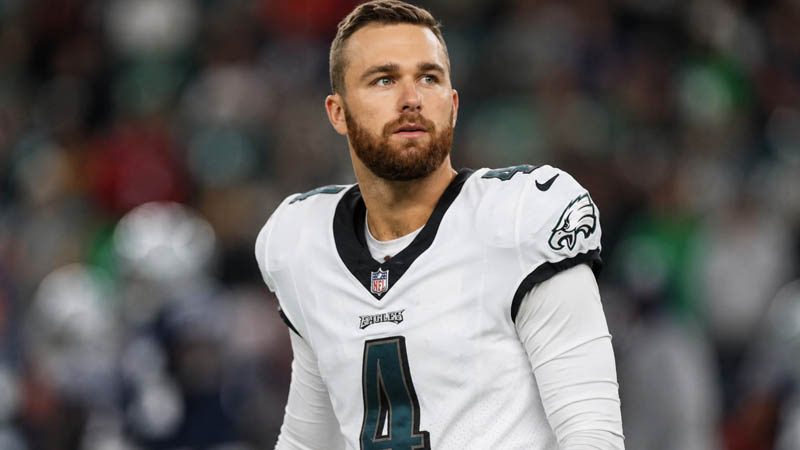
Why was Jake Elliott on concussion protocol during his 2017 rookie season with the Philadelphia Eagles? The reliable kicker suffered a head injury on November 19, 2017, during a highly anticipated Sunday Night Football game against the Dallas Cowboys.
Elliott sustained the injury on the opening kickoff when he lowered his helmet to execute a touchdown-saving tackle. After initially staying on the field, he missed a short field goal, prompting team physicians to evaluate and remove him.
This injury forced the Eagles into an emergency kicking situation, reshaping their entire offensive game plan for the rest of that night.
Why Was Jake Elliott on Concussion Protocol After the Opening Play?
The sudden loss of a specialist can completely disrupt an NFL team’s game strategy. Understanding the specific kickoff collision that triggered this medical emergency requires analyzing a high-speed collision on special teams.
The Ryan Switzer Kickoff Tackle
During the opening kickoff of the Sunday Night Football game, Dallas returner Ryan Switzer broke loose for a massive 61-yard return.
As the last line of defense, the 5-foot-9, 167-pound Philadelphia Eagles kicker lowered his body to make a touchdown-saving tackle.
Because of his relatively light frame compared to returning runners, the collision was incredibly violent and resulted in immediate physical trauma.
Helmet-to-Helmet Impact Mechanics
The collision became dangerous when Switzer unexpectedly lowered his frame at the final second, causing Elliott to lower his helmet directly into Switzer’s helmet and shoulder.
This high-velocity impact absorbed by the kicker’s head was the direct catalyst for his subsequent head injury. Because head-first contact is highly regulated in modern sports, this specific hitting mechanic instantly put him at extreme risk.
Missed Spotters and the Diagnosed Head Injury
While medical observers are trained to spot head injuries immediately, this specific game featured a rare breakdown in early detection. This delay allowed the injured player to briefly remain active on the field.
The NFL Concussion Spotter Delay
NFL medical spotters initially missed the high-impact helmet-to-helmet collision on the replay, allowing Elliott to stay on the field for short subsequent kickoffs.
This delay meant the player continued to run and initiate plays before any formal medical evaluation could occur on the sideline. This lapse highlighted real-time monitoring challenges during fast-paced special teams plays.
The Uncharacteristic Missed Field Goal
The definitive warning sign of cognitive impairment occurred later in the first quarter when Elliott was called to kick a routine 34-yard field goal.
He missed the kick completely wide right, a highly uncharacteristic blunder that immediately alerted the Eagles’ medical staff to intervene.
For an elite specialist, missing such a short attempt is an immediate red flag indicating compromised focus.
Sideline Blue Tent and Halftime Removal
Physicians pulled Elliott to the sideline blue tent for a head evaluation before escorting him to a dark locker room.
By halftime, the franchise officially announced that he had sustained a concussion, ruling him out for the remainder of the night.
This swift medical intervention was necessary to prevent further exposure to contact and manage the acute symptoms.
How Did the Eagles Adapt on the Field Without a Kicker?
NFL active gameday rosters do not carry backup kickers, which forced Head Coach Doug Pederson to restructure his entire tactical playbook. The resulting strategy created a memorable night of aggressive decision-making.
Linebacker Kamu Grugier-Hill Steps In
With no backup kicker available, linebacker Kamu Grugier-Hill assumed emergency kicking duties.
Although his first warmup kick missed the sideline net and flew into the stands, he handled kickoffs safely and even managed to force a deep touchback during the game.
His unexpected contribution stabilized the special teams unit during a high-stakes divisional matchup.
Doug Pederson’s Two-Point Conversion Aggression
The Eagles completely abandoned their field-goal unit, refusing to attempt any field goals or extra-point kicks.
Pederson instead opted for two-point conversions after every touchdown, successfully converting three out of four attempts to secure a dominant 37-9 blowout over Dallas.
This aggressive offensive pivot showed how creative leadership can turn a roster crisis into a tactical advantage.
The 5-Step Concussion Return Timeline
To protect player safety, the league mandates a highly organized recovery process. Elliott’s progression through this system shows how modern sports medicine manages head trauma for active athletes.
Symptoms and Limited Practice Re-Entry
After reporting typical head injury symptoms on Monday and Tuesday, Elliott entered the official protocol.
By Wednesday, he returned to the practice field in a limited capacity, confined only to non-contact, individual drills as outlined by the team injury report.
This controlled phase allowed medical staff to monitor his heart rate and cognitive response to light exertion.
Full Practice and Final Medical Clearance
By Thursday, Elliott advanced to a full participant in team practice after remaining entirely symptom-free following his increased physical workload.
On Friday, an independent neurological consultant officially cleared him, allowing him to kick against the Chicago Bears the following Sunday. Navigating this entire safety protocol without missing a game is a testament to careful medical supervision.
What Lessons Did the NFL Learn from Elliott’s Collision?
Specialists rarely practice defensive maneuvers, leaving them highly vulnerable during game-breaking returns. This incident highlighted the critical necessity for technical changes and better safety measures during kickoff coverage.
Adjusting Tackling Form for Specialists
Following his head injury, Elliott publicly reflected on how he would handle open-field coverage in the future.
He stated he would change his tackling approach to get lower and go for the opponent’s legs to protect his own head and neck. This technical adjustment represents a safer way for lighter players to execute high-impact stops.
Spotting Blindspots in Live Game Monitoring
The event exposed a dangerous vulnerability in real-time injury detection when spotters missed the helmet impact on live replay.
Ensuring that specialists receive immediate attention after high-velocity contact remains a major focus area for league medical teams to prevent secondary impacts.
Improved sideline communication is vital to ensure no player continues playing with active symptoms.
The 2017 Eagles vs. Cowboys Game At-A-Glance
When an NFL franchise loses its only kicking specialist mid-game, standard strategies are immediately thrown out.
This structured reference table breaks down the key facts, emergency personnel, and coaching decisions from that memorable November night.
| Key Game Element | Details & Outcomes | Reference |
|---|---|---|
| Game Date | November 19, 2017 (Rookie Season) | |
| Opponent | Dallas Cowboys (Sunday Night Football) | |
| Initial Collision | Opening kickoff tackle on Ryan Switzer | |
| Missed Play | Routine 34-yard field goal (wide right) | |
| Emergency Kicker | Linebacker Kamu Grugier-Hill (Kickoffs) | |
| Offensive Strategy | Abandoned field goals; 2-point conversions | |
| Conversion Success | Converted 3 out of 4 attempts (75% success) | |
| Final Score | Eagles defeated Cowboys 37-9 | |
| Next Game Played | November 26, 2017 vs. Chicago Bears |
Frequently Asked Questions About the 2017 Kicker Injury
Why was Jake Elliott placed in concussion protocol during the 2017 season?
He was placed in the safety protocol after making a head-first tackle on Dallas returner Ryan Switzer during the opening kickoff.
Did Jake Elliott miss any regular season games due to his head injury?
No, he successfully navigated all five recovery stages within a single week and was cleared to kick the very next Sunday against the Chicago Bears.
Who replaced Elliott for kickoffs during the Eagles-Cowboys matchup?
Linebacker Kamu Grugier-Hill took over emergency kickoff duties, while the coaching staff entirely abandoned the field goal unit for the rest of the night.
What was the coaching strategy after the kicker’s removal?
Coach Doug Pederson decided to go for two-point conversions after every touchdown, converting three out of four attempts in a dominant victory.
Strategic Takeaways on NFL Roster Management and Safety
The 2017 game remains an exceptional case study in roster management, coaching adaptability, and league safety compliance.
When a primary specialist is sidelined, coaches must think dynamically under pressure, turning potential disaster into aggressive triumph.
For professional teams, this event highlighted the critical need for emergency planning on the active sideline.