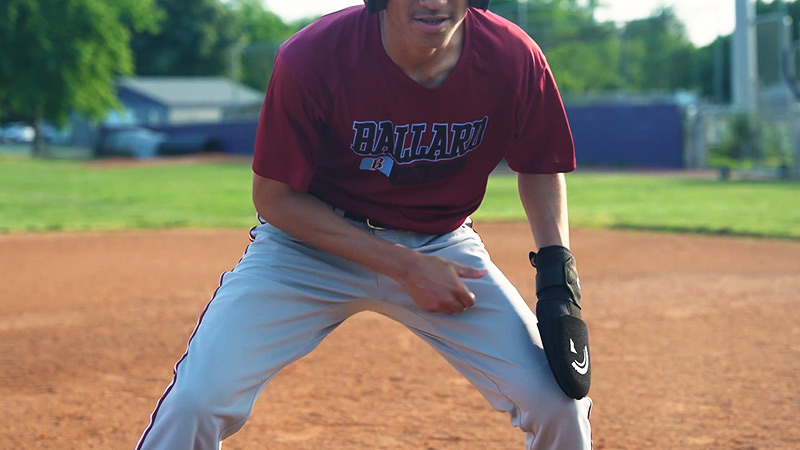
Wear your sliding mitt on the hand that reaches the base first when you slide headfirst. That lead hand takes the most impact from the bag, the dirt, and a fielder’s cleats or tag, so it needs the protection.
For many players, the smartest setup is to lead with the non-throwing (glove) hand and wear the mitt on it. That way the throwing hand stays tucked and out of harm’s way.
There is no universal rule, though. Your natural sliding style, your position, and how often you dive back into bases should all shape the decision.
What Is a Sliding Mitt and Why Do Players Wear One?
A sliding mitt is a padded protective glove worn by baserunners. Unlike a batting glove, it encloses the fingers together in a mitten-style shell, usually reinforced with a firm or semi-rigid insert and secured at the wrist with a hook-and-loop strap.
That design addresses the specific ways hands get hurt on headfirst slides. Fingers can jam into the base or catch in the dirt and bend backward. The thumb can be forced away from the hand and strain its ligaments.
Fielders covering a base can step on or spike an outstretched hand by accident. And the wrist absorbs the force when a player’s momentum stops suddenly against the bag.
By keeping the fingers grouped and supported, a sliding mitt prevents any single finger from being bent back on its own, spreads impact across a padded surface, and adds a barrier against cleats.
High-level players have lost significant time to hand and thumb injuries from headfirst slides, which is a big reason the mitt has become standard equipment from youth travel teams to the pro ranks.
How to Decide Which Hand Gets the Mitt
Start With Your Lead Hand
Watch yourself (or ask a teammate to film you) during a few practice headfirst slides. Most players have a natural tendency to reach with one hand slightly ahead of the other. That hand makes first contact with the base and absorbs the most force.
Whatever your instinct is, that’s the hand that should wear the mitt. Fighting your natural movement on a close play at second base is a recipe for a bad slide, so build your equipment around your mechanics, not the other way around.
Factor In Your Throwing Hand
Your throwing hand is your most valuable asset on defense. A jammed finger on your glove hand is an inconvenience, but the same injury on your throwing hand can affect your accuracy, velocity, and grip for weeks.
That’s why many coaches teach players to lead headfirst slides with the glove hand and keep the throwing hand pulled in. If you’re a right-handed thrower, that means leading with your left hand and wearing the mitt on your left. If you throw left-handed, you’d lead with and protect your right.
If you already lead with your throwing hand and can’t easily change, wear the mitt on your throwing hand. Protecting the hand that actually hits the base always comes first.
Think About Dive-Backs to First Base
Advancing to second or third isn’t the only time you go headfirst. When a pitcher throws over to first, runners often dive back, reaching for the back corner of the bag, away from the first baseman’s tag.
Pay attention to which hand does that reaching in practice. If it’s the same as your advancing lead hand, one mitt covers both situations. If it’s different, you have two options: train yourself to use the mitted hand for both, or wear a mitt on each hand.
When to Wear Two Mitts
Aggressive base stealers, leadoff hitters, and players who take big leads often wear a mitt on each hand. It removes the guesswork entirely and covers you no matter how a play unfolds. Two mitts can feel bulky at first, so take a few practice slides before using them in a game.
Quick Reference: Which Hand Should You Choose?
| Player profile | Recommended mitt hand | Reason |
|---|---|---|
| Right-handed thrower who leads with the left hand | Left | Protects the lead hand and keeps the throwing hand safe |
| Left-handed thrower who leads with the right hand | Right | Same logic, mirrored |
| Player who naturally leads with the throwing hand | Throwing hand | The mitt belongs where contact happens |
| Frequent base stealer or regular dive-backs | Both hands | Contact can come from either direction |
| Unsure of natural lead hand | Decide after practice slides | Let your mechanics choose for you |
Left-Hand vs. Right-Hand Labels: Avoid a Common Buying Mistake
Here’s where many parents and players get tripped up. Fielding gloves are labeled by the throwing hand, so a “right-hand throw” glove is worn on the left hand.
Sliding mitts usually follow the opposite convention: they’re labeled by the hand they’re worn on. A “left-hand” sliding mitt goes on the left hand.
Because labeling isn’t perfectly consistent across manufacturers, always read the product details carefully before buying.
Some mitts are designed to fit either hand, which is a convenient option for younger players who haven’t settled on a lead hand yet or for teams that share equipment.
How to Put On and Carry Your Sliding Mitt
Most players carry the mitt in their back pocket while batting. Once you reach base, call time if needed, hand your batting gloves to the base coach (or keep them on underneath if the fit allows), and slide the mitt on.
Seat your fingers fully into the end of the mitt so there’s no empty space at the tips. Tighten the wrist strap until the mitt doesn’t twist or shift when you shake your hand, but not so tight that it restricts circulation. If your mitt has a thumb loop or thumb pocket, make sure your thumb is fully inside.
When you score or return to the dugout, take the mitt off and put it back in your pocket so it’s ready for your next time on base.
Sizing and Fit: Getting It Right
A sliding mitt that’s too big can slip on contact, which defeats its purpose. One that’s too small will feel cramped and may leave your fingertips exposed. Mitts generally come in youth and adult sizes, with some brands offering more detailed sizing.
A good fit means your fingertips reach the end of the mitt, the strap closes securely with room to adjust, and the mitt stays in place when you make a fist-like motion or press your hand flat against the ground. Growing players should be re-fitted each season, as a mitt that fit perfectly in spring can be too small by the following year.
How to Practice Headfirst Slides Safely
A sliding mitt protects your hand, but technique protects everything else. Before relying on headfirst slides in games, practice them in a controlled setting.
Start on soft, wet grass or a sliding mat, beginning from your knees and progressing to a walk, then a jog, then full speed.
Focus on these fundamentals: lower your body early and gradually rather than leaping at the bag; land on your chest and thighs, not your knees or elbows; keep your arms extended with your hands slightly raised so they glide rather than dig in; keep your chin up and eyes on the base; and lead with your mitted hand on every rep so it becomes automatic.
Practicing with the mitt on also helps you get comfortable with how it feels, so there’s no awkward adjustment during a real game.
Rules and Safety Considerations
Sliding mitts are common in amateur and professional baseball and softball, and they’re generally permitted, but equipment rules vary by league.
Some youth organizations restrict or prohibit headfirst slides while advancing at younger age levels, which makes a sliding mitt less useful there. Always check your league’s rulebook before game day.
Keep in mind that a mitt reduces risk but doesn’t eliminate it. Batting helmets, proper technique, and good judgment about when to slide headfirst all matter. If you experience persistent pain, swelling, or numbness after a slide, stop playing and see a qualified medical professional.
Common Mistakes to Avoid
The most frequent error is wearing the mitt on the hand that doesn’t lead the slide, leaving the exposed hand to take the hit. Close behind is buying the wrong mitt because of the fielding-glove labeling confusion.
Other common problems include leaving the strap loose so the mitt slides off on impact, switching lead hands mid-season without practicing, and treating the mitt as permission to slide recklessly. The mitt works best as part of good baserunning, not a substitute for it.
Conclusion
So, what hand do you wear a sliding mitt on? The best answer is the hand that reaches the base first on your headfirst slides.
For many players, that means leading with the glove hand and keeping the throwing hand tucked away from cleats and tags, though no single rule fits everyone.
Match the mitt to your natural slide, confirm the label before you buy, secure the strap, and practice until reaching with that hand feels automatic.