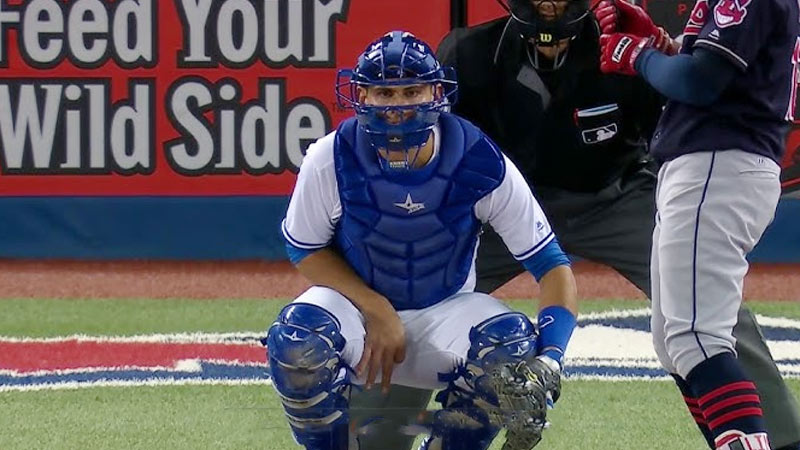
Watch a close-up of a catcher during a broadcast and you might spot something unexpected: painted fingernails.
Sometimes the polish is white. Sometimes it is neon yellow, bright pink, or a team color. For a position known for dirt, bruises, and foul tips, it can look out of place.
So, why do catchers wear nail polish? The answer has nothing to do with fashion. Catchers paint their nails so the pitcher can read the signs more easily.
Below, we break down how catcher signs work, why they can be hard to see, which colors work best, and whether electronic devices have made the trick a thing of the past.
The Short Answer: Painted Nails Make Signs Easier to See
Before nearly every pitch, the catcher crouches, tucks the throwing hand between the thighs, and flashes a set of fingers.
The pitcher reads those fingers from 60 feet, 6 inches away. That is a long distance to count fingers that sit in the shadow of the catcher’s body.
Nail polish adds contrast. A bright fingertip stands out against dark pants, the mitt, and the shade between the catcher’s legs. When the pitcher can see each finger clearly, there is less chance of a mix-up and less time wasted asking for the sign again.
How Catcher Signs Work
Signs are the private language between the pitcher and catcher. The most common basic system looks like this:
- One finger: fastball
- Two fingers: curveball
- Three fingers: slider
- Four fingers or wiggling fingers: changeup
Location is often added with a second gesture, such as tapping the inside or outside of the thigh. Catchers may also call pickoff throws and pitchouts with their hands. If you want to see how that part of the game works, read our guide on what a pickoff is in baseball.
Things get more complex with a runner on second base. That runner has a clear view of the catcher’s hand and can relay signs to the batter.
To prevent that, catchers switch to sequences, such as “the second sign after two fingers.” More signs per pitch means more chances to misread one, which is exactly why clear visibility matters.
The catcher also has to hide the signs from the base coaches while keeping them visible to the pitcher. That is why the hand sits deep between the thighs, where light is poor. How a catcher sets up affects that balance, and we explain one common setup in why catchers put one leg out.
Why Seeing the Signs Is Harder Than It Looks
From the stands, it seems easy to see a few fingers. From the mound, several factors work against the pitcher.
Distance and Focus
At 60 feet, 6 inches, a finger is a small target. The pitcher is also thinking about the batter, the count, the runners, and the grip. A quick, clear sign helps the pitcher stay focused on execution instead of squinting toward home plate.
Shadows and Dark Uniforms
The catcher’s hand sits low, close to the body, and often in shade. Many teams wear navy, black, or gray pants, especially on the road. Skin against dark fabric in shadow can blend together. White or neon polish cuts through that.
Night Games and Changing Light
Stadium lights create glare and uneven shadows. Late-afternoon games can be even tougher, when the shadow line falls right across home plate. A sign that was easy to read in the first inning can be hard to see by the sixth.
The Pitcher’s Eyesight
Not every pitcher has perfect vision. Some wear contacts or glasses, and many deal with sun and glare on the mound. Gear rules also limit what pitchers can wear, which we cover in can a pitcher wear sunglasses while pitching. Painted nails put the fix on the catcher’s side instead.
What Happens When a Sign Gets Missed
A missed sign is called a “cross-up.” The catcher sets up for a fastball, and a sharp breaking pitch arrives instead. The result can be a passed ball or a wild pitch, letting runners advance or even score.
Cross-ups also hurt. A catcher who is not ready for a pitch that dives into the dirt can take it off the shin, the arm, or the mask.
A pitch with heavy late break, like the one described in why a slider is so hard to hit, is just as hard to catch when the catcher is expecting something else.
The position already takes a toll on the body, as we discuss in is catching bad for your knees. Anything that prevents extra hits is worth doing.
Best Nail Polish Colors for Catchers
The right color depends on the uniform, the field, and the pitcher’s preference. Here are the most common choices:
- White: The classic option. It contrasts well with dark pants and is easy to see in daylight.
- Neon yellow or green: Popular for night games because fluorescent shades stand out under lights.
- Bright pink or orange: Strong contrast with most uniform colors and easy to spot from the mound.
- Team colors: Some catchers match their team, as long as the color does not blend into their own pants.
A good rule is to pick the color that contrasts most with your uniform pants. White polish may not pop against light gray pants, while neon yellow will. The best test is simple: have someone flash signs from home plate while you stand on the mound in game conditions.
You might wonder if this is legal. Baseball does have color rules, but they mostly target pitchers. Pitchers cannot wear certain distracting gear, as explained in why pitchers can’t wear white sleeves, and some glove colors are restricted, which we cover in what color baseball gloves are illegal. There is no rule against a catcher wearing nail polish, and you will see it at every level of the game.
How Catchers Apply and Maintain It
Catching is rough on a manicure. Dirt, sweat, and constant gripping of the ball cause chips quickly. Catchers who use polish usually follow a simple routine:
- Clean and dry the nails so the polish sticks.
- Apply a base coat to help it last.
- Add two thin coats of color, letting each one dry.
- Finish with a clear top coat for chip resistance.
- Touch up before each series or whenever chips show.
Only the throwing hand needs it, since that is the hand used for signs. The glove hand stays inside the mitt. Many catchers keep a small bottle and some remover in their equipment bag.
Other Ways Catchers Make Signs Visible
Nail polish is not the only option. Some catchers wrap white athletic tape around their fingertips. Others use correction fluid, small reflective stickers, or bright finger sleeves.
At the high school and college levels, teams often use wristband cards, where the catcher or coach calls a number and the pitcher checks a chart on the wrist.
Each method has trade-offs. Tape can affect the grip on throws, and stickers can fall off. Polish is light, cheap, and does not change how the catcher handles the ball, which is why it stays popular.
Has PitchCom Made Nail Polish Unnecessary?
In 2022, Major League Baseball approved PitchCom, an electronic system that lets the catcher press a button on a wrist device to call a pitch. The pitcher hears the call through a small receiver in the cap.
The system makes sign stealing much harder, which became a major issue after the scandal covered in our Houston Astros cheating article.
Still, nail polish has not disappeared. Many youth, high school, college, and softball games rely on traditional hand signs. Even in professional baseball, catchers keep finger signs ready as a backup in case a device fails. As long as hand signs exist, painted nails will remain a smart tool.
Style, Team Spirit, and Routine
While the main reason is practical, some catchers enjoy the look. Polish can show team spirit, mark special games, or become part of a pregame routine.
Baseball players are known for their habits, and for some catchers, painting their nails before a series is as normal as taping a bat.
Final Thoughts
Catchers wear nail polish because it solves a real problem. It makes signs easier to see across 60 feet, 6 inches, through shadows, glare, and stadium lights.
Fewer missed signs mean fewer cross-ups, fewer passed balls, and less punishment for the catcher.
The next time you see painted nails behind the plate, you will know it is part of the job.
For more on the most demanding position on the field, read our guide on whether the catcher can cover home plate, or browse more baseball articles on Metro League.