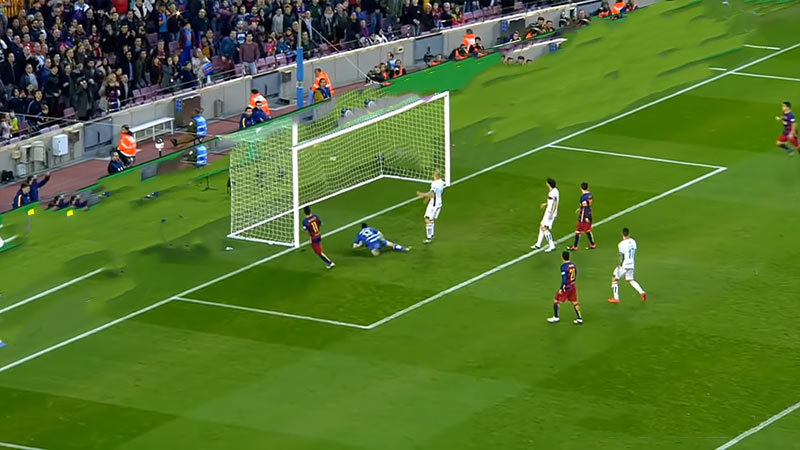
Understanding soccer’s nuances often begins with its most polarizing regulation: the offside rule. For casual viewers, the sudden whistle and raised flag of an assistant referee can feel like a disruption to the game’s flow.
However, the offside rule is the strategic heartbeat of soccer, preventing unfair advantages and shaping how teams defend and attack. By mastering this law, you move from being a spectator to a student of the game.
This guide breaks down the technical mechanics, the specific exceptions, and the tactical impact of what it truly means to be caught offside.
Decoding the Technical Offside Position
The first step in mastering this rule is distinguishing between being in an “offside position” and committing an “offside offense.” Simply standing in an offside spot is not a violation of the rules; it only becomes a foul when that player becomes active in the play.
To understand the foundation of the rule, we must look at where a player stands relative to the ball and the defenders the moment a teammate plays the ball.
The Second-to-Last Defender Rule
The most common way to describe an offside position is when an attacking player is closer to the opponent’s goal line than the second-to-last defender.
In a standard scenario, the goalkeeper is the “last” defender, meaning the offside line is typically set by the last outfield player (the “second-to-last” opponent).
If you are past that final outfield defender and the ball hasn’t been played to you yet, you are technically in an offside position.
The Geography of the Pitch
A player cannot be offside if they are still within their own half of the field. The rule only takes effect once an attacker crosses the halfway line into the opponent’s territory.
Additionally, to be in an offside position, the attacker must be closer to the goal line than both the ball and the second-to-last opponent.
This means if the ball is closer to the goal line than the attacking player is, that player is “behind the ball” and cannot be offside.
Legal Body Parts and the Offside Line
When referees determine the offside line, they only consider parts of the body that can legally play the ball. This includes the head, torso, and feet.
If a player’s hand or arm is technically past the defender, they are not offside because hands and arms cannot be used to score or control the ball in soccer.
The line is fixed at the exact instant the ball is kicked or touched by a teammate, not when the attacking player eventually receives the pass.
When Position Becomes an Offside Offense
As established, being in an offside position is not a foul by itself. The referee will only blow the whistle if the player in that position becomes actively involved in the play. This is a crucial distinction that often leads to debate during high-stakes matches.
Active Involvement in Play
Active involvement occurs when a player in an offside position touches the ball after it has been passed or touched by a teammate. However, you don’t always have to touch the ball to be penalized.
If a player interferes with an opponent—such as by blocking a defender’s line of sight or preventing them from playing the ball—the official can still signal for an offside offense.
Gaining an Unfair Advantage
Another form of active involvement is “gaining an advantage”. This happens when a player starts in an offside position and then plays a ball that has rebounded off the goalpost, the crossbar, or a match official.
Even if the original pass wasn’t intended for them, their initial illegal position allowed them to reach the rebound first, which constitutes an offense. To stay safe and avoid the whistle, players are encouraged to remain in front of the last defender whenever possible.
Crucial Exceptions to the Offside Rule
To ensure the game remains fluid, there are several “safe zones” or specific restarts where the offside rule is temporarily suspended. These exceptions are vital for tactical set-pieces and quick transitions.
Restarts Where Offside Does Not Apply
There are three primary restarts where a player can receive the ball directly without fear of being called offside:
- The Throw-In: Because the ball is played from the side of the field, the offside rules are essentially reset.
- The Corner Kick: Since the ball is placed on the corner of the goal line, any teammate receiving it is technically “behind the ball” relative to the goal line.
- The Goal Kick: An attacker can stand as deep as they want during a goal kick; if the ball reaches them directly from the kick, no offside is called.
Defensive Possession and Ball Control
If the defending team has clear possession and control of the ball, an attacking player cannot be called offside. The rule is designed to penalize an unfair advantage during an attacking move, not to punish a player for where they happen to be standing while the other team has the ball.
Summary of Offside Conditions
| Feature | Offside Possible? | Reason/Condition |
|---|---|---|
| Own Half | No | Rules only apply in the opponent’s half. |
| Behind the Ball | No | You are always “on-side” if the ball is closer to the goal than you. |
| Throw-In | No | Specific restart exception. |
| Corner Kick | No | Specific restart exception. |
| Goal Kick | No | Specific restart exception. |
| Touching the Ball | Yes | This constitutes active involvement. |
The Consequences of an Offside Call
When a referee or an assistant referee (linesperson) identifies an offside offense, they will signal for a stoppage in play. This is usually done by the assistant referee raising a flag to alert the center referee.
The Indirect Free Kick
The standard penalty for an offside offense is an indirect free kick awarded to the defending team. This kick is taken from the exact spot where the infraction occurred.
Unlike a direct free kick, where a player can shoot and score immediately, an indirect free kick requires the ball to be passed to a teammate before a goal can be legally scored.
The Role of the Assistant Referee
Enforcing this rule is one of the most difficult jobs in sports officiating. Assistant referees must maintain a perfect line of sight with the second-to-last defender while simultaneously watching the moment the ball is kicked by the midfielder.
This requires incredible focus and speed, as even a few inches of displacement can lead to an incorrect call.
Expert Insight: The Tactical Impact of the Offside Rule
The offside rule isn’t just a restriction; it’s a tool used by coaches to control the space on the pitch. By understanding how the rule works, teams can implement sophisticated strategies like the “Offside Trap.”
The Offside Trap Explained
An offside trap is a defensive maneuver where the entire backline moves forward in unison just before an opponent makes a pass. By stepping up, the defenders leave the attacking forwards in an offside position.
If timed correctly, the attacker is caught “behind the lines” the moment the ball is played, resulting in a turnover. This is a high-risk, high-reward strategy; if one defender fails to move up in time, the attacker is left with a clear run at the goal.
The Impact of VAR and Semi-Automated Technology
In the modern professional era, the Video Assistant Referee (VAR) has transformed how offside is governed. Since the rule is objective—you are either past the line or you aren’t—technology can now draw “calibrated lines” on a screen to check for offside offenses during goal-scoring plays.
This has led to “pixel-thin” calls where a player’s toe or shoulder might be deemed offside. More recently, semi-automated offside technology uses limb-tracking cameras and sensors inside the ball to provide near-instantaneous decisions, reducing the margin for human error that often plagues traditional officiating.
Frequently Asked Questions
Can you be offside if there are two defenders behind the goalkeeper?
Yes. The rule states you must be behind the second-to-last opponent. Usually, the goalkeeper is the last opponent, but if the goalkeeper wanders out of the box, you must have at least two defenders between you and the goal line to be on-side.
Does the offside rule apply to women’s and youth soccer?
Absolutely. The Laws of the Game, governed by IFAB, are standardized across almost all levels of competitive soccer globally, from youth leagues to the professional ranks.
What happens if the ball is deflected by a defender?
This is one of the most debated areas of the rule. If a defender makes a “deliberate play” on the ball (like an intentional pass or clearance) and it goes to an offside attacker, the attacker is often considered on-side.
However, if the ball simply deflects off a defender without them having control, the attacker remains offside.
Why is the kick “indirect”?
The indirect free kick serves as a minor penalty. Since offside is a technical violation of the rules rather than a physical foul (like tripping or pushing), the game requires a pass to restart play rather than a direct shot on goal.
Can a player be offside on their own half?
No. You are completely safe from offside calls as long as you are on your own side of the center line. This allows for long-ball strategies where attackers wait right at the halfway line to sprint into the opponent’s half.
Conclusion: Leveling Up Your Soccer Knowledge
The offside rule is often the final hurdle for fans looking to truly understand the tactical depth of soccer. It prevents “goal-hanging” and forces teams to use skill, timing, and coordination to break down a defense.
By learning to spot the second-to-last defender and recognizing the moment of contact, you can appreciate the game at a much higher level.
Next time you watch a match, keep an eye on the assistant referee’s flag and see if you can anticipate the call before the whistle blows.
Whether you are a new fan or a seasoned player, mastering the offside rule is essential for any true student of the world’s most popular sport.