Formula 1 is popular because it blends three things few sports offer at once: extreme speed, real human drama and a strategy game played at 300 km/h.
Add a global race calendar, smart digital storytelling and a Hollywood blockbuster, and you get a sport growing faster than almost any other.
The numbers back it up. Formula 1’s 2025 season review counts 827 million fans worldwide, a 12% rise in a single year and 63% more than in 2018. Nielsen Sports reported a cumulative global TV audience of 1.83 billion for 2025, the largest in five years.
Whether you are a curious newcomer, a returning fan or a business leader wondering why global brands are lining up to join the paddock, this guide breaks down what drives F1’s appeal. It also explains why that appeal looks built to last.
Formula 1 at a glance (2025 season)
| Measure | Figure |
|---|---|
| Global fanbase | 827 million |
| Fans under 35 | 43% (up from 30% in 2018) |
| Female fans | 42% (up from 37% in 2018) |
| Average weekend TV audience | About 70 million |
| Total race attendance | 6.7 million across 24 events |
| Sold-out race weekends | 19 of 24 |
Figures from Formula 1’s official 2025 season review.
1. Speed and Engineering: The Pinnacle of Motorsport
At its core, Formula 1 sells something primal: the thrill of watching the fastest racing cars on the planet.
Top speeds can exceed 350 km/h, and drivers endure cornering forces of up to five or six times their body weight. Lap after lap, they brake later and turn harder than seems physically possible.
Speed alone does not explain the obsession, though. F1 is also the world’s most visible engineering competition. Every team designs and builds its own car, so each season becomes a contest of ideas as much as a contest of drivers.
Aerodynamics, tyre management, hybrid power units and real-time data analysis all shape who wins on Sunday. That technical depth gives fans endless layers to explore.
A casual viewer can enjoy a close fight for the lead, while a dedicated fan can debate floor designs, energy deployment and why one car shines on street circuits but struggles at Monza.
The technology matters beyond the track too. Advances in hybrid efficiency, lightweight materials and safety, such as the halo cockpit protection introduced in 2018, have influenced road cars and wider industry.
Fans are not just watching a race. They are watching the future of mobility tested in public, at full speed.
2. Drama, Rivalries and Larger-Than-Life Personalities
Great sport is built on great stories, and Formula 1 has supplied them for 75 years. Senna versus Prost. Schumacher’s era of dominance.
Hamilton and Verstappen’s 2021 title fight, settled on the final lap of the final race. These rivalries turned drivers into global icons.
The 2025 season proved the formula still works. Lando Norris won his first world title at the Abu Dhabi finale after a three-way battle with McLaren team-mate Oscar Piastri and Red Bull’s Max Verstappen. That last-race tension drew a record 203,000 spectators to Yas Marina, according to the event’s organisers.
F1 drivers are also unusually relatable for elite athletes. Many are young, outspoken and active on social media between races.
Lewis Hamilton’s move to Ferrari in 2025 became headline news far beyond motorsport, proving how a single driver’s choice can capture mainstream attention.
Crucially, F1 drama works on several levels at once. There is the fight between teams, the fight between team-mates in identical cars and the constant fight against the clock.
A driver can lose the race yet still win the story, which keeps fans invested even when one team dominates.
3. Drive to Survive, Streaming and Social Media
For decades, Formula 1 felt like a sport for insiders. That changed after Liberty Media bought the championship in 2017 and opened its doors to digital audiences. The turning point came in 2019, when Netflix launched Formula 1: Drive to Survive.
The series showed the sport’s human side: team bosses under pressure, drivers fighting for their seats and the politics of the paddock. It turned the faces behind the visors into characters viewers genuinely cared about. Many new fans, especially in the United States, trace their interest back to a single binge-watching weekend.
Liberty Media built on that momentum with a modern content strategy. According to its 2025 season review, Formula 1 has been the fastest-growing global sports league on social media for five years in a row, with more than 2.3 billion engagements last season.
Highlights, short-form clips and behind-the-scenes videos keep fans engaged between race weekends.
The results show clearly in the United States, once a tough market for F1. American TV audiences averaged a record 1.32 million viewers per race in 2025. Streaming services such as F1 TV add onboard cameras, team radio and live timing for fans who want every detail.
4. Hollywood and the Pop Culture Crossover
In 2025, Formula 1 crossed fully into mainstream entertainment. F1: The Movie, starring Brad Pitt with seven-time champion Lewis Hamilton among its producers, was filmed at real Grands Prix during the 2024 season.
It earned more than $546 million worldwide, becoming the highest-grossing film of Pitt’s career and Apple’s most successful theatrical release.
The film introduced the sport to people who had never watched a race. It explained slipstreams, pit strategy and team dynamics in a way that felt accessible and cinematic. Plenty of viewers left the cinema and tuned in to the very next Grand Prix.
Pop culture now runs right through the paddock. Musicians perform at race weekends, fashion houses design team kits and celebrities crowd the grid before the start. The 2025 Abu Dhabi weekend, for example, paired the title decider with after-race concerts that drew a record 136,000 fans.
This crossover matters because it lowers the barrier to entry. You no longer need to understand tyre compounds to feel part of the F1 conversation. Culture brings people in, and the racing keeps them there.
5. A Global Calendar Packed with Iconic Venues
Few sports travel like Formula 1. The season spans 24 races across five continents, from Melbourne and Shanghai to Montreal, São Paulo and Abu Dhabi. Every couple of weeks brings a new city, a new time zone and a new atmosphere.
That variety offers something for everyone. Monaco delivers glamour and history on tight harbour streets.
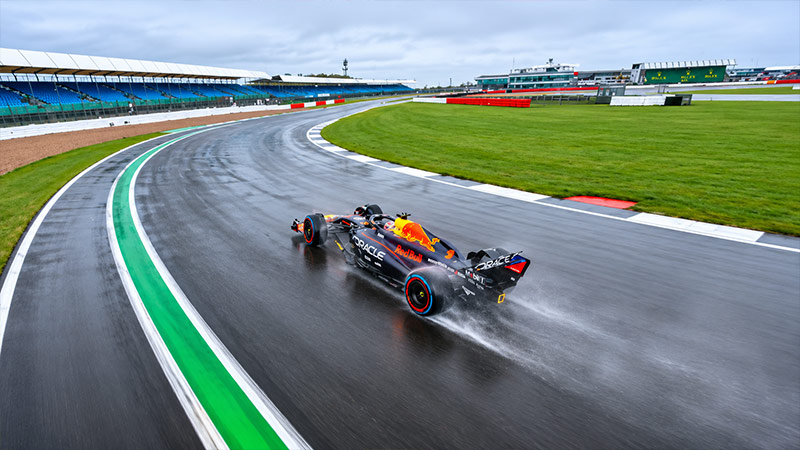
Spa-Francorchamps and Suzuka test pure driver skill, while Las Vegas and Miami serve up night-time spectacle and entertainment-style events. Silverstone, host of the first world championship race in 1950, remains a pilgrimage for British fans.
Fans are showing up in record numbers. Total attendance reached 6.7 million in 2025, up from 4.2 million in 2019. The British Grand Prix drew 500,000 spectators over four days, the second-largest crowd in F1 history, while Australia welcomed more than 465,000.
The calendar keeps evolving too. A new circuit in Madrid joins in 2026, and long-term deals keep races such as Miami and Austria on the schedule until 2041. For host cities, a Grand Prix is a global showcase. For fans, it is a bucket-list trip.
6. Strategy, Teamwork and the 2026 Rule Reset
Formula 1 is often called a team sport disguised as an individual one. Behind every driver stand hundreds of engineers, strategists and mechanics. Pit crews can change all four tyres in under two seconds, and a single strategy call can win or lose a race.
That strategic layer is a major reason fans stay hooked. When should a driver pit? Which tyre will last? Should the team gamble on a safety car? Watching these decisions unfold in real time feels like high-speed chess, and armchair strategists love to second-guess every call.
The 2026 season raises the stakes even further. New technical regulations bring smaller, lighter cars and power units with a much larger electric share, all running on fully sustainable fuel. The rules are set to run until 2030, so the teams that master them early could shape the rest of the decade.
The grid is growing as well. Cadillac has joined as the 11th team, the first expansion since 2016, while Audi has taken over the Sauber operation as a full works outfit. New rules and new entrants mean a less predictable pecking order, and unpredictability is exactly what keeps audiences watching.
7. More Ways Than Ever to Play Along
Modern fans want to take part, not just watch. Formula 1 has embraced that shift with a rich mix of interactive experiences.
- Gaming: The official F1 video game and sim racing let fans drive real circuits at home, and some esports racers have moved into real-world motorsport.
- Fantasy leagues: F1 Fantasy turns every qualifying session into a personal stake, as fans pick drivers and teams within a budget.
- Live data: Timing screens, team radio and onboard cameras let fans follow strategy like a race engineer.
- F1 Academy: Launched in 2023, the all-female series builds a pathway for young women drivers and gives new fans fresh role models.
This approach is paying off with new audiences. As the figures above show, 43% of fans are now under 35 and 42% are women, both sharply higher than in 2018. A sport once seen as traditional now reaches one of the broadest audiences in global sport.
8. Business Power and Brand Prestige
Formula 1’s popularity is also a commercial success story. The sport offers brands a rare combination: global reach, affluent and increasingly young audiences, and a premium image tied to performance and innovation.
Major partners have taken notice. In 2025, Formula 1 added global partners including LVMH under a 10-year agreement, alongside Disney, PepsiCo, LEGO Group and Barilla.
Car makers are investing heavily too, with Cadillac, Audi and Honda’s works return with Aston Martin all tied to the 2026 rules.
For businesses, the appeal goes well beyond logo placement. F1 offers storytelling, premium hospitality and technology showcases that connect with high-value customers. That investment funds better coverage, better events and better fan experiences, which in turn grow the audience further.
The result is a powerful flywheel. More fans attract more partners, more partners fund more content, and more content attracts more fans. Few sports have built such a self-reinforcing model so quickly.
How to Start Following Formula 1 Today
Ready to see what the excitement is about? Here is a simple five-step way to get started.
- Pick a driver or team to support. A rooting interest makes every race feel personal.
- Watch a full race weekend. Saturday qualifying sets up Sunday’s story, so try to catch both.
- Learn the basics as you go. Tyre strategy, pit stops and the points system click quickly after a few races.
- Join the conversation. Follow the official F1 and team channels, play F1 Fantasy or join a local fan community.
- Plan a trip to a Grand Prix. Seeing the cars live, hearing the engines and feeling the crowd is unforgettable.
If you lead a brand, a club or a media platform, the lesson is just as clear. Formula 1 proved that authentic storytelling, open digital access and memorable live experiences can turn a niche sport into a global passion. Start applying those lessons to your own audience today, and share this guide with someone who is curious about F1.
Conclusion
Formula 1 is so popular because it delivers what modern audiences crave: speed, story and a real sense of belonging.
The cars push engineering to its limits, while the drivers bring rivalries and personalities that fans care about deeply.
Drive to Survive, social media and a blockbuster film opened the doors, and a global calendar of iconic races keeps people coming back.
With 827 million fans, record crowds and a fresh rule reset in 2026, the sport’s momentum shows no sign of slowing.
For newcomers, there has never been a better time to start watching. For brands, there are few stages more powerful. Pick a driver, tune in this weekend and discover why the world has fallen for Formula 1.