In the modern landscape of professional sports, the velocity at which information travels often outpaces its accuracy.
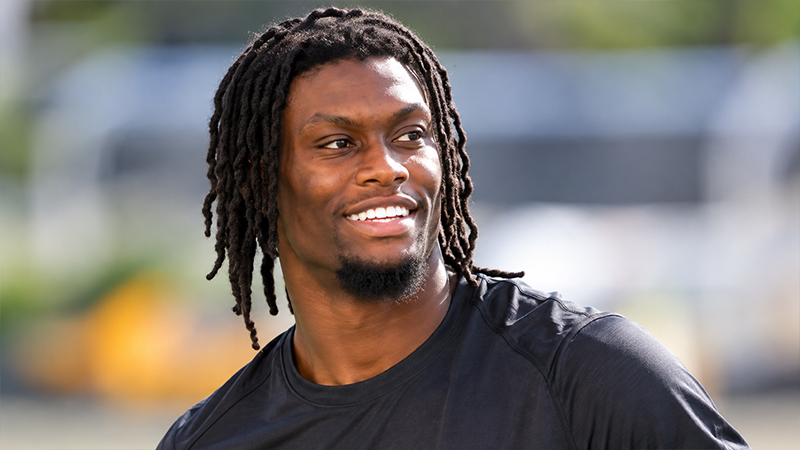
George Pickens, a high-profile wide receiver for the Dallas Cowboys, recently found himself at the center of a whirlwind of speculation regarding his eligibility and disciplinary standing.
For stakeholders ranging from fantasy football managers to team executives, distinguishing between official league actions and social media narratives is critical for maintaining a clear understanding of a player’s value and availability.
Current official records confirm that George Pickens is not currently suspended by the NFL. Despite the noise generated by digital platforms, he remains listed as a healthy, active member of the roster.
This distinction is vital, as the distinction between “team-level discipline” and “league-mandated suspension” often carries significantly different implications for a player’s career trajectory and a team’s offensive strategy.
Navigating the Fog: Debunking Viral Misinformation
The genesis of recent confusion surrounding Pickens’ status can be traced back to unverified reports circulating on social media. These narratives suggested a multi-week suspension following a purported altercation during a joint training camp practice.
However, rigorous fact-checking against league transactions reveals these claims to be satire or internet memes rather than documented disciplinary actions.
In the high-stakes environment of the NFL, the league office is the sole authority for regular-season suspensions. To date, no such order has been issued against Pickens during his tenure with the Dallas Cowboys.
While the athlete has faced standard financial penalties—fines typically associated with specific on-field conduct—these do not impact his week-to-week eligibility to participate in games.
Understanding this allows for a more analytical view of his professional standing, stripping away the hyperbole of the “viral moment.”
Case Study in Discipline: The 2025 Las Vegas Incident
While Pickens has avoided league-level bans, he has not been immune to internal team accountability. A specific instance occurred during a 2025 matchup against the Las Vegas Raiders, where Pickens was notably absent from the field during the game’s opening series.
This event triggered immediate speculation across broadcast and digital media, though the reality was far more logistical than the rumors suggested.
Contrary to theories regarding locker room friction or illicit activities, the disciplinary action was rooted in a breach of team protocol.
Stephen Jones, Executive Vice President of the Dallas Cowboys, clarified that Pickens was disciplined specifically for failing to board the team bus on game day.
This distinction is crucial, as Pickens’ teammate, CeeDee Lamb, was also disciplined during the same period, but for a separate violation involving a team curfew.
The Cowboys’ leadership viewed this incident through a strictly professional lens. Stephen Jones emphasized that Pickens’ situation was tied to game-day logistics, a matter the organization takes very seriously.
Owner Jerry Jones echoed this sentiment, noting that while the team respects players’ personal time, pre-game meetings and transit are non-negotiable components of what is ultimately a “business trip”.
This internal benching served as a corrective measure, ensuring that even star athletes adhere to the operational standards required of a premier sports franchise.
Resilience on the Gridiron: Responding to Adversity
The true measure of a professional athlete often lies in their response to setbacks. Following his brief benching against the Raiders, Pickens delivered one of the most statistically dominant performances of his season.
He recorded nine receptions for 144 yards and a touchdown, demonstrating an immediate refocusing of his energy toward the game.
This performance highlights a key aspect of Pickens’ professional character: the ability to compartmentalize internal discipline and execute at an elite level.
Offensive Coordinator Brian Schottenheimer was seen embracing Pickens on the sideline after a scoring play, a gesture that signaled the organization’s desire to move forward.
Schottenheimer later noted that Pickens’ playmaking ability is a cornerstone of the offense, and the brief disciplinary measure did not fracture the player-coach relationship.
In fact, Pickens has stated that the incident actually brought him closer to his coordinator, suggesting that the accountability session fostered a deeper level of mutual respect.
A Historical Context: From Athens to Arlington
To understand the scrutiny surrounding Pickens, one must look at his broader disciplinary history, which includes his collegiate years at the University of Georgia.
It is documented that Pickens served a one-game suspension during the 2019 SEC Championship game against LSU.
The reason for this half-game suspension was an ejection from the previous week’s game against Georgia Tech following an on-field altercation.
When comparing his collegiate history to his professional record, a pattern emerges of “hiccups” rather than systemic behavioral issues. In the NFL, his infractions have shifted from on-field physical altercations to logistical errors, such as the missed team bus.
This evolution suggests a maturing athlete who, while still navigating the complexities of professional expectations, has largely moved past the more volatile conduct of his early career.
The Business of the Future: Contractual Implications
As Pickens approaches the conclusion of his rookie contract, every administrative and disciplinary action is viewed through a strategic lens.
The Dallas Cowboys’ front office must weigh his undeniable field-stretching talent against these minor lapses in protocol.
Brian Schottenheimer has expressed an explicit interest in working with Pickens and CeeDee Lamb long-term, indicating that the team views Pickens as a foundational piece of their future.
From a management perspective, the resolution of the “bus incident” and Pickens’ subsequent 144-yard game serves as a positive indicator for future contract negotiations. It shows a player who can accept criticism, adhere to discipline, and respond with high-level production.
For a franchise like the Cowboys, which operates under a global spotlight, this type of professional resilience is as valuable as the raw physical metrics a player brings to the field.
Conclusion
The narrative that George Pickens has been suspended by the NFL is categorically false. He remains a healthy and eligible asset for the Dallas Cowboys.
While he has faced internal benching and standard fines—common occurrences in the high-pressure environment of the league—his availability for upcoming contests is not in question.
Fans and analysts should remain wary of the “satire” that frequently populates digital feeds. By focusing on official team statements and league-verified data, we see the true story: a dynamic young receiver navigating the learning curve of a professional “business trip” while maintaining his status as one of the most dangerous offensive threats in the game today.