In the high-stakes theater of the National Football League, games are rarely decided solely by physical dominance.
Instead, the final minutes of a matchup frequently transform into an intense mathematical and psychological chess match where the currency of exchange is time.
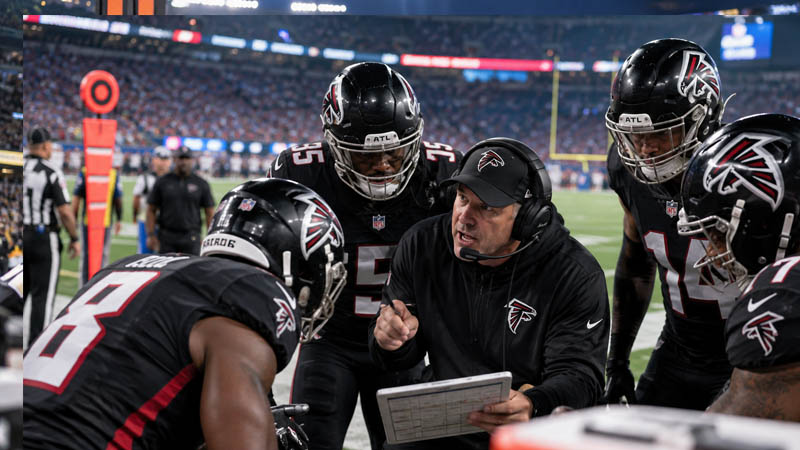
To the untrained eye, a timeout is simply a brief pause in play—a moment for athletes to catch their breath or for television broadcasts to cut to commercial. In reality, these three-minute periods of stoppage are the most critical strategic assets a coaching staff possesses.
How a coaching staff manages its timeouts in the fourth quarter directly correlates with its win probability. A single timeout called too early can doom a final drive; a timeout held too long can let precious seconds slip away into nothingness.
Understanding the precise mechanics of why NFL teams call timeouts late in games reveals the deep tactical framework that underpins modern football strategy.
The Economics of the Game Clock
The most fundamental driver of late-game timeout usage is clock management. To understand why these stoppages are so valuable, one must first understand the asymmetric rules governing how the game clock runs.
                  ┌────────────────────────────────────────┐
                  │       LATE-GAME TIMEOUT OBJECTIVES     │
                  └───────────────────┬────────────────────┘
                                      │
         ┌────────────────────────────┼────────────────────────────┐
         ▼                            ▼                            ▼
┌──────────────────┐        ┌──────────────────┐        ┌──────────────────┐
│ CLOCK MANAGEMENT │        │ DAMAGE CONTROL   │        │ PSYCHOLOGICAL    │
│                  │        │                  │        │                  │
│ • Stop Opponent  │        │ • Prevent Delay  │        │ • Ice Kicking    │
│   from Running   │        │   of Game    │        │   Units      │
│   Out Clock  │        │ • Resolve Pre-   │        │ • Disrupt Play   │
│ • Preserve Time  │        │   Play Alignment │        │   Rhythm         │
│   for Drive  │        │   Confusion  │        │                  │
└──────────────────┘        └──────────────────┘        └──────────────────┘
The Defensive Imprisonment
For a defense, the game clock is a relentless enemy. When an offensive team has the lead late in the fourth quarter, their primary objective is to keep the clock running.
They do this by running the ball, staying in bounds, and letting the play clock wind down to the final seconds before snapping the ball.
Under standard NFL rules, a defense has virtually no passive mechanism to stop the game clock. While the offense can stop the clock by throwing an incomplete pass, stepping out of bounds after a catch, or scoring, the defense is locked into the pace dictated by the offense. Therefore, the defense must rely on timeouts as their only active tool to freeze the clock.
If a trailing defensive team does not possess timeouts in the final two minutes, an opponent with a first down can simply kneel the ball three times to run more than two minutes off the clock, effectively ending the game.
By calling timeouts immediately after a play is whistled dead, the defense stops the clock, forces the offense to execute another play, and preserves precious seconds for their own offense.
Preserving Time for the Comeback
When a team is trailing in the final minutes of a game, every second is a resource that must be budgeted. If the opponent has possession of the ball, the trailing team’s coaching staff must calculate exactly how much time they need to execute their own touchdown- or field-goal-scoring drive once they get the ball back.
For example, if an opponent has the ball with 2:30 remaining on the clock and faces a third down, the trailing team’s coach must decide whether to use a timeout immediately after the third-down play to preserve time, or trust the defense to make a stop and rely on the two-minute warning.
If they call a timeout, they guarantee that their offense will have more time to mount a comeback drive when they receive the punt. Without these timeouts, a team is forced to play at a frantic pace, limiting their playbook and increasing the likelihood of game-ending turnovers.
Pace Control and Denying the Opponent
Conversely, when a team is winning, the tactical calculus shifts. A leading team wants to limit the opponent’s ability to dictate the tempo of the game.
By executing structured offensive plays and forcing the opponent to exhaust their own timeouts, the leading team constricts the opponent’s strategic options.
When the defensive team is forced to burn their timeouts early in the half, they lose the ability to stop the clock later.
This allows the winning team to run a highly conservative, clock-draining offense, secure in the knowledge that the opponent cannot halt the progression of time.
Damage Control: Avoiding Self-Inflicted Errors
While clock management is the most visible reason for late-game timeouts, coaches also use them as emergency safety valves to prevent self-inflicted mistakes that can instantly swing the outcome of a game.
The Play Clock vs. The Game Clock Trade-Off
An NFL offense has precisely 40 seconds (or 25 seconds following certain administrative stoppages) to snap the ball once the previous play is whistled dead. In the loud, chaotic environment of a late-game drive, communication lines can break down.
If the quarterback cannot get the play call from the offensive coordinator, if a player is slow to get up from the turf, or if there is confusion about the substitution package, the play clock will rapidly tick down to zero.
                          ┌────────────────────────┐
                          │ Is Play Clock Winding? │
                          └───────────┬────────────┘
                                      │
                                      ▼
                        ┌────────────────────────────┐
                        │   Is Team Lined Up/Ready?  │
                        └─────────────┬──────────────┘
                                      │
                        ┌─────────────┴─────────────┐
                        │                           │
                   NO   ▼                      YES  ▼
         ┌────────────────────┐            ┌─────────────────┐
         │ CALL TIMEOUT       │            │ SNAP THE BALL   │
         │                    │            │                 │
         │ • Avoid 5-Yard     │            │ • Execute Play  │
         │   Penalty      │            │ • Keep Play     │
         │ • Reset Offensive  │            │   On Schedule   │
         │   Alignment    │            └─────────────────┘
         └────────────────────┘
When players are struggling to get lined up in their correct positions, the coach faces a difficult decision. Letting the play clock hit zero results in a five-yard delay-of-game penalty.
In a critical third-and-short or fourth-down situation, giving up five yards can be catastrophic. Thus, coaches will routinely sacrifice one of their three precious timeouts to prevent the penalty and keep the offense on schedule.
Pre-Play Alignment and Formation Mitigation
The game of football is played in the pre-snap phase just as much as it is after the ball is snapped. Offensive and defensive coordinators spend all week designing specific packages to exploit structural vulnerabilities in the opponent’s systems.
If an offensive coach notices that the defense has perfectly anticipated their play design and set up an unblockable blitz path, executing the play as called could result in a devastating sack, fumble, or interception.
Similarly, if a defensive coordinator spots a dangerous alignment mismatch—such as a slow-footed linebacker isolated in single coverage against an elite, deep-threat wide receiver—they will call an emergency timeout.
Burning a timeout in these moments is a calculated risk. The coaching staff is betting that the value of stopping a potentially game-ending play outweighs the future value of having that timeout available for clock management.
The Psychology of Special Teams: Icing the Kicker
Perhaps the most traditional and highly visible tactical maneuver in the final seconds of an NFL game is the practice of “icing the kicker”.
Disrupting High-Pressure Concentration
When a game comes down to a final, game-winning or game-tying field goal attempt, the psychological pressure on the placekicker is immense. To combat this, defensive coaches will frequently call a timeout a split second before the ball is snapped.
                ┌──────────────────────────────────────────┐
                │        ICING THE KICKER TIMELINE         │
                └────────────────────┬─────────────────────┘
                                     │
    ┌────────────────────────────────┼────────────────────────────────┐
    ▼                                ▼                                ▼
┌───────────────────────┐        ┌───────────────────────┐        ┌───────────────────────┐
│ Kicking Unit Aligns   │        │ Timeout Called        │        │ The Actual Kick       │
│                       │        │                       │        │                       │
│ • Kicker visualizes   │        │ • Called split-second │        │ • Kicker must reset   │
│   the trajectory.     │        │   before the snap.│        │   mental routine.     │
│ • Long snapper and    │        │ • Forces "practice    │        │ • Added pressure of   │
│   holder prepare.     │        │   kick" or delay.     │        │   the moment builds.  │
└───────────────────────┘        └───────────────────────┘        └───────────────────────┘
This tactic serves multiple psychological purposes:
- Disrupting Routine: Placekickers rely heavily on muscle memory, precise timing, and a highly structured pre-kick routine. Forcing them to wait on the field for an additional two minutes after they have already lined up breaks their concentration and introduces cognitive friction.
- Allowing Pressure to Build: By forcing the kicker to stand on the field and contemplate the magnitude of the kick, the coach hopes to increase the physical tension in the kicker’s body, potentially leading to a mechanical error during the actual kick.
- The “Practice” Kick: Often, the snap occurs just as the whistle blows, resulting in a practice kick that does not count. If the kicker misses the practice kick, it can damage their confidence; if they make it, the defense gets a second chance to block or pressure the next attempt.
While statistical analyses of the effectiveness of icing the kicker yield mixed results, coaches continue to employ it because, in a game decided by inches, any potential disruption to an opponent’s rhythm is viewed as a worthy investment of a timeout.
The Final Play: The True Measure of NFL Coaching
Ultimately, the management of timeouts late in games is one of the clearest differentiators between average coaching and championship-caliber leadership. A great coach does not view a timeout merely as a safety net, but as an active tactical weapon.
Whether it is deployed to freeze the clock during an opponent’s drive, prevent a momentum-killing penalty, or disrupt the concentration of a kicker, the timeout is an irreplaceable tool.
The next time you watch an NFL game wind down to its final, tense minutes, look past the physical matchups on the field and focus on the sideline.
The real game is being played with the clock, and the team that manages its three timeouts most effectively will almost always find a way to win.