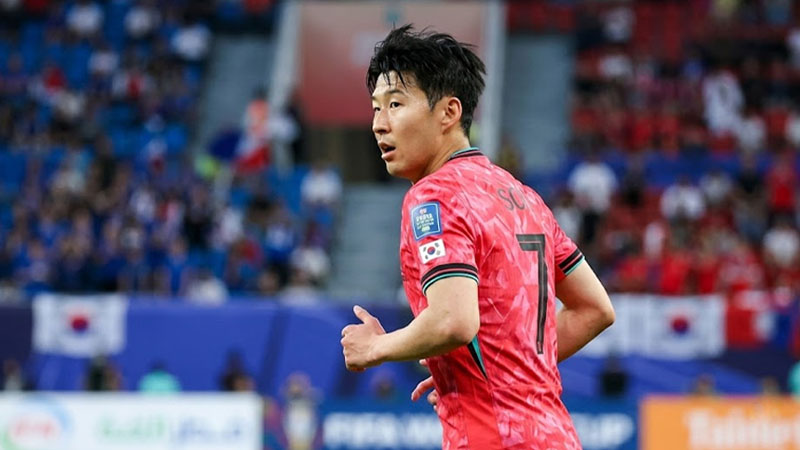
Son Heung-min is far more than a world-class footballer in South Korea; he is a pervasive cultural institution. With a public awareness rate estimated at a staggering 99.9%, he occupies a unique space where sports, commerce, and traditional values intersect.
While global audiences recognize him for his Premier League Golden Boot, his domestic status is more profound, appealing to everyone from six-year-olds to the elderly.
This analysis explores the scale of his popularity, his alignment with Confucian virtues, and how he single-handedly dictates the nation’s sporting allegiances, regardless of the league or team he represents.
The 99.9% Awareness Rate: A National Ubiquity
The primary metric of Son Heung-min’s fame in South Korea is his absolute ubiquity across every demographic and age group.
Unlike typical celebrities or K-pop idols who may cater to specific generational niches, Son is a household name recognized by almost every citizen, including those with zero interest in football rules.
Breaking the Generation Gap
One of the most significant factors in Son’s popularity is his lack of a “generation gap”. While massive global acts like BTS or Blackpink have astronomical fanbases, they often struggle to capture the attention of the older, more conservative generations in Korea.
In contrast, analysts note that 50-year-old women who know nothing about the sport still passionately discuss Son’s “Golden Foot” and follow his career trajectory.
This broad appeal makes him a unifying figure in a country where cultural tastes often diverge sharply between the youth and the elderly.
The Psychology of Nationalistic Pride
South Korean culture exhibits a deep sense of nationalistic pride regarding citizens who achieve immense success on the global stage.
Because the Premier League is the most-watched football league in the world, Son’s individual accolades—such as winning the Golden Boot—are viewed as collective victories for the nation.
This success triggers a level of “worship” where his status transcends that of a mere athlete; he becomes a symbol of South Korean excellence and capability in the Western-dominated sporting world.
The Face of the Nation: Commercial and Visual Dominance
In South Korea, it is nearly impossible to navigate a major city without encountering Son Heung-min’s image.
He has transitioned from being an athlete who does commercials to being the most sought-after brand ambassador in the country’s history, often referred to as the “Face of the Nation”.
| Industry Sector | Brand Involvement & Impact |
|---|---|
| Coffee & Beverage | Primary spokesperson for Mega Coffee, the country’s largest ubiquitous coffee chain. |
| Finance & Banking | Represents major national banks, signaling high levels of public trust and stability. |
| Technology | Featured in advertisements for electronics and high-end consumer goods. |
| Luxury Fashion | Global ambassador for luxury brands, bridging the gap between sports and high-end lifestyle. |
The visual dominance of Son Heung-min extends beyond traditional television commercials. His face adorns subways, billboards, and retail storefronts across Seoul and beyond.
For a brand, securing Son as a spokesperson is considered the ultimate signal of prestige and market reach.
Reshaping Media and National Broadcasting Patterns
Son Heung-min’s popularity has fundamentally altered how sports media is consumed in South Korea.
The national interest in the Premier League is almost entirely centered on his participation, leading to several innovative broadcasting choices that cater specifically to his fans.
The “Son Icon” and Scoreboard Customization
Perhaps the most unique feature of Korean sports broadcasts is the “Son Icon”. Whenever Son’s club team is playing, media platforms embed a small, customized graphic of his face right next to the on-screen scoreboard whenever he is on the pitch.
This ensures that even casual viewers flicking through channels can immediately identify if “Sonny” is currently active in the game, highlighting his importance over the match itself.
24/7 Career Highlight Programming
The demand for Son Heung-min content is so high that sports channels frequently dedicate entire blocks of time to “Son’s Top Goals” or “Son’s Best National Team Moments”.
These ranking shows and highlight reels run at all hours of the day, ensuring that fans can consume his greatest hits regardless of the time zone differences between Korea and the leagues in which he plays.
This constant media presence reinforces his status as a permanent fixture in the Korean public consciousness.
The Confucian Hero: Values Behind the Fame
While his physical talent is undeniable, much of the deep-seated respect for Son Heung-min stems from his personal character. His public persona aligns perfectly with core Confucian virtues, which remain the ethical backbone of modern South Korean society.
Extreme Humility and Teammate Credit
In an era of flashy sports personalities, Son is revered for his extreme humility. He consistently credits his teammates and coaches for his successes, even after winning historic individual accolades like the Golden Boot.
This modesty is viewed as a sign of high moral character in Korea, making him a role model for children and a figure of respect for parents.
The “National Son-in-Law” Archetype
Son’s relationship with his family, particularly the respect and filial piety he shows toward his parents, has earned him the playful title of the country’s “ideal son-in-law”.
Parents across the nation frequently cite his discipline and respectful nature when discussing the type of person they would want their children to emulate.
This perception of him as a “good person” first and an “athlete” second provides a level of brand safety and public affection that few other celebrities can match.
A Paradigm Shift in Global Club Allegiance
The “Son Heung-min Effect” is so powerful that it dictates the footballing loyalties of a significant portion of the South Korean population. His presence in a team is the single most important factor for whether a club gains a foothold in the Korean market.
- The Tottenham Hotspur Era: During his long tenure in North London, Son single-handedly turned Tottenham into South Korea’s favorite overseas team. Estimates suggest he captured more than 20% of the entire country’s fan allegiance for the club.
- The LAFC Transfer Impact: Following his high-profile transfer to Major League Soccer (MLS) side Los Angeles FC (LAFC), the Korean media landscape shifted overnight. Broadcasting platforms immediately began live-streaming LAFC games to accommodate the time difference, and LAFC merchandise quickly became a common sight in the streets of Seoul.
- Merchandise Ubiquity: Whether it is a Tottenham jersey or an LAFC kit, the sight of a “Son 7” shirt is a staple of Korean fashion, appearing in parks, gyms, and schools nationwide.
Common Questions About Son Heung-min’s Status
Who is more famous: Son Heung-min or Faker?
While Faker (Lee Sang-hyeok) is a global titan in the world of e-sports, domestic analysts generally agree that Son Heung-min has a broader reach.
While Faker dominates the younger, digital-native demographic, Son’s appeal reaches into the older generations and non-gamers, giving him a more universal level of recognition across the entire population.
How does he compare to Park Ji-sung?
Park Ji-sung is often credited with paving the way for Korean players in the Premier League and remains a highly respected figure. However, Son Heung-min has surpassed Park in terms of individual accolades and commercial ubiquity.
While Park was the pioneer, Son is the “superstar” whose individual stats and goal-scoring records have elevated him to a different tier of global fame.
What is the significance of his military status?
In South Korea, military service is a mandatory rite of passage for men. Son’s successful navigation of this requirement—earning an exemption through his sporting achievements—was a major national event.
His willingness to serve and his performance during his short-term training only served to bolster his image as a responsible and patriotic citizen.
Conclusion: A Legacy That Transcends the Pitch
Son Heung-min’s popularity in South Korea is a multi-layered phenomenon that combines elite athletic performance with cultural resonance and commercial power.
He is not merely a player who represents his country; he is a living embodiment of the “Korean Dream”—a figure who has reached the pinnacle of a global industry while maintaining the traditional virtues of his heritage.
As he continues his career in the MLS with LAFC, his influence shows no signs of waning. He remains the most trusted, recognized, and celebrated individual in South Korea, acting as a bridge between the nation’s history and its future on the world stage.
For anyone visiting South Korea, understanding the scale of “Sonny” is essential to understanding modern Korean identity.