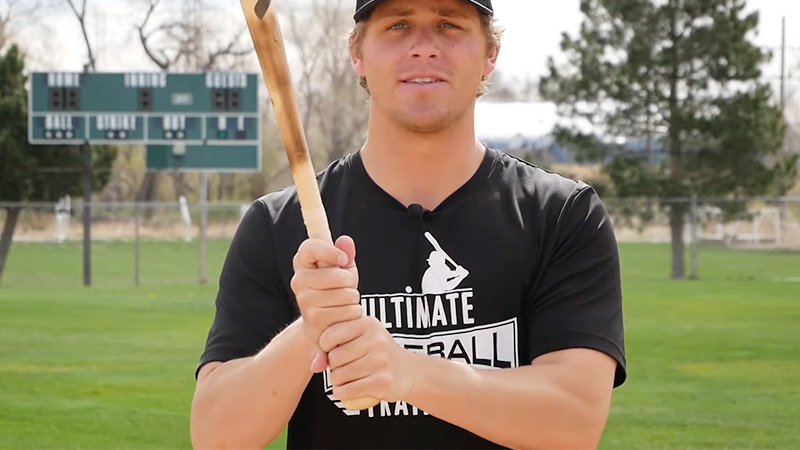
A good swing starts with the right bat grip. Your hands are the only part of your body that touch the bat. So, how you hold it can affect your whole swing.
A good grip can help you swing fast and control the bat. It also helps your wrists move with ease. This lets power flow from your legs and hips to the bat and then into the ball.
For a right-handed hitter, hand position is key. Do not hold the bat deep in your palms. Do not grip it too hard. Both can make your hands and wrists stiff. They may also slow the bat and make it hard to control.
Instead, hold the bat more with your fingers. Keep your hands in a natural spot. Line up your knuckles in a way that feels loose and easy. Use a firm grip, but do not squeeze too hard.
A simple and relaxed grip gives your wrists room to move. It can also help you control the barrel and use your power well. With the right grip, it is easier to build a smooth swing that you can repeat.
1. Hand Placement and Orientation for Right-Handed Hitters
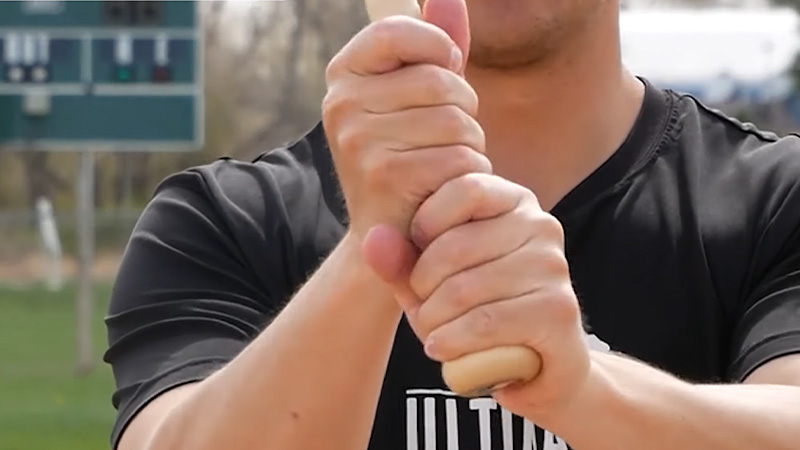
A good right-handed batting stance starts with the hands. The hands need to sit in the right place on the bat. This helps you control the bat and swing with more ease. Try to use the same hand position each time you hit.
Bottom Hand (Left Hand) Placement
For a right-handed hitter, the left hand is the bottom hand.
- Near the Knob: Put your left hand at the bottom of the bat. It can touch the knob or sit just above it. This lets you use more of the bat’s length when you swing.
- Hold with the Fingers: Let the bat rest near the base of your fingers. Do not push the handle deep into your palm. This helps your hands and wrists move with ease.
- Wrap the Fingers: Wrap your fingers around the bat in a natural way. Let your thumb rest over your index and middle fingers. Keep the thumb loose and free of extra force.
Top Hand (Right Hand) Placement
For a right-handed hitter, the right hand goes above the left hand. It helps guide and control the bat.
- Keep the Hands Together: Place your right hand right above your left hand. The two hands should touch. Do not leave a gap between them.
- Move as One: Both hands should work as one unit during the swing. This helps keep the bat on a smooth path. It also helps you send more force into the ball.
A simple and loose grip gives your wrists room to move. It also helps you guide the bat with more control from the start of the swing to the point of contact.
2. Finger Placement vs. Palm Placement: The Biomechanical Imperative
One common mistake for new hitters is holding the bat too deep in the palms. This can make the hands and wrists feel stiff. A grip near the fingers can help the hands move with more ease.
Finger Grip vs. Palm Grip
| Feature | Finger Grip | Palm Grip |
|---|---|---|
| Bat Position | Near the base of the fingers | Deep in the palm |
| Wrist Movement | Free and easy | Stiff and tight |
| Arm Tension | Loose and calm | Tight and tense |
| Hand Roll | Happens after contact | May happen too soon |
| Bat Speed | Helps the bat move fast | Can slow the bat down |
How the Finger Grip Works
Your fingers can move with more ease than your palm. They also give you good feel and control.
For a finger grip, place the bat across the base of your fingers. It should sit near the line where your fingers meet your palm.
This grip can help in three key ways:
- Free Wrist Movement: Your wrists can bend and turn with ease. This helps them move well during the swing.
- More Bat Whip: A loose grip lets the bat move fast through the hitting zone. The wrists can act like a hinge. This helps the barrel gain speed.
- Better Hand Position: Loose wrists make it easier to keep the hands in a good spot at contact. One palm can face up while the other faces down. The hands can then roll after the ball is hit.
Why a Palm Grip Can Hurt the Swing
A palm grip means the bat sits deep in the middle of your hand. Some players also squeeze the bat too hard. This is often called a “death grip.”
A tight palm grip can cause a few problems:
- Your wrists may become stiff.
- Your arms may feel tight.
- Your shoulders may also tense up.
- Your elbows may move too far from your body.
- The bat may move on a poor path.
- Your hands may roll too soon.
For a right-hand hitter, an early hand roll can lead to weak ground balls to the left side of the field.
A loose finger grip can help you avoid these issues. Keep the bat near the base of your fingers and stay relaxed. This can give your wrists more freedom and help you control the bat.
3. The Knuckle Alignment Spectrum: Finding Your Optimal Grip

Knuckle alignment is a key part of a good bat grip. Yet, there is no one grip that works for every hitter. Hand size, wrist motion, and comfort can all affect the best grip.
First, know the two main sets of knuckles:
- Big Knuckles: These are the large joints where your fingers meet your hand.
- Middle Knuckles: These are the joints you use to knock on a door.
The Three Main Knuckle Positions
1. Big Knuckles in a Straight Line
Status: Not advised
This grip puts the big knuckles of both hands in one straight line. It can make your hands and arms feel tight. It may also push your back elbow up. This can make it hard for your wrists to move with ease.
A tight grip can slow the bat and make the swing feel stiff. For these reasons, this grip is not a good choice for most hitters.
2. Middle Knuckles in a Straight Line
Status: Can work for some hitters
In this grip, the middle knuckles of both hands line up. This can give your wrists more room to move. It may also help your hands stay loose as you swing.
But this grip may not feel good for all players. Some hitters may feel too much bend in the wrists. This can be an issue for players with large hands or stiff joints. If the grip feels natural and pain-free, it can be used.
3. Offset Knuckles or Box Grip
Status: Best choice for most hitters
This grip places the knuckles between the first two positions. The middle knuckles of the top hand sit between the big and middle knuckles of the bottom hand. This creates a small offset or “box” shape.
The hands should feel loose and at ease. This grip lets the wrists move well. It also helps the elbows stay in a more natural spot. The bat can move through the hitting zone with less strain. The wrists can turn with ease after contact.
Which Knuckle Grip Is Best?
For most hitters, the offset or box grip is a good place to start. Do not force your knuckles into a strict line. Your grip should feel soft, loose, and natural.
Hand size and wrist range can change the exact position. A small shift is fine if it helps you stay loose. The main goal is simple: hold the bat in a way that lets your hands and wrists move with ease.
4. Calibrating Grip Pressure: The “Small Bird” Principle
Grip pressure can affect how fast you swing the bat. If you grip the bat too hard, your hands and arms get tight. This can make your swing slower.
Stay Loose for More Speed
Do not squeeze the bat as hard as you can. A tight grip can make your hands, arms, and shoulders tense. This can slow the bat and make it harder to react to a fast pitch.
Keep your hands and arms loose before the swing. This can help you move the bat with more speed and ease.
Use the “Small Bird” Rule
Think of the bat as a small bird or an egg in your hands. Hold it with care.
- Grip the bat just tight enough so it does not slip in your hands.
- Do not squeeze the handle too hard before the swing.
- Keep your fingers soft and relaxed as you wait for the pitch.
- Your grip will get firm on its own as the bat hits the ball.
- Keep your arms loose so the bat can move fast and with ease.
A soft, firm grip can help you stay loose. It can also help you swing the bat with more speed and control.
5. Leverage vs. Control: Hand Position on the Knob
A right-handed batter can adjust their hand positioning along the length of the handle depending on game situations, bat weight, and pitch velocity.
Knob Positioning Overview: Leverage vs. Control
| Grip Style | Hand Placement | Primary Performance Benefit | Tactical Use Case |
|---|---|---|---|
| Standard Knob Grip | Bottom hand flush against the knob | Maximum lever length, rotational power, and distance | Neutral or hitter-favorable counts |
| Choked-Up Grip | Hands moved 1 to 2 inches up the handle | Higher hand speed, enhanced barrel control, shorter path | Two-strike counts or oversized bat handling |
Standard Knob Grip (Maximum Leverage)
Placing the bottom (left) hand flush against the bottom knob extends the distance between the hands and the barrel tip.
- Advantage: Maximizes leverage and rotational energy, generating higher exit velocity and distance.
- Application: Standard approach for hitters wielding a properly fitted bat in neutral counts.
Choking Up (Enhanced Barrel Control)
Choking up involves sliding both hands 1 to 2 inches up the handle, leaving a visible gap between the bottom hand and the knob.
- Advantage: Shortens the effective length and swing weight of the bat, making it feel up to two inches shorter and lighter.
- Mechanical Benefit: Accelerates hand speed, improves barrel control, and shortens the swing path to the ball.
- Tactical Application: Highly effective in two-strike counts to minimize strikeout risk, or when facing high velocity with an oversized bat.
6. Upper Body Kinetic Chain: Elbow Angles and Wrist Mechanics
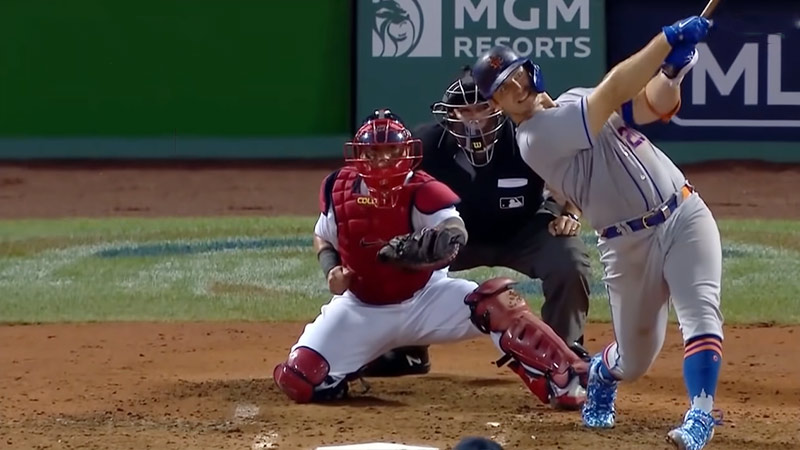
The way you grip the bat can affect your arms and shoulders. A good grip helps your upper body stay loose and ready to swing.
The 45-Degree Elbow Angle
Use a soft finger grip and keep your hands in a natural spot.
- Let both elbows point down at about a 45-degree angle.
- Keep your back elbow loose and at ease.
- Do not press it tight to your side.
- Do not lift it too high like a “chicken wing.”
- This position helps your hands stay close to your body.
- It also helps the bat stay on the ball’s path for more time.
Smooth Wrist Roll
- Before the Pitch: Keep your wrists loose. Let the bat sit at a slight angle behind your head.
- Start the Swing: Turn your hips and let your hands lead. Keep your top palm up and your bottom palm down.
- At Contact: Keep your wrists firm. Do not roll them before you hit the ball.
- After Contact: Let your arms reach out. Then let your top hand roll over your bottom hand in a smooth and natural way.
A soft grip helps this wrist roll feel easy. It also helps you finish the swing with less strain.
7. Step-by-Step Protocol for Executing the Perfect Right-Handed Grip
Use these five easy steps before you step into the batter’s box:
Step 1: Set Your Bottom Hand
Put your left hand near the bat knob. Rest the handle across the base of your fingers. Do not place it deep in your palm. Wrap your fingers around the bat. Keep your hand close to the knob.
Step 2: Add Your Top Hand
Place your right hand just above your left hand. The two hands should touch. Keep the bat across the base of your fingers. Do not let it sit deep in your palm.
Step 3: Line Up Your Knuckles
Turn your top hand until your knuckles feel natural. Keep the middle knuckles in a relaxed zone. Your hands and wrists should feel loose and free.
Step 4: Use a Light Grip
Move your fingers a little to ease any tightness. Hold the bat like you would hold a small bird. Keep it firm enough for control, but do not squeeze it hard.
Step 5: Check Your Elbows
Lift the bat into your hitting stance. Let both elbows point down at about a 45-degree angle. Keep your arms loose and relaxed. You are now ready for a quick, smooth swing.
Troubleshooting Common Gripping Mistakes
Even good players can fall into bad grip habits. Use this guide to spot and fix common grip problems.
Weak Ground Balls to the Left
- Problem: The ball often rolls weakly to the left side.
- Cause: The bat may sit too deep in the palms. The knuckles may also be lined up too much. This can make the wrists roll too soon.
- Fix: Hold the bat near the base of the fingers. Keep the knuckles in a soft, natural offset.
Slow and Stiff Swing
- Problem: The swing feels slow, tight, or stiff.
- Cause: You may be holding the bat too tight. This puts stress on the hands and arms.
- Fix: Use a light grip before the pitch. Keep the hands and wrists loose. Let the bat move with ease.
High Back Elbow and Wide Swing
- Problem: The back elbow sticks out or rises too high. The bat may also take a wide path to the ball.
- Cause: The knuckles may be lined up in a stiff way. This can push the top elbow up.
- Fix: Turn the top hand in a bit. Use a relaxed box-style grip. This can help the elbow stay in a more natural spot.
Conclusion
Mastering the right-handed baseball bat grip is one of the highest-leverage mechanical refinements a player can make.
By anchoring the bottom left hand along the callus line, positioning the top right hand in the flexible middle knuckle zone, maintaining relaxed grip pressure, and adjusting lever length when necessary, hitters establish the physical foundation required for maximum bat velocity and barrel accuracy.