In the grand tapestry of American football, where strategy, skill, and athleticism converge, one seemingly simple act holds immense significance at the dawn of every game – the football coin toss.
This iconic ritual, steeped in tradition, carries the power to shape the trajectory of the game from its very start. As captains from both teams gather at midfield and a coin takes flight, the destiny of possession, field advantage, and tactical choices hang in the balance.
This guide covers how the coin toss works, the choices it gives each team, and how the rules differ in the NFL, college football and overtime.
What Is Football Coin Toss?
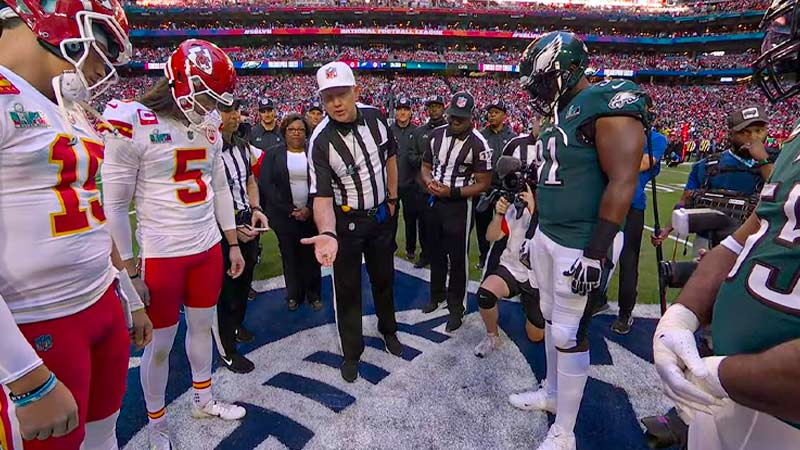
The football coin toss is a ritualistic and symbolic element at the beginning of American football games used to determine which team will have the initial choice between offense and defense. Prior to kick-off, captains from both teams meet at the center of the field, and an official referee presents a coin.
The visiting team’s captain calls “heads” or “tails” before the coin is tossed, and if the call matches the side that lands face up, their team wins the toss. The winning captain can then choose to receive or kick off, choose which goal to defend, or defer the choice to the second half.
The coin toss is a pivotal moment, as the decision can impact the game’s momentum and strategy, especially in high-stakes matchups where field position and possession are crucial.
Rules of American Football Coin Toss
In American football, the coin toss is a fundamental pre-game procedure that determines which team will have the choice to kick off, receive the ball, choose an end zone to defend or defer their decision to the second half. The rules for the coin toss are as follows:
Coin Toss Participants
Each team designates its captains, usually a few players who represent the team during the coin toss. Captains often include team leaders and players with extensive experience.
Coin and Referee
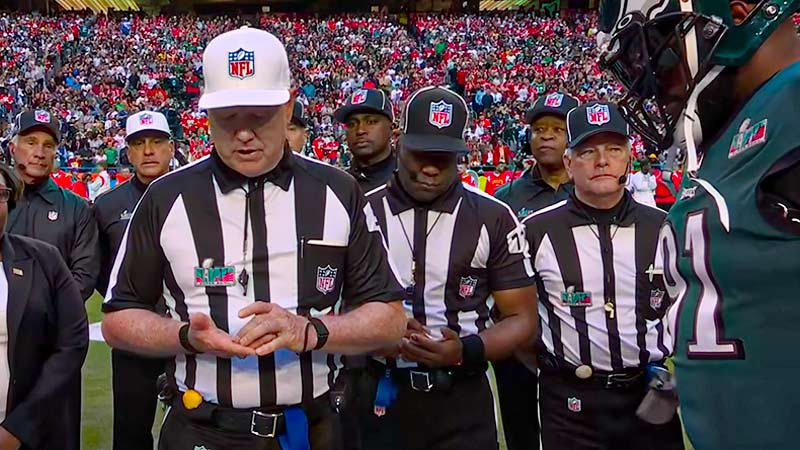
An official referee, typically the head referee for the game, holds the coin and oversees the toss. The coin is clearly marked heads and tails, and the NFL mints a special commemorative coin for each Super Bowl.
Toss Decision
The captains from both teams meet at the center of the field before the game starts. In both the NFL and college football, the visiting captain calls “heads” or “tails” before the referee tosses the coin. In the NFL, the toss takes place three minutes before kickoff.
Coin Flip
The referee flips the coin into the air. The side that was chosen by the first captain will be declared the winning side if it lands facing up as the coin falls.
Outcome Determination
If the side facing up matches the choice made by the first captain, their team wins the coin toss. If not, the opposing team wins.
Choice Options
Offense or Defense
The captain of the team that wins the coin toss can choose whether their team wants to be on offense (receiving the ball) or on defense (kicking the ball to the other team) for the first half.
End Zone Choice
The captain also has the option to choose which end zone their team will defend in the first half, regardless of the initial decision about offense or defense.
Defer Decision
Instead of making an immediate choice, the winning captain can choose to defer their decision to the second half. This means the opposing team gets to decide whether they want to start on offense or defense in the first half.
Second Half Choice
The team that lost the toss gets first choice for the second half. If the toss winner deferred, the roles switch, and the winner gets first choice in the second half.
The coin toss is a strategic aspect of the game, as the choice made by the winning captain can impact field position, possession, and momentum throughout the match.
Process and Options of Football Coin Toss
The football coin toss is a critical element that determines various aspects of the game, including possession, field position, and strategic choices. Here’s a detailed breakdown of the process and options involved in a football coin toss:
Coin Toss Process
- Captains from both teams, typically three or four players, meet at the center of the field along with the officials.
- The head referee presents the specially marked coin to one of the team’s captains.
- The visiting team’s captain calls “heads” or “tails” before the coin is flipped.
- The coin is flipped by the referee, and the side that lands facing up determines the winner.
Options for the Winning Captain
Offense or Defense
The captain of the winning team can choose whether their team wants to start on offense (receiving the ball) or on defense (kicking the ball to the other team).
End Zone Choice
The winning captain can choose which end zone their team will defend in the first half.
Defer Decision
Instead of making an immediate choice, the captain can choose to defer their decision to the second half. The other team then gets to choose whether to start on offense or defense.
Second-Half Choice for the Opposing Team
The team that lost the toss gets first choice for the second half, unless the winner deferred, in which case the winner chooses first.
Reception and Kickoff
- If the winning team chooses to receive, they start the game on offense by receiving the kickoff from the other team. The receiving team aims to advance the ball down the field to score.
- If the winning team chooses to kick, they start on defense by kicking the ball to the other team. The kicking team aims to prevent the receiving team from advancing the ball effectively.
Possession and Downs
- The team with possession of the ball gets a series of four downs (or attempts) to advance the ball at least 10 yards toward the opposing team’s end zone.
- If the offense gains the required 10 yards within four downs, they earn a new set of downs. If not, possession of the ball is turned over to the opposing team.
Fumbles and Missed Kicks
- A fumble occurs when a player loses possession of the ball, often leading to a scramble for recovery.
- A missed field goal gives the opposing team possession, at the spot of the kick in the NFL or at the previous line of scrimmage in college (or the 20-yard line if that is farther from the goal). A missed extra point does not change possession; the scoring team still kicks off.
Downed Player and Spot of the Ball
- A player is considered “down” when any part of their body other than their hands or feet touches the ground. In the NFL, this only applies when the player has been touched by an opponent; in college, a ball carrier is down as soon as a knee touches, contact or not.
- The spot of the ball refers to where the ball is placed on the field at the start of a new play. It’s determined by the result of the previous play and any penalties incurred.
Number of Players
- Each team fields 11 players on the field at a time. This includes offensive and defensive players, as well as special teams players during kickoffs and punts.
- The football coin toss influences various elements of the game, from initial possession to strategic choices that impact each team’s overall gameplay and tactics.
Football Coin Toss for Postseason and Overtime
The football coin toss takes on additional significance in postseason games and overtime scenarios, where the outcome can have a direct impact on the game’s outcome. Here’s how the coin toss is handled in these situations:
Postseason Games
In postseason games (playoffs), the coin toss remains a critical factor in determining which team gets the initial choice and potentially advantageous opportunities.
Importance of Possession
In the postseason, the decision of whether to receive the ball or kick-off can be even more crucial, as the stakes are higher. Having the first possession can set the tone for the game and provide an opportunity to score early.
Overtime Rules
In American football, overtime rules vary between the regular season and the postseason. In the regular season, there’s a possibility of a tie, while in the postseason, games must have a winner. Overtime rules are as follows:
Regular Season Overtime
- Since 2025, both teams are guaranteed a possession in regular-season overtime, even if the first possession ends in a touchdown. The period lasts 10 minutes.
- The team that wins the coin toss has the choice of receiving the ball first or kicking it off.
- If the score is still tied after both teams have had the ball, the next score wins.
- If the first team scores a touchdown, the other team still gets a possession to match it.
- If the defense scores on the opening possession (for example, an interception return or a safety), the game ends. If the game is still tied after 10 minutes, it ends in a tie.
Postseason Overtime
- Postseason overtime uses 15-minute periods, and the game continues until there is a winner.
- Both teams are guaranteed at least one possession, regardless of whether the first possession results in a touchdown.
- If the first team scores a touchdown or field goal, the other team gets a possession to answer.
- If the first possession results in a defensive touchdown, the game is over.
- If the score remains tied after both teams have had a possession, the game continues in a sudden-death format.
The coin toss in postseason games and overtime situations can significantly impact the outcome of the game due to the importance of possession and scoring opportunities.
Coin Toss Regulation in NFL and NCAA
The coin toss regulations in the NFL (National Football League) and NCAA (National Collegiate Athletic Association) (American football’s two major governing bodies) share many similarities, but there are also some notable differences. Here’s an overview of the coin toss regulations in both leagues:
NFL (National Football League)
Coin Toss Process
- Before the game, the captains from both teams, along with the officials, participate in the coin toss at the center of the field.
- The referee tosses the coin after the visiting team’s captain calls “heads” or “tails.” Since 1998, the call must be made before the toss rather than while the coin is in the air.
Options for the Winning Captain
The captain of the team that wins the coin toss has three choices:
- Choose whether to kick off or receive the ball.
- Choose the end zone their team will defend in the first half.
- Defer the decision to the second half.
Second Half Choice for Opposing Team
The team that didn’t win the coin toss gets to choose one of the options that the winning captain did not select for the first half.
NCAA (National Collegiate Athletic Association):
Coin Toss Process
The coin toss takes place similarly to the NFL, with captains and officials gathering at the center of the field before the game.
Options for the Winning Captain
In college football, the coin toss winner has the same options as in the NFL:
- Kick or receive, choose a goal to defend, or defer: like NFL teams, most college teams that win the toss choose to defer.
- The team that loses the toss chooses from the remaining options, and the second-half choices reverse the first-half ones.
Overtime Coin Toss (Regular Season and Playoffs)
- In overtime games, both teams have an equal opportunity to possess the ball, starting at the opponent’s 25-yard line.
- The team that wins the coin toss has the option to choose offense or defense or to defer the choice to the other team.
- Teams alternate first choice in each overtime period, and starting in the second overtime a team that scores a touchdown must try a two-point conversion.
- From the third overtime on, teams run alternating two-point conversion plays instead of starting drives from the 25-yard line.
Differences
The main difference between the NFL and NCAA coin toss regulations is how overtime is handled.
In the NFL, each team gets at least one possession in overtime, and play then continues as sudden death. In college football, each team gets a possession from the opponent’s 25-yard line in every overtime period, and from the third overtime on, teams run alternating two-point conversion plays.
Another difference is that NFL regular-season games can end in a tie after one 10-minute overtime period, while college games always continue until there is a winner.
Possible Mistakes in Football Coin Toss
Mistakes can occur during a football coin toss, just like in any other aspect of the game. While coin tosses are typically straightforward, human error or miscommunication can lead to various types of mistakes. Here are some possible mistakes that could happen during a football coin toss:
Miscommunication of Choice
The captain who calls “heads” or “tails” might miscommunicate their choice to the referee. The most famous example came on Thanksgiving 1998, when Pittsburgh’s Jerome Bettis said he called “tails” but referee Phil Luckett heard “heads.” Detroit got the ball in overtime and won, and the NFL then required the call to be made before the coin is tossed.
Coin Not Flipped Properly
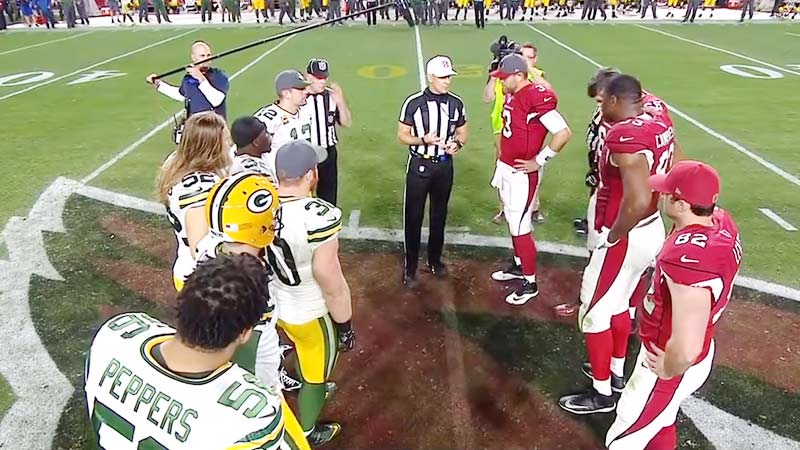
The referee might mishandle the coin flip. In the January 2016 NFC Divisional playoff between Green Bay and Arizona, the overtime coin landed without flipping, and referee Clete Blakeman tossed it again.
Interference
External factors like wind or stadium conditions could affect the coin toss, causing it to be blown off course or land unpredictably.
Coin Landing on Edge
In extremely rare instances, a coin might land perfectly on its edge, making it difficult to determine the winning side.
Incorrect Coin Side
If the designated “heads” or “tails” side of the coin is unclear or misidentified, it could lead to confusion during the coin toss.
Unclear Decision
The referee might not clearly hear or understand the winning captain’s decision regarding offense, defense, or end zone choice.
Team Mix-Up
The wrong captains or teams might step forward for the coin toss, causing confusion and requiring correction before proceeding.
Deferment Misunderstanding
If a team wants to defer their choice to the second half but doesn’t communicate it effectively, they might unintentionally make an immediate choice for offense or defense.
Coin Landing Outside Designated Area
In some cases, the coin might land outside the designated area for the toss, requiring a re-toss.
Lack of Consensus
If the captains from both teams cannot agree on a choice or decision, it could lead to delays or the need for a re-toss.
It’s worth noting that referees and officials involved in the coin toss process are experienced and trained to handle these situations professionally.
FAQs
Why is the coin toss important in football?
The coin toss is vital as it determines which team gains possession of the ball first, potentially influencing the early momentum of the game. Additionally, it allows the winning team to make strategic decisions that impact offense, defense, and field position throughout the match.
What are the choices presented to the winning captain?
The winning captain of the coin toss can choose between starting on offense or defense, selecting an end zone to defend, or deferring their choice to the second half. These choices can influence the team’s approach and set the tone for the game.
What happens if the captain’s choice matches the coin’s result?
If the captain’s call matches the side of the coin that lands facing up, their team wins the toss and gains the right to decide how to proceed. This can include choosing to kick off, receive the ball, or defer the decision to the second half.
How does the coin toss impact overtime and postseason games?
In overtime, the coin toss winner often chooses between offense, defense, or direction of play. The decision can influence the team’s chances of scoring in sudden-death scenarios. In postseason games, the coin toss holds even more weight due to higher stakes.
Can the coin toss lead to mistakes or controversies?
While rare, mistakes during the coin toss can occur, such as miscommunication of choices, coin landing on edge, or interference by external factors. Referees and officials are trained to handle such situations and ensure fairness.
Wrapping Up
The football coin toss, seemingly a brief prelude, is an embodiment of the sport’s essence – the blend of strategy, anticipation, and tradition that makes each game unique.
As the coin spins through the air, captains, coaches, players, and fans hold their collective breath, knowing that the outcome will set the stage for the exhilarating battle that lies ahead.
This simple ritual connects modern football to its traditions, and it shapes the game from the very first moment.