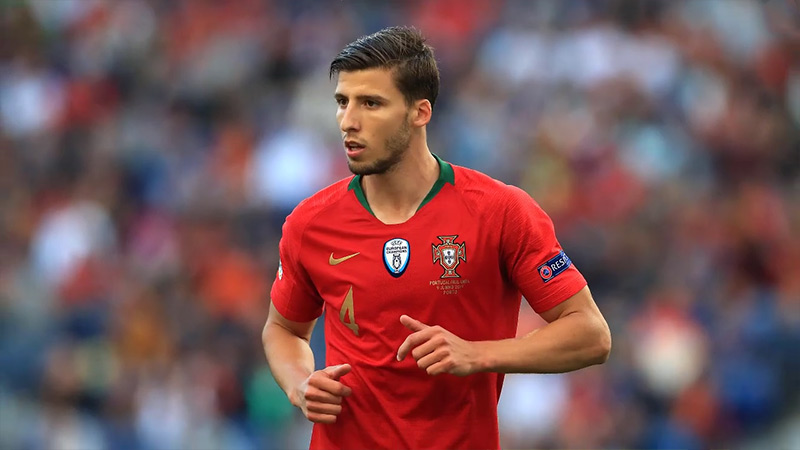
The landscape of international football has shifted toward a model of high-performance workload management. Yet, few situations have generated as much discourse as the recent playing time of Rúben Dias within the Portuguese national team.
As Portugal prepares for the 2026 FIFA World Cup, a segment of the global audience has raised questions regarding its perceived absence from certain starting lineups or its early exits from the pitch.
To understand the current status of the Manchester City defender, one must look beyond the basic team sheet and analyze the sophisticated tactical and physiological strategy employed by manager Roberto Martínez.
Far from being a sign of declining influence, the management of Rúben Dias is a testament to his status as the most indispensable asset in the squad.
Deconstructing the Misconception: Rotation vs. Replacement
The primary confusion regarding Dias’s availability often stems from a misunderstanding of how elite international managers approach non-competitive fixtures.
In high-stakes competitive matches, Rúben Dias remains a near-permanent fixture on the pitch. He is the team’s definitive defensive anchor, and his position in the starting XI for major tournament fixtures is not in question.
However, the modern football calendar is congested. Players competing at the highest levels of the Premier League and the Champions League, such as Dias, arrive at international breaks with significant “mileage” on their bodies.
Consequently, Roberto Martínez has adopted a policy of frequent squad rotation during friendly matches and non-critical qualification windows. This approach serves two strategic purposes:
- Testing Defensive Contingencies: By rotating central defenders, the coaching staff can evaluate backup pairings and develop chemistry between secondary options, ensuring the team is resilient should an injury occur during the tournament.
- Preservation of High-Value Assets: For a player of Dias’s caliber, playing ninety minutes in a friendly match offers diminishing returns compared to the risk of soft-tissue injuries or mental fatigue.
Case Study: The June 2026 Chile Match and the “87th-Minute Rule.”
A specific instance that triggered debate among fans was the match against Chile on June 6, 2026. Despite starting the game and commanding the backline with his usual authority, Dias was substituted in the 87th minute.
In a traditional context, a substitution so late in a game for a central defender is rare, as managers typically prefer to keep their defensive core intact to see out the result. Under the Martínez regime, however, this move is a calculated preservation tactic.
With an intense World Cup schedule looming, every minute spent on the pitch during the “fatigue zone”—the final ten minutes of a match where concentration dips and muscles are most vulnerable—is a risk.
By removing Dias in the 87th minute, Martínez provides a symbolic rest, allowing the player to begin his recovery protocol immediately while giving a substitute a brief taste of the match’s closing intensity.
The “Coach on the Field”: Why Leadership Trumps Statistics
The value Rúben Dias brings to the Portuguese national team cannot be measured solely by tackles won or passes completed.
Roberto Martínez has publicly categorized Dias as a “coach on the field,” a label reserved for players with exceptional organizational skills and tactical intelligence.
In the complex defensive systems favored by Martínez, the ability to organize the backline, manage the offside trap, and communicate instructions to the midfield is paramount.
Dias acts as the operational heartbeat of the defense. His presence allows more adventurous full-backs to push forward, knowing that the structural integrity of the center will be maintained through his constant vocal and positional adjustments.
This leadership role is why Dias is often granted “tactical rest” breaks. Once a game is under control or a qualification goal has been mathematically secured, Martínez has previously opted to leave Dias out of the matchday squad or even send him back to Manchester City early.
The logic is clear: if the tactical objective is met, the “coach” is better served resting for the next major challenge than participating in a low-priority environment.
Physical Readiness and the 27-Man Roster
Speculation regarding potential injuries has been a recurring theme in fan circles. However, the data confirms that Rúben Dias is fully fit. His inclusion in the final 27-man roster for the 2026 World Cup was never in doubt for the technical staff.
The expansion of tournament squads to 27 players has fundamentally changed how managers utilize their specialists. With a deeper pool of talent, there is less pressure to “overplay” key starters in the group stages.
Nonetheless, the expectation within the Portuguese camp is that Dias will start every major match in the upcoming group stages to provide the necessary stability for the knockout rounds.
Expert Analysis: The Long-Term Vision for the 2026 World Cup
For Portugal to succeed in 2026, they require a version of Rúben Dias that is not only fit but peak-performing. The strategy currently being criticized by some as “not playing him enough” is, in reality, the foundation of a championship-winning roadmap.
By managing his minutes now, the coaching staff ensures that:
- Mental Sharpness remains high: Avoiding burnout is crucial for a player who bears the burden of defensive organization.
- Tactical Versatility is tested: Rotating partners around Dias ensures that he is comfortable leading any combination of defenders that might be required due to in-match tactical shifts or suspensions.
- Peak Physicality for the Knockouts: The goal is for Dias to be at 100% capacity during the high-pressure elimination games, where his leadership and defensive prowess are most critical.
Frequently Asked Questions Regarding Rúben Dias’s Current Status
1. Is Rúben Dias injured?
No. He is currently fully fit and maintaining a rigorous training schedule. His absence from specific minutes is a result of workload management and tactical rotation by the coaching staff.
2. Has he lost his starting spot in the national team?
Absolutely not. He remains the team’s defensive anchor. While Roberto Martínez tests different pairings in friendlies, Dias is expected to be the first name on the defensive team sheet for all competitive World Cup fixtures.
3. Why was he subbed off so late against Chile?
This was a strategic move to preserve his fitness. Substituting a key player in the final minutes of a game helps manage physical load and reduces the risk of injury during the closing stages of a match when fatigue is highest.
4. Why did he leave the squad early during the qualification rounds?
On several occasions, once Portugal’s qualification was mathematically confirmed, the management team chose to release Dias back to his club. This builds goodwill with the player’s club and ensures he is not subjected to unnecessary travel and match-day stress for fixtures that do not impact the standings.
Conclusion: A Foundation of Stability
The narrative that Rúben Dias is “not playing” for Portugal is a perspective that overlooks the intricacies of modern sports science and elite-level management.
In the era of the 2026 World Cup, the value of a player is often shown in how carefully they are protected.
Rúben Dias is the cornerstone of the Portuguese defense. His role as a tactical leader and “coach on the field” makes him the most vital component of Martínez’s project.
As the tournament begins, the strategic rests and late-match substitutions of the past year will likely be revealed for what they were: a masterclass in talent preservation designed to ensure that Portugal’s anchor is ready to lead the nation to its first World Cup title.
Fans should look forward to the group stages with confidence, knowing that the “missing” anchor has been exactly where he needed to be—preparing to lead from the front when it matters most.