
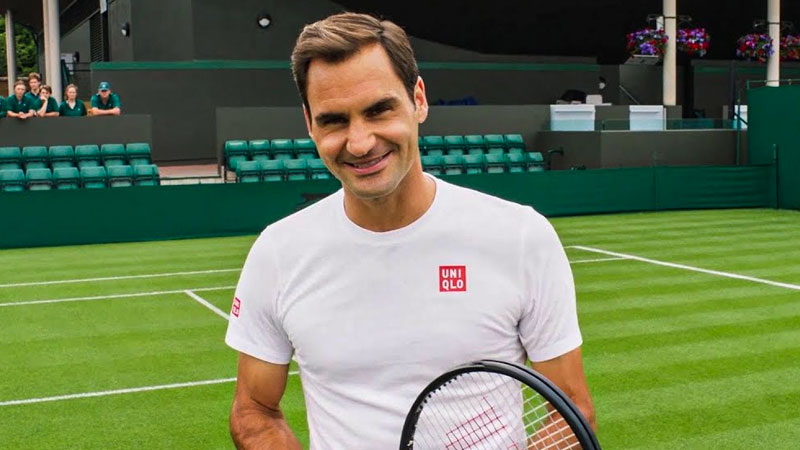
For over two decades, the debate over tennis supremacy has captivated international audiences. While conventional discussions often reduce greatness strictly to numerical counts, true athletic legacy is defined by a multi-dimensional synthesis of statistical dominance, technical mastery, aesthetic influence, and sustained excellence over time.
Roger Federer stands as the benchmark of modern athletic achievement. His career represents an unprecedented intersection of historic records, revolutionary court mechanics, remarkable longevity across multiple decades, and peerless global sportsmanship.
┌─────────────────────────────────────────────────────────────────────────┐
│                      THE FEDERER LEGACY MATRIX                          │
├───────────────────┬───────────────────┬────────────────┬────────────────┤
│    DOMINANCE      │     ARTISTRY      │   LONGEVITY    │  SPORTSMANSHIP │
│  310 Weeks No. 1  │ Effortless Motion │ Age 35 Slam W  │ 13x Edberg Award│
│ 237 Consecutive   │ Early Ball-Taking │ Multi-Decade   │  Global Icon   │
└───────────────────┴───────────────────┴────────────────┴────────────────┘
The Quantitative Foundation: Career Metric Breakdown
To evaluate Federer’s standing in athletic history, key performance indicators must be analyzed across major championships, ranking consistency, and total match performance.
Historical Career Benchmarks
| Performance Indicator | Documented Achievement | Historical Context & Significance |
|---|---|---|
| Grand Slam Singles Titles | 20 Majors | Includes a record 8 Wimbledon titles and 5 consecutive US Open titles. |
| Weeks at World No. 1 | 310 Total Weeks | Highlights sustained elite performance over a multi-year span. |
| Consecutive Weeks at No. 1 | 237 Consecutive Weeks | All-time ATP record maintained from Feb 2, 2004 to Aug 17, 2008. |
| Wimbledon Men’s Singles Titles | 8 Titles | Record for men’s singles titles at Wimbledon. |
| Consecutive US Open Titles | 5 Consecutive (2004–2008) | Unbroken dominance at Flushing Meadows over five consecutive seasons. |
| Consecutive Wimbledon Titles | 5 Consecutive (2003–2007) | Five straight titles during his peak grass-court era. |
| Career ATP Singles Titles | 103 Titles | Second all-time in the open era. |
| Career Match Victories | 1,087 Match Wins | Over a thousand professional match victories. |
| Grand Slam Finals Reached | 28 Finals | Reached 28 major championship finals. |
| ATP Sportsmanship Awards | 13 Awards | Voted by peers for the Stefan Edberg Sportsmanship Award. |
1: The Era of Unmatched Peak Dominance
When evaluating peak performance in professional sports, consistency across consecutive seasons serves as the definitive test. Between 2003 and 2008, Federer established a period of dominance unprecedented in the modern game.
- The 237-Week Reign at World No. 1: From February 2, 2004, to August 17, 2008, Federer held the top spot in the world rankings continuously for 237 weeks. This streak remains the longest consecutive tenure at World No. 1 in ATP history.
- Historical Back-to-Back Seasons (2005–2006): During the 2005 and 2006 campaigns, Federer compiled an astounding combined match record of 173 wins and 9 losses while securing five Grand Slam titles.
- The 10 Consecutive Grand Slam Finals Streak: Starting in 2005, Federer achieved a historic run of reaching 10 consecutive major finals, capturing 8 titles during this single stretch.
- Multi-Major Supremacy: Federer became the first player in history to win 5 or more titles at three distinct Grand Slam events (Australian Open, Wimbledon, and US Open).
- Surface Specialization and Dominance: He secured five consecutive Wimbledon crowns from 2003 to 2007 and five consecutive US Open titles from 2004 to 2008, proving his complete mastery on both grass and hard courts.
2: Technical Artistry and Court Efficiency
Beyond pure numbers, Federer revolutionized how tennis is played. Observers, coaches, and peers often describe him as a “tennis artist” due to his fluent biomechanics and efficient court coverage.
Technical Breakdown of the Federer Game Model
- Early Ball-Taking and Court Position:
- Federer played closer to the baseline than virtually any opponent, striking the ball on the rise.
- By taking time away from rivals, his early ball-taking created constant pressure and forced hurried returns.
- Forehand Mechanics:
- Utilizing an exceptionally fluid forehand swing, Federer generated effortless pace and acute angles without placing unnecessary physical stress on his body.
- Footwork Efficiency and Movement:
- His footwork relied on short, dancing adjustment steps that positioned him impeccably behind the ball.
- This movement minimized physical wear and tear, allowing him to navigate long matches while appearing completely unhurried.
- Serve Diversity and Disguise:
- Rather than relying solely on raw power, Federer used a consistent toss motion for flat, slice, and kick serves, making his delivery almost impossible to read before impact.
3: Longevity, Adaptive Mindset, and Late-Career Resurgence
Sustaining elite performance across two decades requires deep mental adaptability and physical management.
Table 2: Milestones in Longevity and Resurgence
| Age / Stage | Major Achievement | Strategic Significance |
|---|---|---|
| Age 35 Victory | 2017 Australian Open Title | Became the oldest Grand Slam men’s singles champion in 45 years. |
| Post-30 Major Titles | Multiple Majors Won After 30 | Joined an elite group of six players in history to win multiple majors after age 30. |
| 20-Year Career Span | Multi-Decade High Performance | Competed at the pinnacle of international tennis across two distinct decades. |
| 28 Major Finals | Sustained Championship Presence | Reached 28 major finals, establishing an enduring standard of high-level performance. |
The Resurgence Mindset
During high-stakes moments, such as his legendary comeback at the 2017 Australian Open, Federer adopted a liberating psychological approach.
By entering late-career matches with a “nothing to lose” philosophy while maintaining belief until the final point, he turned high-pressure situations into career-defining victories.
4: Global Impact and Unparalleled Sportsmanship
Greatness extends beyond victories to encompass how an athlete conducts themselves on and off the competitive stage.
- Peer Respect and Honor: Federer received the ATP Stefan Edberg Sportsmanship Award a record 13 times. This award, voted on by fellow professional players, underlines the profound respect he earned across the locker room.
- Elevating the Sport’s Global Footprint: Federer transformed tennis into a graceful, globally celebrated spectacle, inspiring millions of fans with his elegance and poise.
- Ambassadorial Role: Throughout his career, he represented the sport with dignity, bridging generations of players and fans while remaining accessible and grounded.
Conclusion: The Indelible Blueprint of a Legend
Roger Federer’s legacy transcends statistics. While his 20 Grand Slam titles, 310 weeks at World No. 1, and 103 ATP titles place him in the upper echelon of sporting history, it is the harmony between his numerical records and his graceful execution that establishes him as the benchmark of greatness.
He redefined what was possible on a tennis court, turning athletic competition into an enduring art form.






