In professional football, stability is a rare and expensive commodity. Every offseason, NFL franchises willingly subject themselves to organizational volatility, chasing the promise of tactical revolutions.
Yet, history shows that the most successful organizations prioritize system design and coaching infrastructure over constant reinvention.
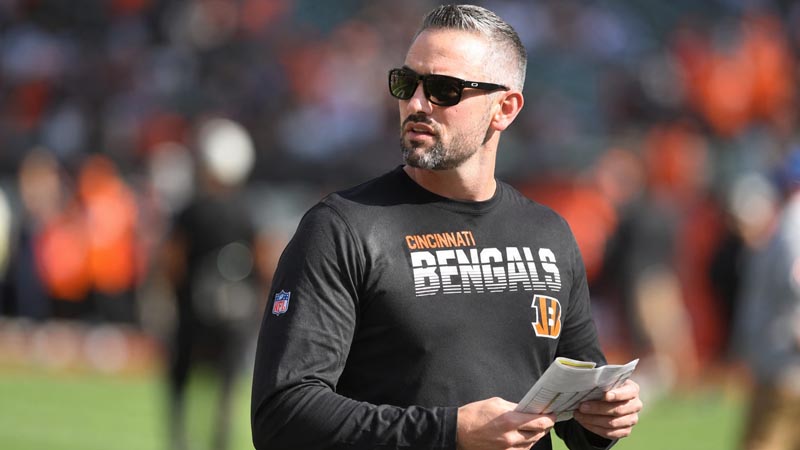
For Cincinnati, the decision to retain offensive coordinator Dan Pitcher is not merely a standard coaching renewal; it is a calculated effort to protect and maximize the prime years of franchise quarterback Joe Burrow.
In an era where play-calling turnover often stunts the development of elite quarterbacks, maintaining a stable baseline is the ultimate competitive advantage.
By keeping Pitcher at the helm of the offense, Cincinnati avoids the structural friction of an offensive overhaul and secures a foundation built for long-term championship contention.
The Real Cost of Systemic Turnover in the NFL
Every time an NFL team changes its offensive coordinator, it incurs a massive, hidden cost. This overhead is measured not just in contract dollars, but in cognitive load, lost development time, and administrative friction.
The Cognitive Burden of New Terminology
When a new offensive scheme is installed, players do not just learn new plays; they must learn an entirely new language.
- The Translation Phase: A simple concept like a three-step drop with a curl-flat combination might be called “Texas” in one system and “Hank” in another. Forcing an established quarterback to translate concepts in real time during a game slows pre-snap decision-making.
- Decelerated Reaction Times: When players must think rather than react, execution suffers. Offense is about anticipation.
- The Loss of Nuance: In a new system, the first year is spent mastering basic mechanics. Only in the second and third years can a coaching staff introduce high-level adjustments and customized wrinkles.
By retaining Pitcher, Cincinnati bypasses this translation phase entirely. The players do not have to spend spring workouts memorizing terminology. Instead, they can focus immediately on refining their physical performance and mastering advanced concepts.
Protecting the Core Infrastructure
A quarterback does not operate in a vacuum. His success is dictated by the infrastructure surrounding him.
[Joe Burrow] <---> [Dan Pitcher] <---> [Position Coaches] <---> [Offensive Line & Skill Positions]
       ^                                                                       ^
       |_______________________(Shared Tactical Vocabulary)____________________|
When an offensive coordinator leaves, the entire offensive coaching staff often scatters with him. This breaks the communication lines that exist between position coaches, the quarterback, and the front office.
Keeping Pitcher keeps this core infrastructure fully intact, protecting the heavy investment Cincinnati has made in its passing attack.
The Burrow-Pitcher Partnership: An Analytical Deep Dive
The connection between a quarterback and his play-caller is one of the most critical relationships in professional sports.
It requires an alignment of philosophy, an understanding of mechanical limitations, and an unspoken trust on game days.
                    ┌───────────────────────────────┐
                    │     Dan Pitcher (OC)          │
                    └───────────────┬───────────────┘
                                    │
                       Years of Shared Film Study,
                       Terminology, & Adjustments
                                    │
                                    v
                    ┌───────────────────────────────┐
                    │     Joe Burrow (QB)           │
                    └───────────────────────────────┘
The Transition from Position Coach to Coordinator
Pitcher’s progression within the organization is a textbook example of healthy coaching succession. Before stepping into the coordinator role, he worked closely with Burrow as the team’s quarterbacks coach.
This history means Pitcher did not have to spend months learning Burrow’s processing speed, his pocket preferences, or how he reacts to specific defensive coverages.
They had already logged thousands of hours together in film rooms, discussing situational football, third-down conversions, and red-zone strategies.
This long-term bond ensures that when Pitcher designs a game plan, it is custom-built for Burrow’s exact strengths.
The Elements of Professional Trust
To operate a high-powered offense, a coordinator must bring specific personal and intellectual qualities to the table. Pitcher’s coaching style is characterized by four distinct pillars:
- Clarity: Providing direct, unambiguous instructions that eliminate hesitation on the field.
- Detail: Structuring plays with precise spacing, depth, and timing to manipulate modern defensive schemes.
- Vision: Anticipating how defensive coordinators will adapt throughout a game and having pre-planned counters ready.
- Passion: Infusing the offensive unit with an energy that builds collective confidence.
These attributes are not easily replaced by external hires. When players know that their coordinator possesses a clear vision and an obsessive attention to detail, they buy into the game plan completely, creating a unified on-field product.
Micro-Communication and Game Day Velocity
In the modern NFL, games are won and lost in the margins of seconds. The speed at which a coaching staff communicates, adjusts, and executes determines their weekly efficiency.
[Coaching Booth: Pitcher] ---> (Radio headset: 15-second cutoff) ---> [Burrow on Field]
                                                                            │
                                                                   (Pre-Snap Alignment)
                                                                            │
                                                                    (Instant Adjustments)
The 15-Second Radio Window
By rule, the radio communication from the coordinator to the quarterback’s helmet shuts off when the play clock hits 15 seconds. Within this tight window, the coordinator must:
- Assess the personnel on the field.
- Select the correct play call based on down, distance, and field position.
- Articulate the call clearly, including protections, formations, motions, and individual route adjustments.
- Leave enough time for the quarterback to repeat the call in the huddle and line up the offense.
When a quarterback and play-caller are in their first year together, this process is often rushed. Miscommunications occur, leading to wasted timeouts, delay-of-game penalties, or bad pre-snap alignments.
Because Burrow is deeply familiar with Pitcher’s voice, cadence, and daily communication habits, this exchange becomes second nature.
Pitcher can deliver shorthand instructions that Burrow instantly understands, saving valuable seconds and allowing the offense to operate with a high tempo when needed.
Eliminating On-Field Friction
A clean game-day operation requires the entire offensive unit to react faster and play cleaner. When the quarterback is confident in the play-caller, that confidence trickles down to the offensive line, the tight ends, and the receivers.
Familiarity with Pitcher’s communication style allows the unit to break the huddle quickly, read defensive alignments, make post-snap adjustments, and execute their assignments with minimal hesitation.
The Blueprint for Strategic Evolution
Continuity does not mean standing still. To remain competitive, an offense must evolve to counter the defensive adjustments designed to stop them. The benefit of retaining Pitcher is that this evolution can be surgical rather than disruptive.
Defining the On-Field Targets
Under Pitcher’s ongoing direction, the offense operates with two explicit, data-driven goals:
                  ┌───────────────────────────────┐
                  │      Offensive Strategy       │
                  └───────────────┬───────────────┘
                                  │
         ┌────────────────────────┴────────────────────────┐
         v                                                 v
┌───────────────────────────────┐                 ┌───────────────────────────────┐
│     More Explosive Plays      │                 │       Fewer Turnovers         │
│  - Deep vertical passing      │                 │  - Cleaner protections        │
│  - Yards after catch (YAC)    │                 │  - Smart decision-making      │
│  - Creative run integration   │                 │  - Precise route running      │
└───────────────────────────────┘                 └───────────────────────────────┘
1. Generating More Explosive Plays
To stretch opposing defenses, an offense must threaten all three levels of the field. Under Pitcher, the coaching staff works directly on schemings that create explosive plays—defined as passes of 15+ yards and runs of 10+ yards.
Because the foundation of the playbook is already secure, the staff can spend their time designing creative downfield concepts, utilizing play-action designs, and maximizing the individual talents of their skill players.
2. Committing Fewer Turnovers
Explosive playmaking must be balanced with ball security. Turnovers are the single most highly correlated statistic to winning and losing in the NFL.
By avoiding the introduction of a new, unfamiliar scheme—which naturally leads to missed assignments, poor route depths, and protection breakdowns—Cincinnati minimizes the risk of unforced errors.
The quarterback knows exactly where his hot reads are, the offensive line knows their protection slides, and the receivers understand their spacing.
Iterative Growth Over Total Reconstruction
When a team keeps its system stable, offseason self-scouting becomes incredibly powerful. The coaching staff can look at their performance from the previous season and ask: “How do we make our existing concepts better?”
If they had changed coordinators, they would be asking: “How do we teach this team to run a whole new set of concepts?”
Pitcher’s presence allows Cincinnati to build upon its established baseline, adding new wrinkles to a system that players already understand inside and out.
Navigating Gaps and Adapting to Defensive Trends
While the advantages of system continuity are undeniable, a professional analysis must also examine the challenges that come with this approach. No strategy is without potential vulnerabilities, and identifying these areas is key to overcoming them.
The Risk of Predictability
The primary risk of maintaining the same offensive system over multiple seasons is that opposing defensive coordinators accumulate a vast library of film on your concepts. They study your tendencies, your formation keys, and your situational preferences.
- The Trap of Comfort: When a coaching staff is comfortable with their playbook, they can fall into predictable calling patterns.
- The Adjustment Dilemma: The coaching staff must continually find ways to innovate within their established framework to ensure defensive players cannot guess the play pre-snap.
The Play-Calling Evolution
Another critical area that remains a work in progress is the precise distribution of play-calling responsibilities and how the staff intends to adapt to changing defensive trends.
Maintaining system stability prevents disruption, but it does not automatically guarantee that the team will counter complex defensive schemes effectively.
Pitcher and his staff must remain highly adaptable, ensuring they do not let continuity drift into complacency.
They must constantly challenge their own assumptions, integrate modern schematic elements, and ensure their weekly adjustments are as dynamic as the defenses they face.
The Long-Term Organizational Outlook
For Cincinnati, the retention of Dan Pitcher represents a mature, disciplined approach to franchise management. It is a recognition that the ultimate goal is to build a sustained championship window around an elite quarterback.
By choosing stability over change, the organization has made a direct investment in the health, development, and efficiency of Joe Burrow.
                                  [Championship Window]
                                            ^
                                            │
                             [Sustained High-Level Play]
                                            ^
                                            │
                            [On-Field Communication Speed]
                                            ^
                                            │
                          [System Stability & Team Trust]
                                            ^
                                            │
                          [Retention of Dan Pitcher (OC)]
As the team moves forward, the benefits of this decision will manifest in quiet, critical moments: a third-down adjustment made in seconds on the sideline, an explosive play executed with perfect timing against a disguised coverage, or a clean, turnover-free performance in a hostile environment.
In a league that often panics and searches for new answers, Cincinnati chose the power of design, trust, and continuous growth. That choice remains their strongest strategic advantage.