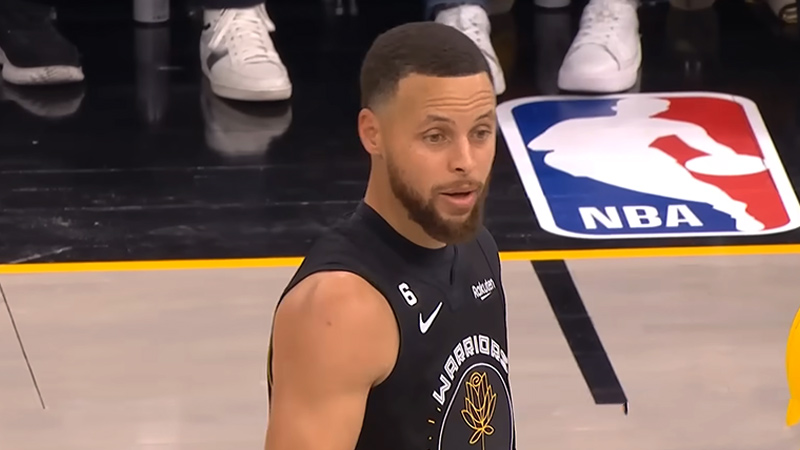
The Golden State Warriors recently shocked the basketball world when Stephen Curry, the NBA’s all-time leading three-point shooter, began appearing on the bench rather than in the starting lineup.
While seeing a two-time MVP as a sixth man is rare, this transition is a calculated masterstroke of sports science known as the “Curry Protocol.” Far from a demotion, this strategy optimizes recovery from significant injuries while maintaining high-stakes performance.
By managing load and eliminating physiological cooling periods, the Warriors ensure their superstar remains elite when it matters most. Understanding this tactical shift reveals the future of superstar longevity.
The Physiological Blueprint of the Curry Protocol
The primary driver behind this unconventional rotation is a sophisticated minutes-management strategy developed by the Warriors’ medical staff and head coach Steve Kerr.
When a player of Curry’s caliber returns from a lengthy absence—such as a major right knee injury or a bone bruise—the body requires a structured ramp-up to handle the explosive demands of professional basketball.
Simply starting a game does not always provide the most efficient path to full recovery. Instead, the team prioritizes a controlled environment where intensity is high but the total volume of work is strictly monitored to prevent setbacks.
Strict Minutes Restriction and Load Management
The medical staff typically implements a cap of roughly 25 to 26 minutes per game during the initial phase of a superstar’s return.
This restriction is not arbitrary; it is designed to prevent over-exertion after long absences, such as the 27-game hiatus Curry faced following a knee injury.
By starting on the bench, the coaching staff gains granular control over exactly when those 25 minutes are spent, ensuring Curry isn’t forced into “junk time” or over-extended during unexpected game fluctuations.
Eliminating the “Dead Warmup” Period
One of the most critical scientific reasons for coming off the bench is the elimination of “dead warmup” time. In a traditional starting role, a player warms up, plays the first several minutes, and then sits for a significant portion of the first and second quarters.
During this time on the bench, the body begins to cool down, requiring a secondary re-warmup period before the player can return to peak intensity.
By entering the game as a reserve, Curry can play in shorter, higher-intensity bursts that keep his muscles at optimal operating temperature without the interrupted “start-sit-cool-down” cycle.
Strategic Advantages of the Elite Sixth Man
Beyond the medical justifications, there is a profound tactical advantage to having the most feared shooter in history lead the second unit.
When Stephen Curry enters the game mid-quarter, he often faces opponents who have already been sprinting for several minutes, giving him a distinct cardiovascular and energy advantage.
This creates a massive mismatch, as the opposing team’s defensive intensity often wanes just as the Warriors’ most potent weapon is unleashed.
The Coordination of Quarter Closures
A specific element of this protocol involves the coordination between Curry and the coaching staff to target the final six minutes of each quarter. This ensures that Curry is on the floor for the “clutch” moments of every period, where games are often won or lost.
By preserving his limited minutes for the end of quarters, the Warriors guarantee that their best player is available to close out tight games and provide a psychological boost to the team during high-stakes transitions.
Creating Defensive Chaos for Opponents
Opposing defenses, such as the Denver Nuggets during the 2022 playoffs, already struggle to contain the Warriors’ secondary scorers like Klay Thompson and Jordan Poole.
When Curry is introduced into this mix from the bench, it creates a “pick your poison” scenario for the defense.
The presence of multiple elite shooters simultaneously forces the opposition to abandon traditional defensive schemes, often leading to open looks for the entire Golden State roster.
Data-Driven Results: The 2022 Playoff Case Study
To understand the effectiveness of this strategy, one must look at the historical precedent set during the 2022 NBA Playoffs. This was not the first time the Warriors utilized this “bench-rotation formula” to manage a superstar’s return.
During that championship run, Curry returned from a foot injury and successfully anchored the second unit before eventually transitioning back to the starting lineup.
The Minutes Progression Analysis
The following table illustrates how the Warriors systematically increased Curry’s workload during the opening round of the 2022 playoffs against the Nuggets, demonstrating the “ramp-up” phase of the protocol.
| Game Phase | Minutes Played | Role | Statistical Impact |
|---|---|---|---|
| Game 1 | 22 Minutes | Bench | Controlled return, low risk |
| Game 2 | 23 Minutes | Bench | Incremental increase, high efficiency |
| Game 3 | 31 Minutes | Bench | Post-conditioning surge |
| Game 4 | 37 Minutes | Bench | Full intensity, no restrictions |
Transitioning to Full Capacity
By Game 5 of that series, the medical restrictions were typically lifted entirely. Once the player has demonstrated that their body can handle 35+ minutes without adverse reactions, the “protocol” concludes, and the player returns to the starting lineup.
This gradual progression ensures that by the time the team reaches the deeper rounds of the playoffs, their star player is conditioned for the highest possible stakes.
The Psychological Impact on Team Culture
Implementing the Curry Protocol requires a unique level of buy-in from a superstar. In an era where “starting” is often tied to a player’s ego and brand, Curry’s willingness to embrace a reserve role for the benefit of the team speaks to the Warriors’ internal culture.
This selflessness trickles down to the rest of the roster, reinforcing the idea that the “how” and “when” of playing time are secondary to the ultimate goal of winning a championship.
| Key Advantage | Description |
|---|---|
| Injury Mitigation | Reduces the risk of re-injury by avoiding cold-starts and over-extension. |
| Bench Scoring Depth | Turns a traditional weakness into a massive strength by leading the second unit. |
| Clutch Availability | Ensures the star player has “fresh legs” for the final minutes of the game. |
| Tactical Flexibility | Allows the coach to experiment with lineups like the “Three Splash Brothers”. |
Frequently Asked Questions
Is Stephen Curry’s move to the bench permanent?
No. The bench role is a temporary, strategic measure used specifically during injury recovery to manage minutes and physical load. Once a player is fully conditioned, they typically return to the starting lineup, as seen in previous playoff iterations.
How does this strategy affect the rest of the Warriors’ lineup?
It allows players like Jordan Poole or other secondary scorers to maintain their rhythm with the starting unit while Curry provides a massive spark for the reserves. This depth makes the Warriors significantly harder to scout and defend over a seven-game series.
Why not just start him and play him fewer minutes?
Starting a player and then sitting them early causes their body temperature and heart rate to drop. Entering from the bench allows for a “continuous burn” where the player stays warm and active for their entire stint, which is safer for recovering ligaments and muscles.
Conclusion: A Masterclass in Modern Longevity
The Curry Protocol is more than just a coaching decision; it is a blueprint for how elite organizations should manage their most valuable assets.
By prioritizing physiological data and strategic game flow over traditional optics, the Golden State Warriors have found a way to bridge the gap between injury recovery and championship-level performance.
As the NBA continues to evolve into a more data-driven league, expect to see more teams adopt this “superstar-reserve” model for returning legends.
It preserves the athlete’s health, demoralizes the opponent’s second unit, and ensures that the best players in the world are at their peak when the trophy is on the line.