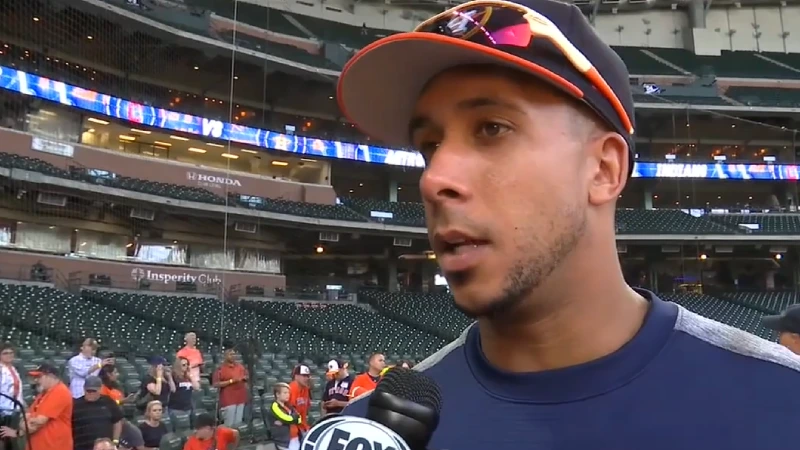
For fans of Major League Baseball, the name Michael Brantley is synonymous with a smooth left-handed swing and a professional approach at the plate.
However, throughout his career, a recurring theme has often overshadowed his offensive prowess: his availability.
If you find yourself asking, “Why is Brantley on the DL?”, the answer is rarely a single incident, but rather a complex history of chronic right ankle issues and shoulder complications that have required careful management by his teams.
Understanding Brantley’s frequent stints on the disabled list (now known as the Injured List) requires looking back at the specific physical hurdles he has faced, ranging from major surgeries to precautionary recovery windows designed to preserve his long-term health.
A History of Resilience: Understanding Brantley’s Injury Profile
Michael Brantley’s time on the DL has historically been concentrated in two primary areas: his right shoulder and his right ankle.
These are not just minor aches; they are fundamental to a ballplayer’s mechanics. The right shoulder is essential for the lead arm in a left-handed swing, while the right ankle provides the stability and pivot point necessary for both hitting and fielding.
According to historical reports, Brantley’s injury log is characterized by a cycle of surgery, recovery, and the subsequent management of inflammation or “aggravation” during active play.
The Shoulder Struggle: 2015–2016
The genesis of much of Brantley’s missed time can be traced back to late 2015. Following a highly productive season, he underwent shoulder surgery in late 2015. This procedure had a significant ripple effect on his 2016 campaign.
- Significant Time Missed: Brantley missed a substantial portion of the 2016 season as a direct result of the recovery process from this surgery.
- Post-Surgical Inflammation: Even after returning to the field, the path was not linear. In May 2016, he was placed back on the DL specifically due to inflammation in his right shoulder. This highlights a common theme in Brantley’s career: the injury itself is often less of a hurdle than the inflammatory response that follows a return to high-intensity activity.
The Ankle Chronicles: 2017 and the Cycle of Aggravation
By 2017, the focus of Brantley’s health concerns shifted from his shoulder to his right ankle. This lower-body instability became a chronic issue that required multiple DL stints to manage.
- The June 2017 Stint: Brantley was placed on the 10-day DL in June 2017 following a sprained right ankle.
- Aggravation During Play: The injury was not a “one-and-done” event. It was aggravated during play, a situation that forced the team to prioritize rest to avoid “long-term issues”. This proactive approach to the DL—using it as a tool for prevention rather than just reaction—became a hallmark of how his teams handled his health.
Strategic Rest: Recovery Management in 2018
One of the most interesting answers to “Why is Brantley on the DL?” occurred at the start of the 2018 season. Unlike many stints that follow a specific on-field collision or “pop,” his 2018 placement was purely strategic.
Despite appearing healthy during Spring Training, Brantley began the 2018 season on the DL. This was classified as “Recovery Management”.
The goal was to ensure that his surgically repaired right ankle was fully prepared to handle the grueling “load of a full season”.
This illustrates a critical point for fans: Brantley’s presence on the DL does not always mean he is currently “broken.”
Often, it means the training staff is managing the workload of a surgically repaired joint to ensure he is available for the most important stretches of the season.
The “Precautionary” DL Stint: Professional Athlete Longevity
During his tenure in Cleveland, Brantley frequently dealt with minor re-injuries to his shoulder and ankle. These recurring tweaks led to stints described as “precautionary, but necessary” stints on the disabled list.
- The Logic of Precaution: For a player like Brantley, whose value lies in consistent contact and elite outfield play, playing at 70% health can often do more harm than good. By taking 10 days off to address minor inflammation, the team avoids a major tear or a season-ending setback.
- The Chronic Nature: Because these injuries are described as “chronic,” the DL becomes a revolving door of sorts—a place to reset the body when the “load” of the MLB schedule becomes too high for his joints to sustain.
The Impact of Aging and Mechanics
It is worth noting that as players age, recovery times naturally lengthen. For a veteran like Brantley, what might be a three-day recovery for a younger player often necessitates a full DL stint to ensure the soft tissue has completely healed.
Furthermore, his mechanics as a “line-drive” hitter require immense torque from the lower body; any weakness in the right ankle can cause a “collapse” in the swing, leading to poor performance and further injury as the player overcompensates with other muscle groups.
Why These Injuries Matter for His Performance
It is important to recognize that the right ankle and right shoulder are the “anchor points” for a left-handed hitter.
- The Lead Shoulder: The right shoulder guides the bat through the zone. Inflammation here directly impacts a hitter’s ability to “stay inside” the ball and maintain the “Dr. Smooth” swing.
- The Lead Ankle: As a lefty, the right ankle is the front foot. It absorbs the force of the swing and provides the base for the pivot. Chronic issues here can lead to a loss of power and stability.
Conclusion: The Reality of Being Michael Brantley
Ultimately, Michael Brantley is on the DL because his commitment to playing through pain often results in the aggravation of chronic issues.
His injury history is a testament to the physical toll of professional baseball, specifically the long-term consequences of major shoulder and ankle surgeries.
Whether it is a sprained ankle in June, inflammation in the shoulder, or a calculated “Recovery Management” stint to start a season, every trip to the DL is a strategic move to keep one of baseball’s best hitters in the lineup for the long haul.
While it may be frustrating for fans to see him sidelined, these “precautionary” stays are often the only reason he is able to return and perform at an All-Star level year after year.