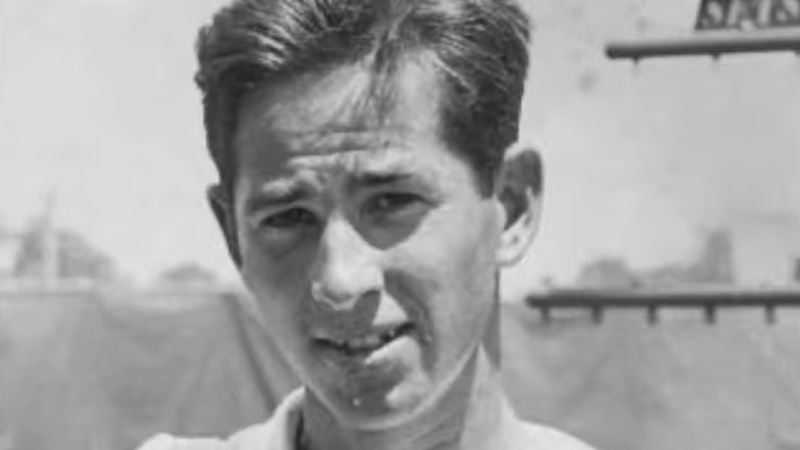
Bobby Riggs is not playing tennis because he passed away on October 25, 1995, at the age of 77 following a courageous battle with prostate cancer.
While the former 1939 World No. 1 and Wimbledon Champion remained active in senior circuits and amateur “hustling” for decades, his physical presence on the court concluded permanently due to failing health.
Historically, Riggs’ absence from competitive play evolved through his 1962 professional retirement, a notorious performance decline during the 1973 “Battle of the Sexes,” and his 1987 medical diagnosis, which eventually silenced his final volley.
What Happened to Bobby Riggs?
Bobby Riggs passed away on October 25, 1995, at his home in Leucadia, California, marking the end of an era for a man who transformed tennis into a cultural spectacle.
His death followed a lengthy and difficult struggle with prostate cancer, a condition that was first diagnosed in 1987.
For a man whose life was defined by movement, competition, and the thrill of the “hustle,” the final years were a period of reflection and preservation as he sought to cement his historical standing before his physical capabilities were completely taken by the disease.
A Courageous Battle with Prostate Cancer
The diagnosis in 1987 served as the definitive catalyst for his withdrawal from active play. While Riggs had spent his younger years as the 1939 World No. 1 and a Wimbledon Champion, the onset of cancer in his late 60s forced a significant lifestyle shift.
He spent the better part of a decade managing the illness, which eventually made it impossible for him to compete in the senior tennis circuits or enjoy recreational golf.
This medical reality is the primary reason why Riggs is no longer seen in the sporting world today.
Preserving the Heritage of a Champion
Recognizing that his time on the court was nearing its end, Riggs dedicated his final years to establishing the Bobby Riggs Tennis Museum.
This initiative was designed to ensure that his contributions to the sport—both as a champion and a showman—would be remembered by future generations.
Even as his health failed, his focus remained on the history of the game, ensuring that the stories of his most famous matches would live on long after he had struck his final volley.
Why Did Bobby Riggs Stop Playing Professional Tennis?
The query regarding why Riggs stopped playing often refers to his departure from the traditional professional circuit decades before his death. In 1962, at the age of 44, Bobby Riggs officially retired from professional tennis competition.
This was not merely a matter of age, but a calculated shift in interest as he sought out different forms of competition that offered higher personal stakes and more immediate financial rewards.
Transitioning from Pro Champion to Amateur Hustler
After 1962, Riggs began to distance himself from the rigid structure of professional tours. He became increasingly fascinated with high-stakes gambling and amateur golf, where his personality and skill for the “hustle” could be more effectively utilized.
He often engaged in amateur matches for money, using his reputation to entice opponents into bets they had little hope of winning. This transition allowed him to remain a public figure while avoiding the grueling demands of the professional tennis circuit.
The Evolution of the Showman Persona
During this period of “retirement,” Riggs actually intensified his public profile by leaning into his persona as a provocateur. He wasn’t playing traditional tennis because he found the amateur circuit and exhibition matches to be more lucrative and entertaining.
By the time the 1970s arrived, he was less of a traditional athlete and more of a global brand, setting the stage for the most famous exhibitions in sports history.
The 1973 “Battle of the Sexes” Drop-off
One of the most common reasons people inquire why Riggs “wasn’t playing” effectively concerns his 1973 loss to Billie Jean King. Earlier that year, at age 55, Riggs had easily defeated Margaret Court, leading many to believe he was still a formidable force.
However, during the televised match against King, he appeared to be a shadow of his former self, sparking decades of debate about his physical condition and motivations.
The Lack of Conditioning and Training
Unlike his rigorous preparation for the Margaret Court match, Riggs essentially ignored physical training in the lead-up to his encounter with Billie Jean King.
Instead of practicing on the court, he spent months engaging in heavy media promotion, partying, and consuming alcohol.
This total lack of preparation meant that when he stepped onto the court in Houston, he was physically incapable of matching the intensity and speed required for a high-level match.
Facing a Strategically Superior Opponent
Billie Jean King entered the match with a sharp strategic plan that directly exploited Riggs’ age and lack of fitness. She forced him to run back and forth across the court repeatedly, a tactic designed to deplete his energy quickly.
By the third set, the 55-year-old Riggs was completely out of breath and exhausted, leading to numerous unforced errors. It wasn’t that he had stopped playing in a literal sense, but his body had reached its limit against an opponent who had trained relentlessly.
Did Bobby Riggs Intentionally Lose the Match?
The dramatic nature of his loss led to persistent rumors that Riggs “tanked” or intentionally threw the match. These theories often suggest that he wasn’t playing to win because of external pressures that had nothing to do with tennis skills.
| Claim Type | Theoretical Basis | Reality and Evidence |
|---|---|---|
| The Mafia Debt | Rumors claimed Riggs owed $100,000 in gambling debts to the Mafia. | These allegations have persisted for decades but remain unproven. |
| The “Dive” Theory | Observers noted unforced errors and a lack of his usual tactical brilliance. | Riggs’ exhaustion and lack of training explain these errors without needing a conspiracy. |
| Match-Fixing | Speculation that the match was fixed to pay off creditors. | Riggs took a televised polygraph test in 1983 and passed, denying he threw the match. |
| Intentional Loss | The idea that he lost on purpose for a future “rematch” payout. | Riggs maintained until his death that he simply lost to a better-prepared player. |
The Final Set: From Senior Tennis to Permanent Retirement
The final reason why Bobby Riggs is not playing involves the natural progression of his health in the late 1980s and early 1990s. Even after the spectacle of 1973, Riggs continued to play senior tennis and recreational golf whenever his schedule allowed.
However, the 1987 diagnosis of prostate cancer eventually brought these activities to a permanent halt.
The Impact of the 1987 Diagnosis
As the cancer progressed, the physical toll became too great for even a man of Riggs’ legendary energy. He was eventually forced to stop playing senior tennis entirely, as the disease sapped his strength and made the physical demands of the sport impossible.
This period of his life was marked by a shift from the court to the clinic, as he focused on his long battle with the disease.
The Legacy of the Final Volley
Even when he could no longer pick up a racket, Riggs remained a presence in the tennis world through his museum and public appearances.
He passed away on October 25, 1995, at age 77, leaving behind a legacy that is still discussed in the context of gender equality, sportsmanship, and the art of the hustle. His permanent absence from the game today is a result of this final chapter in his life.
Frequently Asked Questions about Bobby Riggs
How old was Bobby Riggs when he died?
Riggs was 77 years old when he passed away on October 25, 1995.
What was the official cause of his death?
He died from prostate cancer after battling the disease for several years following his 1987 diagnosis.
When did he officially retire from professional tennis?
Bobby Riggs retired from the professional circuit in 1962 at the age of 44.
Did Bobby Riggs lose on purpose to Billie Jean King?
While rumors suggest he “tanked” to pay off Mafia debts, Riggs passed a polygraph test in 1983 and insisted he simply lost due to a lack of preparation and exhaustion.
What did he do in his final years?
He focused on establishing the Bobby Riggs Tennis Museum to preserve his legacy before his health fully declined.
Conclusion: The Enduring Mystery of the Hustler
Bobby Riggs remains one of the most polarizing and fascinating figures in the history of sports. Whether you remember him as the 1939 Wimbledon Champion or the man who lost the “Battle of the Sexes,” his impact on the game is undeniable.
Today, his absence from the court is a reminder of the inevitable passage of time and the legacy of a man who lived for the next great match.
Through his museum and his historical matches, the “King of the Hustlers” continues to influence how we view the intersection of entertainment and athletics.