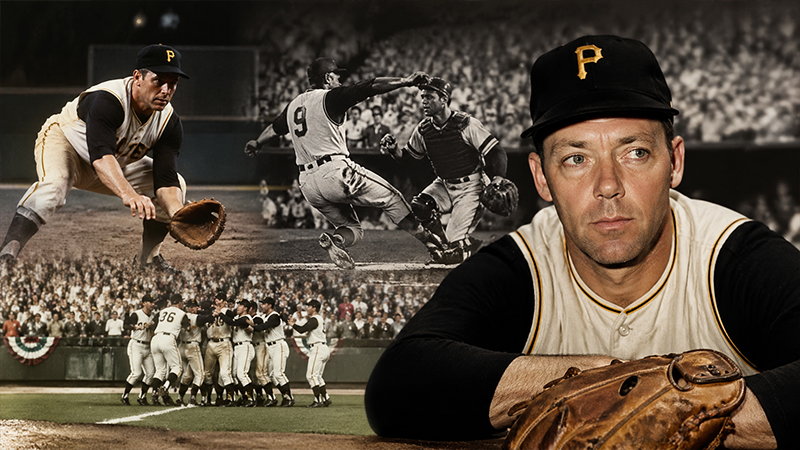
In the pantheon of Major League Baseball, few inductions have sparked as much institutional change and heated debate as that of Bill Mazeroski.
Often simplified to a single swing of the bat in the 1960 World Series, Mazeroski’s legacy is actually a complex tapestry of defensive record-breaking, advanced metrics, and a polarizing Hall of Fame candidacy that forced the National Baseball Hall of Fame to rewrite its own rules.
This strategic analysis explores why a .260 lifetime hitter occupies a plaque in Cooperstown, how his “defensive artistry” redefined the second base position, and the lasting impact of the “Mazeroski Rule” on the Veterans Committee.
The Foundation of Excellence: Defense as a Primary Value Metric
For decades, the Hall of Fame was primarily an offensive clubhouse. To get in, you usually needed 3,000 hits or 500 home runs. Bill Mazeroski shattered that archetype.
His induction in 2001 was a victory for the “defense-first” philosophy, proving that elite run prevention is as valuable as run production.
The Statistical Case for Defensive Perfection
Mazeroski wasn’t just “good” at second base; he was arguably the greatest to ever play the position. During his 17-season career with the Pittsburgh Pirates, he established benchmarks that have remained untouched for over half a century:
- The Double Play King: Mazeroski holds the all-time MLB record for the most double plays turned by a second baseman, with 1,706.
- Gold Glove Dominance: He earned eight Gold Glove Awards, a testament to his peerless reputation among contemporary players and coaches.
- Range and Efficiency: He led the National League in assists a record nine times, showcasing a lateral range that redefined what was possible at the “keystone” position.
- The dWAR Reality: Advanced metrics, which did not exist during his playing days, have since validated his excellence. Mazeroski currently ranks 24th all-time in Defensive Wins Above Replacement (dWAR).
Mazeroski represents the ultimate “specialist” persona. He didn’t try to be a power hitter; he focused on the “artistry” of the pivot, making him an indispensable asset to a championship-caliber roster.
The 1960 Miracle: When a Specialist Becomes a Legend
While his defense provided the floor for his HOF case, the ceiling was built on October 13, 1960. The 1960 World Series remains one of the most statistical anomalies in sports history.
The New York Yankees outscored the Pirates 55-27 across the seven games, yet Pittsburgh emerged as the champions.
The Shot Heard ‘Round the Steel City
The climax of this series is the only moment of its kind: the only Game 7 walk-off home run in World Series history.
When Mazeroski took Ralph Terry deep in the bottom of the ninth inning at Forbes Field, he didn’t just win a ring; he secured an “enduring icon” status that became a primary pillar of his Hall of Fame resume.
Analysts often point out that without this home run, Mazeroski might never have been inducted. However, from a brand-building perspective, this moment provided the “hero’s journey” narrative necessary to supplement his quiet, consistent excellence in the field.
The Great Debate: Mazeroski vs. Roger Maris
One of the most frequent points of contention in baseball history—and a high-volume search query—is the comparison between Bill Mazeroski and Roger Maris.
Both played during the same era, both were icons of the 1960 World Series, and both had career batting averages around .260.
Comparing the Resumes
The debate often centers on why a defensive specialist (Mazeroski) is in the Hall while a two-time MVP and home run record-setter (Maris) is not.
| Feature | Bill Mazeroski | Roger Maris |
|---|---|---|
| Primary Achievement | 8 Gold Gloves, 1,706 Double Plays | 61 Home Runs (Single Season Record) |
| MVPs | 0 | 2 |
| All-Star Appearances | 7 | 7 |
| World Series Rings | 2 | 3 |
| Career Longevity | 17 Seasons | 12 Seasons |
Why the Gap Exists
The distinction lies in longevity versus peak. Maris had a historic peak, but his career was shorter, and his counting stats (.260 AVG, 275 HR, 850 RBI) are often viewed as “Hall of Very Good” rather than “Hall of Fame”.
Conversely, Mazeroski’s case was built on a decade and a half of being the undisputed best at a difficult defensive position.
Furthermore, critics argue that Maris is already honored where he belongs: in the records exhibit of the Hall, rather than having a bust in the “big room”.
The “Mazeroski Rule”: Changing the Institutional Guard
The most fascinating aspect of Mazeroski’s induction isn’t the player himself, but the institutional fallout. His selection by the Veterans Committee in 2001 was met with significant backlash from the sabermetric community and traditionalists alike.
The Veterans Committee Overhaul
Critics pointed to potential biases, noting that Mazeroski’s former General Manager sat on the committee during his selection. Rumors of “friendships” influencing the vote led to a total institutional shift.
Following his induction, the Hall of Fame completely revamped the Veterans Committee process. The goal was to make the process more rigorous and transparent.
The result was so extreme that the committee failed to elect a single player for nearly a decade afterward. In baseball circles, this is often informally referred to as the “Mazeroski Rule”—a cautionary tale of what happens when a committee selection is deemed too “soft”.
Does He Belong?
In the age of Statcast and AI-driven optimization, we can look at Mazeroski through a clearer lens. If we apply modern “Success Criteria” to his 1956–1972 career, the results are illuminating.
- The dWAR Advantage: Ranking 24th all-time in dWAR puts him in the company of legends like Brooks Robinson and Ozzie Smith.
- Positional Value: Second base is a “premium” defensive position. Mazeroski wasn’t just a fielder; he was a tactical advantage that allowed Pirates pitchers to induce ground balls with extreme confidence.
- The Consistency Factor: Leading the league in assists nine times and double plays eight times shows a level of “service reliability” that Fortune 500 companies look for in their own leadership.
Frequently Asked Questions
1. Why was Bill Mazeroski inducted into the Hall of Fame?
He was inducted primarily for being the greatest defensive second baseman of his era, evidenced by his 8 Gold Gloves and his record of 1,706 double plays. His iconic 1960 Game 7 walk-off home run provided the necessary legendary status to seal his candidacy.
2. Is Roger Maris in the Hall of Fame?
No. While Maris is featured in the Hall’s record exhibits for his 61-home run season, he does not have a plaque in the Hall of Fame. Critics cite his short 12-year career and lack of career counting stats as the primary reasons.
3. What is the “Mazeroski Rule”?
It refers to the complete revamp of the Veterans Committee process that occurred after Mazeroski was inducted in 2001. His induction was so controversial that the Hall changed its voting rules to ensure more stringent standards for future veteran candidates.
4. How many double plays did Bill Mazeroski turn?
He turned a record 1,706 double plays, which remains the all-time MLB record for a second baseman.
Conclusion: The Eternal Legacy of Number 9
Bill Mazeroski’s career serves as a masterclass in niche dominance. In a sport obsessed with the long ball, he proved that being the absolute best at a “marginalized” skill—the double play pivot—could lead to immortality.
While the debate over his offensive numbers will likely never end, his impact on the game is undeniable.
He changed the way we value defense, he provided the most dramatic moment in World Series history, and he inadvertently forced the Hall of Fame to modernize its voting structure.
Mazeroski wasn’t just a baseball player; he was a disruptor who changed the metrics of greatness forever.