In the high-stakes world of Major League Baseball, every micro-adjustment can be the difference between a World Series trophy and a long flight home.
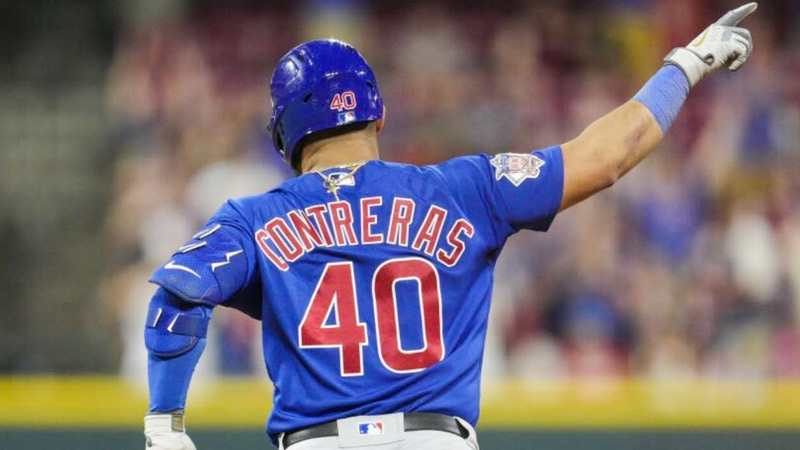
Fans watching a Boston Red Sox or St. Louis Cardinals game might notice something unexpected when the camera zooms in on Willson Contreras: often neon-colored fingernails.
While it might look like a fashion statement, for a three-time All-Star and World Series champion like Contreras, it is a calculated tactical decision.
Painting nails or using specialized stickers is a growing trend among elite backstops. This article dives deep into the strategic, safety, and historical reasons why Willson Contreras and many of his peers have traded traditional grit for neon glow.
1. The Core Objective: Enhancing Pitcher-Catcher Communication
The primary reason Willson Contreras paints his nails—or uses signal-enhancing stickers—is to provide maximum visibility for his pitcher.
In baseball, the “battery” (the pitcher and catcher) must act as a single unit. The catcher is the “general” on the field, calling every pitch through a series of complex finger signals tucked between his legs.
A pitcher stands exactly 60 feet, 6 inches away from the catcher. From that distance, especially at high speeds and under stadium lights, distinguishing between one finger (a fastball) and two fingers (a curveball) can be incredibly difficult.
By adding a high-contrast color to his fingertips, Contreras ensures that his pitcher can instantly recognize the sign without squinting or second-guessing.
2. Overcoming “The Shadow Zone” and Lighting Challenges
Baseball is played in a variety of environments, from the bright afternoon sun to the deep shadows of dusk and the harsh glare of artificial stadium lights. These shifting conditions create “visibility traps” for pitchers.
The Danger of Dusk
One of the most difficult times to see signs is during late afternoon games when the sun begins to set.
At stadiums like Miller Park in Milwaukee, shadows can creep across the mound, making the catcher’s area appear pitch black while the pitcher is still standing in the light. In these “poorly-lit conditions,” a natural skin tone or a dirty catcher’s mitt can blend into the background.
Stadium-Specific Obstacles
Every MLB park has its own unique lighting personality. Some catchers, like John Buck, have noted that “getting crossed up” (where the pitcher throws a different pitch than the catcher expects) often happens because of these environmental factors.
Coaches frequently make it mandatory for catchers to use signal enhancements as soon as the sun goes down to maintain game tempo and accuracy.
3. The “Pants Problem”: Contrast and Backgrounds
An often overlooked reason for painting nails is the catcher’s uniform. Depending on the team’s kit—whether they are wearing traditional whites, grays, or “throwback” uniforms—a catcher’s fingers may naturally blend into the color of their own pants.
When a catcher squats to give signs, his hand is positioned against the fabric of his uniform. If there is no contrast, the pitcher sees a “blob” rather than distinct digits.
Willson Contreras and other catchers use colors like optic white, neon yellow, or bright orange to create a sharp visual break against their clothing, ensuring the “triangle” of communication (pitcher, catcher, and coach) remains unbroken.
4. Safety First: Preventing the Dreaded “Cross-Up.”
While the visual aid helps with strategy, its most critical function is player safety. In the modern era, pitchers like those Contreras has caught for—including legends like Jon Lester or Jake Arrieta—throw with terrifying velocity.
The Physical Risk
There is typically a 10 to 15 mph difference between a fastball and an off-speed pitch like a curveball. In the Major Leagues, this gap can be even wider.
- If Contreras calls for a 78-mph curveball but the pitcher sees the sign incorrectly and fires a 98-mph fastball, Contreras will not have the reaction time to adjust his glove.
- This leads to “passed balls,” which allow runners to advance, or worse, it leads to the catcher being hit by the ball in unprotected areas like the neck or collarbone.
Protecting the Pitcher and Umpire
A “crossed-up” pitch doesn’t just endanger the catcher. If the catcher misses the ball entirely, it often strikes the home plate umpire. Furthermore, a catcher who is unsure of the pitch may hesitate, losing the “rhythm and flow” of the defense, which can rattle a pitcher’s confidence.
5. The Evolution of Signal Enhancement: From Tape to Stickers
The practice of highlighting fingers isn’t new, but the methods have evolved significantly. Willson Contreras is part of the modern wave, using sophisticated tools rather than “MacGyvered” solutions.
The Athletic Tape Era
Decades ago, catchers would wrap white athletic tape around their fingertips. While effective for visibility, it had a major drawback: it constricted the fingers, making it difficult for the catcher to feel the ball and make accurate throws to second base to catch base-stealers.
The Wite-Out Phase
In the late 2000s, catchers like Jorge Posada began dabbing their nails with Wite-Out. It provided the necessary brightness but was “messy,” ruined cuticles, and was incredibly difficult to remove after the game.
The Neon Revolution
Players like Russell Martin moved the needle by using actual neon nail polish, unashamedly sporting “electrifying yellow tips” to give his team an edge. Martin noted that while Wite-Out was okay, the “pop” of neon colors was superior for pitcher readability.
Game Signs: The Modern Solution
Today, many catchers, including those in the Chicago Cubs and St. Louis Cardinals organizations, use Game Signs. These are specially designed, heavy-duty adhesive stickers available in colors like Optic Yellow, Orange, and Pink. They are:
- Non-porous: They repel dirt and spit.
- Painless: They apply instantly and peel off after the game without damaging the nails.
- Highly Visible: They are engineered specifically for the distance between the mound and the plate.
6. Willson Contreras: A Profile in Professionalism
Willson Contreras’s journey to becoming one of the most respected catchers in the league is marked by his attention to detail. Born in Puerto Cabello, Venezuela, Contreras signed with the Cubs as an international free agent in 2009.
His debut in 2016 was legendary—he hit a home run on the very first pitch of his first MLB at-bat. Since then, he has established himself as a versatile powerhouse, playing catcher, first base, and even outfield.
For a player who has caught combined no-hitters and won World Series titles, painting his nails is simply another tool in his professional kit to ensure his pitchers perform at their peak.
7. The Psychological Edge: Confidence on the Mound
Beyond the physical mechanics, there is a psychological benefit to those “magic fingers”. A pitcher who can clearly see his catcher’s signs is more confident.
When a pitcher doesn’t have to squint or lean in to see a sign, they can maintain their “tempo” and stay focused on the batter.
Catchers like Kurt Suzuki have noted that using these enhancements gives them the “added confidence to know we’re always on the same page”.
For Contreras, providing that clarity to his pitching staff is a key part of his leadership role behind the plate.
8. Is PitchCom Replacing Painted Nails?
In 2023, MLB introduced PitchCom, an electronic device that allows catchers to transmit signals via a wrist-worn remote to a speaker in the pitcher’s hat.
While PitchCom is designed to end sign-stealing and speed up the game, it hasn’t eliminated the need for visual signs.
- Technical Failures: Electronics can fail or run out of battery.
- Preference: Some pitchers and catchers still prefer the traditional “tactile” feel of hand signals.
- Speed: Some players, like Travis d’Arnaud, have criticized PitchCom for “rushing” the game too much.
Because of this, manual signs—and the colorful nails that make them visible—remain a staple of the game.
Conclusion
Why does Willson Contreras paint his nails? It isn’t for fashion—it’s for victory. By ensuring his pitcher can see every “one,” “two,” or “three” finger sign clearly, he prevents injuries, reduces errors, and maintains the strategic upper hand.
Whether he is wearing the jersey of the Cubs, the Cardinals, or the Red Sox, those brightly colored fingertips are a symbol of a catcher who leaves nothing to chance.
In the game of baseball, where a single missed sign can cost a championship, Willson Contreras’s painted nails are a brilliant example of how “the little things” create the winning edge.