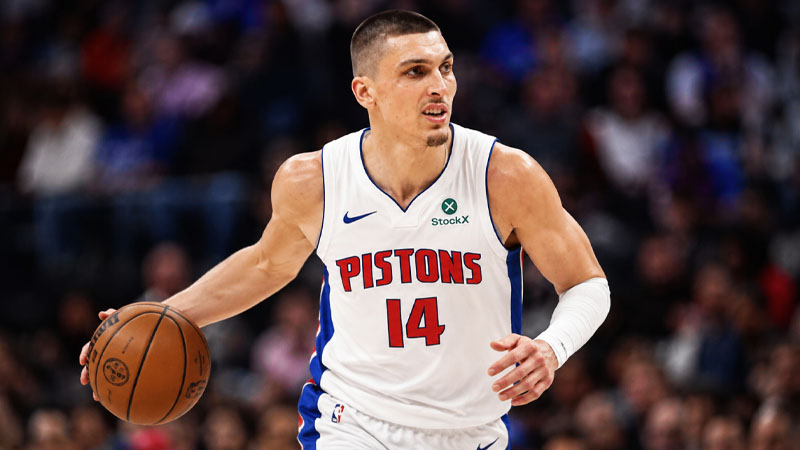
Tyler Herro comes off the bench for the Miami Heat primarily to facilitate injury rehabilitation and optimize the team’s tactical roster balance.
While an All-Star caliber talent, coach Erik Spoelstra utilizes Herro as a high-impact reserve to manage his return from significant ankle, toe, and rib fractures.
This strategic deployment prevents a defensive imbalance in the starting lineup caused by starting two high-usage, defense-vulnerable guards.
By anchoring the second unit, Herro serves as an offensive engine, maintaining scoring consistency when starters rest. Ultimately, this role prioritizes defensive identity while preserving Herro’s elite shot-making for critical closing minutes.
Why Does Tyler Herro Come Off the Bench for the Heat?
The decision to move a player of Herro’s caliber to a reserve role is rarely about a lack of talent and more about the specific operational needs of the roster during the 2025–26 season.
His current deployment is a multifaceted strategy designed to protect his health while maximizing the team’s efficiency across all 48 minutes of play.
Recovery from Seasonal Fracture History
Herro has navigated a challenging medical timeline, including fractures to his ankle, toe, and ribs. When a high-volume scorer returns from a long absence, the coaching staff often utilizes the bench as a “ramp-up” station.
This allows the training staff to manage his minutes strictly, ensuring his body reaches peak game shape without the immediate physical toll of chasing opposing elite starters for 35 minutes a night.
The Logistics of Minutes Management
Coming off the bench allows Erik Spoelstra to control the exact moments Herro enters the game, often pairing him against tired second-unit defenders where he can find his rhythm more easily.
This “ramp-up” protocol was particularly evident following a 15-game absence, where he was eased back into the rotation with 23 minutes per game to ensure long-term sustainability for the postseason.
Tactical Depth: Balancing the Norman Powell Dynamic
The acquisition of Norman Powell significantly altered the geometry of the Heat’s starting five. While both players are elite offensive weapons, their overlapping skill sets and shared defensive limitations created a tactical puzzle for the coaching staff to solve.
The Defensive Compromise in the Backcourt
Analysis of the roster suggests that starting Herro and Powell together compromises the team’s perimeter defense. Both players attract significant defensive gravity as floor spacers, but they both require the ball in their hands to provide their highest value.
By staggering their minutes, Miami avoids a scenario where two “defense-vulnerable” scorers are targeted by opposing offenses simultaneously.
Staggering High-Usage Star Production
The starting unit already features high-usage pillars in Jimmy Butler and Bam Adebayo. This creates a “Three-Body” ball dominance problem where there simply aren’t enough touches to maximize Herro’s self-creation abilities alongside the primary stars.
Moving Herro to the bench allows him to be the undisputed primary engine for the second unit, preventing offensive stagnation when Butler or Adebayo rest.
Statistical Analysis: Performance as a Starter vs. Reserve
To understand why this role transition makes sense, one must look at the data-driven reality of Herro’s production. While his raw volume is higher as a starter, his impact as a reserve allows for a more balanced distribution of team scoring.
| Metric | Performance as a Starter | Performance off the Bench |
|---|---|---|
| Points Per Game | 21.2 PPG | 16.6 PPG |
| Rebounds Per Game | 5.3 RPG | 4.5 RPG |
| Assists Per Game | 4.6 APG | 3.2 APG |
| Contextual Value | High volume, plays with stars | High-efficiency engine vs. reserves |
This data illustrates that while Herro is statistically a “starter” in terms of production, his efficiency against second units provides a unique competitive advantage.
Some analysts have noted that the team has occasionally posted better net ratings (+4) when Herro is off the floor compared to when he is on (-2.6), suggesting that finding the right lineup combinations is more critical than simply starting the best individual scorers.
Prioritizing the Point-of-Attack Defensive Identity
Erik Spoelstra has historically favored a defensive-first culture, and the 2025–26 rotation reflects this priority. By utilizing different archetypes in the starting lineup, the team sets a physical tone from the opening tip-off.
The Value of Defensive-Minded Guards
Players like Davion Mitchell provide essential point-of-attack defense and elite passing that the starting unit requires to stay competitive against the league’s top offenses.
Mitchell’s presence allows the team to preserve its defensive identity early in games, whereas Herro’s scoring is more valuable when the game slows down and “bucket-getting” becomes the priority.
Closing vs. Starting: The Finisher Role
In modern basketball, who finishes the game is often more important than who starts it. By bringing Herro off the bench, he remains fresh for the high-leverage moments of the fourth quarter.
This allows him to play starter-level minutes and close out tight matchups without the fatigue that comes from the initial defensive grind of the first quarter.
Player Buy-In: How Tyler Herro Views the Transition
The success of any bench role depends heavily on the mindset of the player. Herro’s perspective has undergone a notable evolution, moving from a vocal desire to start to a mature acceptance of team needs.
From Sixth Man to Established Veteran
After winning the Sixth Man of the Year award in 2021-22, Herro famously campaigned for a starting role, stating he had “earned it”.
He successfully started 67 games the following season, proving his capability as a frontline player. However, his recent comments suggest a shift toward professional maturity.
Acceptance of the 2026 Strategic Role
In recent interviews, Herro has expressed a level of comfort with the current arrangement, noting that it “doesn’t really feel like I’m out of place”.
He acknowledged the depth of the roster, stating that the team has several players capable of starting and that he is happy with his current contribution.
This buy-in is viewed as a significant maturity signal, as many high-paid stars might react negatively to a perceived demotion.
Long-Term Outlook: Trade Value and Contract Implications
As the 2026-27 season approaches, Herro’s role carries significant weight in terms of salary cap management and potential trade discussions. The financial landscape of the league necessitates a careful evaluation of how high-scoring guards are compensated.
Market Value for Score-First Guards
The market for guards who prioritize scoring can be volatile. With Herro on a substantial contract, his ability to thrive in various roles—whether as an All-Star starter or an elite 6th man—increases his utility to the organization.
Projections suggest he could command a 4-year, $140 million extension if he continues to produce at a high level, regardless of his starting status.
Future Trade and Roster Flexibility
There has been ongoing speculation regarding Herro’s future, including rumors of trades to teams like Detroit or Milwaukee. Maintaining his productivity off the bench proves to other franchises that he is a “winner” who can adapt to different systems.
If the Heat decide to pursue another superstar, Herro remains one of their most attractive assets due to his proven ability to anchor an offense.
Frequently Asked Questions
Is Tyler Herro still considered a star if he comes off the bench?
Yes. Herro’s status as a former Sixth Man of the Year and his consistent 20-point scoring average keep him in the upper echelon of NBA guards. His bench role is a tactical choice by coach Erik Spoelstra to balance the team, not a reflection of a decline in skill.
Will Herro return to the starting lineup permanently?
This depends on roster health and defensive needs. While he has shown he can be a successful starter, the current success of the “staggered” minutes with Norman Powell suggests the bench role may be the most effective way to utilize his talents for the current roster construction.
How does Herro’s performance change when he comes off the bench?
Statistically, his scoring volume drops slightly (from 21.2 to 16.6 PPG), but his role as the primary engine for the second unit allows him to maintain high usage and lead the offense when the primary stars are resting,.
Conclusion: Maximizing a Championship Window
The tactical deployment of Tyler Herro is a masterclass in roster optimization. By prioritizing health, defensive balance, and second-unit stability, the Miami Heat are positioning themselves to be more than just a collection of talent—they are becoming a cohesive unit.
Herro’s willingness to embrace this role speaks to a culture of “buy-in” that is essential for deep postseason runs.
Whether he is on the floor for the opening tip or checking in at the six-minute mark, his impact remains a cornerstone of the team’s pursuit of another championship.