The sight of a player wearing a jersey number that has been officially retired by a franchise is one of the rarest occurrences in professional basketball.
When Reggie Jackson took the floor for the Detroit Pistons, fans were often left wondering how he could sport the same “1” that hangs in the rafters to honor the legendary Chauncey Billups.
This intersection of modern roster management and historical reverence creates a unique narrative within the NBA. Understanding why Jackson wore this number requires a look into league logistics, personal preference, and the graciousness of a franchise icon.
The Strategic Choice Behind the Number 1 Jersey
When Reggie Jackson arrived in Detroit, he was a rising star looking to establish his own identity away from the shadow of established superstars.
The decision to wear number 1 was not born out of a desire to challenge the past, but rather a reflection of the available options and a personal affinity for the digit at that specific point in his career development.
From Oklahoma City to the Motor City
Reggie Jackson’s journey to Detroit began with a high-profile trade in February 2015, moving from the Oklahoma City Thunder to the Pistons.
At the time of the trade, Jackson was seeking a starting role and a fresh start where he could lead an offense. Upon his arrival, the number 1 jersey was technically available on the active roster.
While many players choose numbers based on complex familial ties or childhood heroes, Jackson’s selection of number 1 in Detroit was primarily driven by the fact that it was his preferred choice among the available options at the time of the trade.
Establishing a New Identity in Detroit
Choosing number 1 is often a statement of confidence. For a point guard tasked with leading a team, the number symbolizes being the primary ball-handler and the “first” option in setting the tempo.
Jackson entered a Pistons environment that was hungry for leadership following the mid-2000s “Goin’ to Work” era. By taking the number 1, he wasn’t just picking a digit; he was stepping into a role that required high visibility.
Since there was no complex personal backstory involved, the number became a blank canvas upon which he hoped to paint his own Detroit legacy.
The Chauncey Billups Legacy and the Retirement Conflict
The narrative surrounding Jackson’s jersey took a significant turn in 2016, roughly a year after his arrival.
The Detroit Pistons organization decided it was time to officially immortalize one of their greatest leaders, Chauncey “Mr. Big Shot” Billups, by retiring his jersey number.
This created an immediate logistical and emotional overlap between the active point guard and the retired legend.
The Legend of Mr. Big Shot
Chauncey Billups is synonymous with Detroit’s 2004 NBA Championship. As the Finals MVP, he was the heartbeat of a team that famously defeated the star-studded Los Angeles Lakers.
In 2016, the Pistons officially retired the number 1 jersey to honor Billups and his immense contributions to the franchise.
This act typically means that no future player will ever wear that number again, effectively removing it from the team’s equipment room. However, Jackson’s presence on the team created a rare exception to this standard protocol.
The 2016 Jersey Retirement Milestone
When the retirement ceremony for Billups was announced, Jackson was already a key fixture of the Pistons’ starting lineup. The organization faced a dilemma: should they ask an active starter to change his identity mid-tenure, or allow the overlap to continue?
The retirement of a jersey is a sacred bond between a player and a city, yet the timing of Jackson’s arrival—occurring just before the official ceremony—placed him in a unique position within the team’s historical timeline.
The Mechanics of the NBA’s Grandfather Rule
The reason Reggie Jackson was allowed to continue wearing number 1, despite it being hanging in the rafters, is due to a specific administrative allowance often referred to as the “Grandfather Rule.”
This policy ensures that active players are not forced into sudden branding changes due to ceremonial decisions made by the front office after they have already joined the team.
- Active Roster Status: Because Jackson was already actively on the Detroit roster and wearing the number 1 before the retirement ceremony took place, he was legally permitted to keep it.
- The Power of the Blessing: A crucial component of this arrangement was the public blessing from Chauncey Billups himself. Without Billups’ approval, the optics of Jackson wearing the number would have been controversial among the fanbase.
- Continuity for the Player: Changing a jersey number involves more than just a new shirt; it affects marketing, fan apparel already purchased, and the player’s own brand recognition. The rule prioritizes the player’s existing tenure.
- Terminal Usage: The grandfathered status only applies to the player’s current stint with that specific team. Once Jackson left the Pistons, the number 1 returned to its fully retired, protected status.
A Journey Through Reggie Jackson’s Career Jersey Numbers
Reggie Jackson’s career has been defined by movement and adaptation, and his jersey numbers reflect the various chapters of his professional life.
Unlike some players who cling to a single number for their entire career, Jackson has shown a willingness to pivot based on team history and number availability.
| Team | Jersey Number | Context of the Change |
|---|---|---|
| Oklahoma City Thunder | #15 | His original rookie number in the NBA. |
| Detroit Pistons | #1 | His preferred choice upon trade; later grandfathered. |
| LA Clippers | #1 | Continued using the number where it was available. |
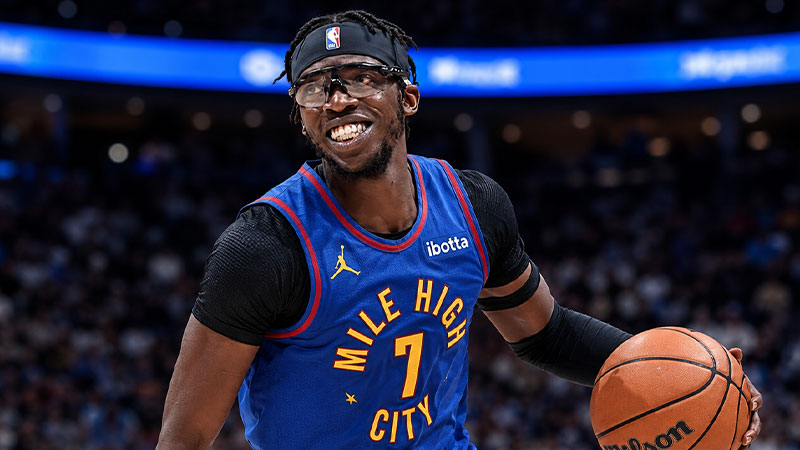
| Denver Nuggets | #7 | Shifted to a new digit during his tenure in Denver. |
| Philadelphia 76ers | #00 | His most recent selection, reflecting a new start. |
This history illustrates that while number 1 was a significant part of his identity in Detroit and Los Angeles, it was ultimately a temporary chapter in a much larger journey.
Each number represents a different phase of his evolution, from a bench spark plug in Oklahoma City to a veteran leader in Denver and Philadelphia.
The Cultural Impact of the Grandfathered Number
For the Detroit Pistons fanbase, seeing Reggie Jackson in the number 1 jersey was a constant reminder of the bridge between eras.
It sparked frequent discussions on social media and during broadcasts, as new fans sought to understand why a “retired” number was still in motion on the hardwood.
This phenomenon added a layer of intrigue to Jackson’s tenure that few other players experience.
Navigating Fan Expectations
In a city like Detroit, where sports history is deeply cherished, wearing the number of a champion comes with immense pressure. Fans initially had mixed reactions to Jackson wearing Billups’ number, but the tension dissipated when Billups publicly supported him.
This gesture of sportsmanship from Billups allowed Jackson to play without the burden of being seen as “disrespectful” to the past. It transformed the number 1 from a point of contention into a symbol of passing the torch, even if only temporarily.
The Rarity of the Occurrence
Grandfathered numbers are exceptionally rare in the NBA because teams usually wait until a number is “out of circulation” for several years before retiring it.
The Pistons’ decision to retire Billups’ jersey while an active player was still using it was a unique timing overlap.
This rarity makes Jackson a notable trivia answer for basketball historians and jersey enthusiasts alike. It highlights how league rules must occasionally bend to accommodate the living history of the game.
Why This Phenomenon is Rare in Professional Sports
In most professional sports leagues, jersey retirement is an absolute. Once a number is raised to the rafters, it is usually stripped from the equipment roster immediately.
The fact that Jackson continued to wear it highlights a more human element of the NBA—the respect for the current player’s contributions and their established brand.
This situation typically only happens when a team decides to honor a legend unexpectedly or when a player’s tenure is already deeply established.
In Jackson’s case, the Detroit Pistons chose to prioritize the “grandfather” clause to avoid the logistical headache of a mid-career rebrand for their starting point guard.
It serves as a case study for other franchises on how to handle the delicate balance between honoring the retired and supporting the active.
Frequently Asked Questions About Reggie Jackson’s Number
Did Reggie Jackson pick #1 to honor Chauncey Billups?
No, there was no complex personal back-story or specific intent to honor Billups with the choice. Jackson chose the number simply because it was his preferred option when he arrived via trade in 2015, at a time when the number was still available for active use.
Why didn’t the Pistons make him change his number in 2016?
Under the “Grandfather” Rule, because Jackson was already on the roster and wearing the number before the retirement ceremony, he was not required to change it.
Additionally, Chauncey Billups gave his blessing, which made the continuation acceptable to the fans and the organization.
Does he still wear number 1 today?
No. After leaving the Pistons, Jackson has worn several other numbers, including #7 with the Nuggets and #00 with the 76ers.
The use of number 1 was a specific chapter of his career that ended as he moved to teams where the number was either unavailable or where he chose a different path.
Has any other NBA player worn a retired number?
While rare, it has happened. For example, when the Spurs retired Bruce Bowen’s #12, he gave LaMarcus Aldridge permission to wear it. These instances are almost always contingent on the retired player giving their explicit consent to the active player.
Conclusion: A Notable Chapter in NBA History
Reggie Jackson’s time in Detroit will always be remembered for his clutch performances and his role in the team’s mid-2010s playoff pushes, but his jersey number remains one of the most interesting footnotes of his tenure.
The “Grandfathered Number One” serves as a perfect example of how the NBA manages the intersection of its storied past and its active present.
By understanding the technicalities of the Grandfather Rule and the importance of Chauncey Billups’ blessing, we see a story of mutual respect and administrative flexibility.
While Jackson has moved on to different numbers and different cities, his time wearing the retired “1” in Detroit stands as a unique testament to a specific moment in Pistons history—a moment where the legacy of “Mr. Big Shot” and the career of Reggie Jackson briefly shared the same fabric.
Jackson’s journey through various numbers across the league further emphasizes that while #1 was a significant period, his identity as a player transcends a single digit.