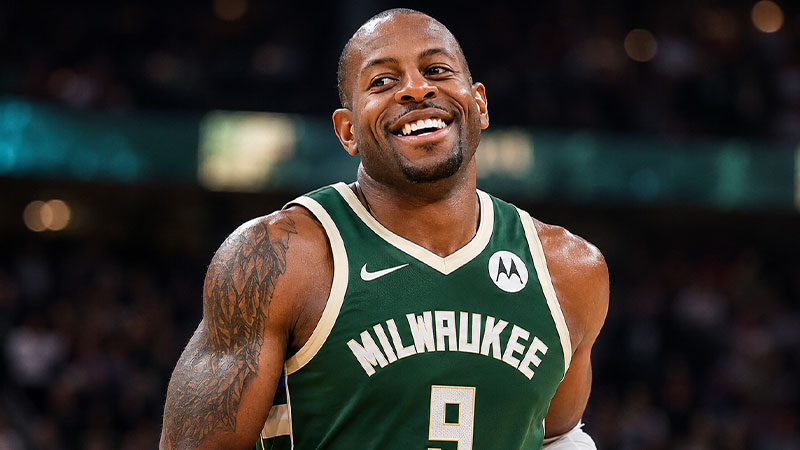
Andre Iguodala remains one of the most intriguing figures in modern basketball history. He achieved legendary status not through high-volume scoring, but through a unique brand of strategic architecture that prioritized winning over individual glory.
With four NBA championships and a Finals MVP trophy, his career challenges the traditional ways we evaluate player greatness. While casual observers might overlook his modest career averages, analytics and coaching film reveal a generationally great talent.
This analysis explores the specific tools, mentalities, and defensive masterclasses that define why Iguodala was so vital to championship success.
The Paradox of Statistics and Winning
The professional evaluation of a player often relies on the box score, yet Andre Iguodala consistently defied these metrics. He managed to exert a superstar level of influence on the game while rarely leading his team in scoring.
This discrepancy creates a fascinating case study for coaches and analysts who value impact over raw production. To understand his value, one must look toward advanced data that captures how a team performs when a specific player is on the floor.
Beyond the Traditional Box Score
Traditional statistics often fail to capture the nuances of high-level basketball. Iguodala was never a consistent twenty-point-per-game scorer, but he functioned as a superstar role player.
His impact was felt in the subtle rhythms of the game: the extra pass, the deflected ball, and the perfectly timed screen. He was described as a Swiss army knife who could do everything on the court even if he was not the primary engine of the offense.
The RAPM Metric Revolution
Between 2012 and 2015, multi-year Regularized Adjusted Plus-Minus (RAPM) data ranked Iguodala as the fourth-best player in the entire league.
This metric attempts to isolate a player’s individual contribution to team success by accounting for teammates and opponents. During this span, he was rated as the third-most impactful defensive player in the league.
Even though his offensive numbers were modest, his ability to improve everyone around him made him an analytical darling.
The Efficiency of a Glue Guy
Iguodala served as the ultimate connector within elite offensive systems. He maintained an incredible assist-to-turnover ratio, rarely making sloppy decisions or forcing bad plays.
This low-turnover value allowed him to organize second units and act as a stabilizing force during high-pressure moments. He possessed the rare ability to hit big shots when needed, despite not being a primary scoring option.
Masterclass Perimeter Defense and Physicality
The cornerstone of the reputation regarding Andre Iguodala is his historical defensive impact. He is widely considered one of the most impactful perimeter defenders in the history of the league.
His presence alone could shift a team’s defensive trajectory. When he changed teams, the defensive rankings of his former teams often dropped significantly while his new teams saw immediate improvement.
The Physical Profile of a Stopper
Iguodala possessed a rare combination of physical tools that allowed him to dominate on the defensive end. His 7’1″ wingspan and exceptional lateral quickness made him a nightmare for opposing wings.
He also had immense functional strength, which allowed him to hold his ground against larger players. This physical foundation enabled him to guard positions one through four with seamless versatility.
The Art of the Strip-Thru
One of his most famous skills was the “strip-thru” technique. He perfected the art of stripping the ball from offensive players right as they gathered to shoot.
He could perform this move without fouling, which often led to immediate transition opportunities for his team. This specific skill required elite timing and a deep understanding of opponent tendencies.
Elite Anticipation and IQ
Defense is as much a mental game as a physical one, and Iguodala was a master of anticipation. He studied the tendencies of his opponents to disrupt passing lanes before a play could even develop.
His basketball IQ allowed him to blow up offensive sets by being in the right position at the right time. This intellectual approach to the game made him an effective defender even as his pure athleticism began to decline.
The Strategic Sacrifice for the Dynasty
The most defining era of his career occurred with the Golden State Warriors. His willingness to sacrifice personal accolades for team success became the cultural blueprint for their dynasty.
By accepting a role off the bench, he provided the Warriors with a level of depth that most teams could not match. This selflessness allowed the team to maximize its talent and revolutionized how rotations were managed.
Redefining the Sixth Man Role
Iguodala voluntarily transitioned to a sixth-man role under head coach Steve Kerr. This move was not a demotion but a strategic deployment of an elite talent to anchor the second unit.
He functioned as an assistant coach who still wore a jersey, teaching younger players the nuances of the game. This leadership and veteran mentorship were invaluable to maintaining team chemistry during intense championship runs.
The Catalyst of the Death Lineup
The most famous iteration of the Warriors’ success was the “Death Lineup,” which featured Iguodala at the wing. This small-ball unit overwhelmed the league with its speed, switching ability, and floor spacing.
He was the defensive anchor of this lineup, often taking the toughest individual assignment. His versatility allowed the Warriors to play a positionless style of basketball that changed the league.
Key Career Milestones and Accolades
| Achievement | Impact and Significance |
|---|---|
| 4x NBA Champion | Anchored the Warriors dynasty in 2015, 2017, 2018, and 2022. |
| 2015 Finals MVP | Recognized for his foundational defense on LeBron James. |
| All-Defensive Teams | Selected for the First Team in 2014 and Second Team in 2011. |
| 2012 NBA All-Star | Recognized as one of the elite talents in the league while in Philadelphia. |
| Defensive Impact | Moved teams’ defensive rankings by 10-15 spots single-handedly. |
The High IQ Offensive Connector
While his defense earned him trophies, his offensive intelligence was equally vital. He operated as a point-forward who excelled at making the “extra pass” that leads to a great shot.
He was not a traditional playmaker who created shots through scoring gravity, but he was an elite processor of the game. His passing was rooted in his ability to read defenses and find teammates coming off screens or cuts.
Low-Usage Efficiency
Iguodala was the perfect “glue guy” for a team featuring elite scorers like Stephen Curry and Kevin Durant. He did not need the ball in his hands to be effective, which allowed the stars to flourish.
He focused on making the right play every time, which often meant keeping the ball moving rather than seeking his own shot. This unselfishness made the entire offensive system more fluid and unpredictable.
Clutch Performance Under Pressure
Despite his low scoring averages, he had a “clutch gene” that coaches trusted in the final minutes. He hit numerous game-winning shots and made critical defensive stops in high-stakes playoff games.
His ability to remain calm and execute the right play under pressure was a hallmark of his career. This reliability earned him the ultimate respect of his teammates and coaches.
Legacy and the Search for Successors
As the era of the Warriors dynasty shifts, the league continues to look for players who can replicate the role of Andre Iguodala. However, finding an All-Star level talent with role player humility is incredibly difficult.
His legacy is defined by “playing the right way” in a league that he claims increasingly prioritizes individual stats over winning. This philosophy of selflessness is what truly made him an irreplaceable asset.
The 2015 Finals MVP Controversy
The debate over his 2015 Finals MVP award continues to this day. Some argue that Stephen Curry was more deserving, while others point to Iguodala’s defense as the turning point of the series.
Before he was moved into the starting lineup to guard LeBron James, the Warriors were struggling to contain the Cavaliers’ superstar. His ability to slow down one of the greatest players in history solidified his place in basketball lore.
Identifying the Next Generation
Several current players have been compared to Iguodala due to their defensive versatility and high IQ. Aaron Gordon of the Nuggets is often cited as a modern comparison for his ability to fill various roles within a winning system.
Other names like Mikal Bridges and Scottie Barnes have shown flashes of the “do-it-all” style that Iguodala perfected. However, the specific combination of his defensive masterclass and championship-winning leadership remains rare.
The Intellectual Leader
Ultimately, Iguodala was more than just a basketball player: he was a strategic architect. He understood the game at a level that few others could match, often seeing plays before they happened.
His commitment to team success over personal profit sets him apart in the history of the sport. As long as winning championships remains the ultimate goal, his career will serve as the primary blueprint for high-impact basketball.
Conclusion: A Blueprint for Greatness
Andre Iguodala proved that you do not need to score thirty points a night to be a generationally great player. By mastering the intellectual and defensive aspects of the game, he became the backbone of a legendary dynasty.
His career reminds us that the most valuable players are often those who make everyone else better. Whether he is remembered for his “strip-thru” move, his Finals MVP trophy, or his selfless leadership, his impact on the game is undeniable.
Expert FAQ: Understanding Iguodala’s Value
Why did Andre Iguodala win the 2015 Finals MVP?
He was recognized for his foundational defense on LeBron James, which fundamentally changed the momentum of the series. His insertion into the starting lineup allowed the Warriors to play their famous small-ball style effectively.
What is RAPM and why did it rank him so high?
Regularized Adjusted Plus-Minus (RAPM) measures a player’s impact on his team’s scoring margin while accounting for teammates and opponents.
Iguodala ranked fourth in the league from 2012 to 2015 because his teams performed significantly better on both ends when he was on the floor.
Can a role player today replicate his career?
It is extremely difficult because it requires a player to have All-Star talent but the humility to accept a secondary role. While players like Aaron Gordon or Jrue Holiday share some traits, Iguodala’s specific defensive impact and IQ are historically unique.
Was he really a poor shooter?
His shooting was often described as hit-or-miss. While his free-throw shooting was notoriously low, his three-point game was respected enough that defenders had to guard him.
He frequently hit “big shots” in clutch moments, even if his season percentages were average.