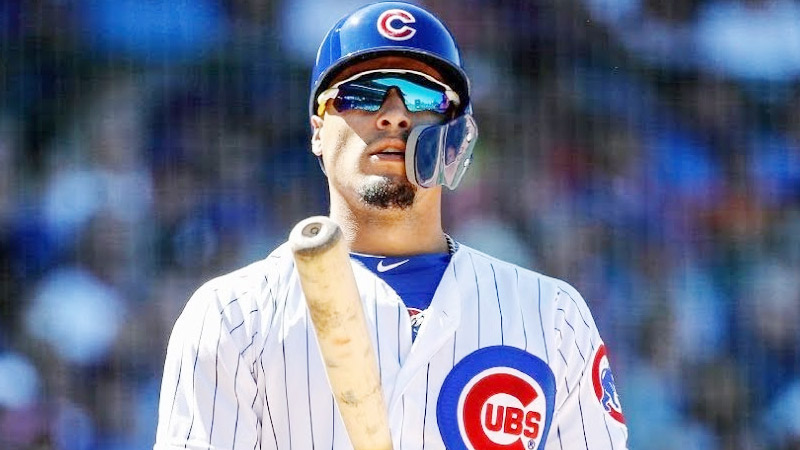
In the high-stakes environment of Major League Baseball, the difference between an All-Star season and a career-altering injury is often measured in millimeters and milliseconds.
For Javier Báez, the dynamic shortstop for the Detroit Tigers, the addition of a face guard—frequently referred to as a C-Flap—to his batting helmet is not a fashion statement; it is a critical piece of modern safety technology born out of necessity and the brutal reality of the “up-and-in” pitch.
As pitch velocities continue to climb and pitchers increasingly use the inner half of the plate to tie up hitters, the sight of a plastic extension shielding a player’s jawline has become nearly ubiquitous across the league.
For Báez, a player known for his aggressive “tremendous bat speed” and high-energy style, the guard serves as a vital shield against the inherent dangers of the batter’s box.
The Catalyst: The “Nasty Shot” in Miami
While many players adopted face guards during the initial surge of the trend in 2018, the importance of this protection was underscored for Javier Báez during a frightening incident in late 2025.
On September 12, 2025, during a game against the Miami Marlins, Báez faced a 90-mph changeup from ace Sandy Alcantara.
In a terrifying sequence, Báez swung and fouled the ball directly off the brim of his own batting helmet.
The force of the ball deflected the projectile into his forehead, striking him near his left eye. The impact was severe enough that Báez remained on the ground near home plate while being tended to by the Tigers’ training staff.
Tigers manager A.J. Hinch described the impact as a “nasty shot,” noting that a large bump immediately formed above the shortstop’s eyebrow with visible bruising and swelling around the eye the following day.
While Báez narrowly escaped the concussion protocol, the injury forced him out of the lineup and served as a stark reminder that even with a helmet, the face remains incredibly vulnerable.
Understanding the C-Flap: Function Over Fashion
The device Báez and his peers utilize is technically known as a C-Flap, a piece of padded plastic bolted to the earflap of a standard batting helmet.
It extends down the player’s jawline to cover the cheekbone, a region particularly susceptible to fractures from high-velocity impact.
The Evolution of the Trend
Historically, such guards were rare, typically reserved for players who had already suffered a major facial injury. However, the landscape shifted significantly around 2018.
- The Tipping Point: By the 2018 season, the adoption rate increased tenfold.
- A New Standard: Analysts noted that by this time, players not using the guard stood out more than those who did.
- Widespread Adoption: In certain lineups, such as the Seattle Mariners or Houston Astros in 2018, as many as six out of nine starters were seen using the protection.
For a player like Báez, who has logged nine years of experience and survived a litany of injuries—ranging from thumb and finger issues to neck and back stiffness—the decision to protect his face is a calculated move toward longevity.
The Science of 95 MPH: Why the Guard is Essential
The primary driver behind the C-Flap revolution is the sheer velocity of the modern game. When a pitcher like Alcantara or a high-velocity reliever uncorks a fastball at 95 mph or higher, the hitter’s reaction time is nearly nonexistent.
Lessons from High-Profile Injuries
The baseball community has been shaped by several graphic reminders of what happens when a fastball misses its mark:
- Mitch Haniger: In 2017, Haniger was struck by a 95-mph fastball that tore his upper lip and caused a facial contusion. He immediately adopted the flap upon his return, stating that “no one wants to get hit in the face”.
- Chris Iannetta: Iannetta began wearing the guard after a 93-mph pitch resulted in a broken nose and fractured teeth.
- The “Reconstruction” Fear: Players like Mike Zunino have noted that the choice is between missing a week for a minor issue or missing months for facial reconstruction surgery.
Báez, who provides “versatile power” for the Tigers, cannot afford the long-term career implications of such a catastrophic injury.
The Psychological Edge: Comfort in the Box
Beyond the physical protection, the face guard provides a significant psychological advantage. Baseball is a game of comfort and routine; any distraction can ruin a hitter’s timing.
Overcoming the “Visual Distraction”
Initially, many players resisted the guard, claiming it felt “weird” or obstructed their vision. Jean Segura famously avoided the flap, claiming it would bother him.
However, those who use it, like Haniger, argue that “visually it’s not going to bug you at all,” and that the mental peace of mind far outweighs the slight weight difference on the helmet.
Standing Up to the “Up-and-In” Strategy
For elite hitters, pitchers often employ a strategy of throwing fastballs up and in to prevent them from extending their arms.
- Robinson Cano noted that he began wearing the guard specifically because so many pitchers were targeting his face with inside pitches.
- Nelson Cruz adopted the guard for the same reason, recognizing it as a logical tool to stay comfortable while pitchers tried to “tie him up”.
By wearing the guard, Javier Báez can maintain his aggressive approach at the plate without the subconscious fear of a pitch “putting you out of the game forever”.
Superstition vs. Safety: The Player’s Dilemma
Despite the clear safety benefits, the culture of baseball is deeply rooted in superstition. Some players view the guard as a variable that can be discarded if they enter a hitting slump.
Carlos Gonzalez (CarGo) provides a famous example of this “flip-flopping”. Gonzalez adopted the flap for safety after seeing Kris Bryant use it, but he famously broke his guard in frustration during a game.
Because he started hitting well immediately after removing the broken guard, his superstition took over. He admitted he would “do anything for hits,” even if it meant going bare-faced despite knowing the risks.
Javier Báez, however, has remained consistent in his use of safety gear, especially as he navigates the later stages of his six-year contract with Detroit, where maintaining his health is paramount to his performance as an All-Star shortstop.
Manufacturing and Regulations: The Shift to “Factory-Standard”
The rise of the face guard has forced a change in how baseball equipment is manufactured and certified. In the early days, guards were often bolted onto existing helmets by clubhouse managers.
The NOCSAE Challenge
The National Operating Committee on Standards for Athletic Equipment (NOCSAE) mandates that any modification to a helmet—such as drilling holes for a C-Flap—can void the safety certification. This creates a liability issue for teams and players.
- The Industry Solution: Major manufacturers like Rawlings, Easton, and Wilson now produce helmets with the face guards already attached at the factory.
- Investment in Safety: These specialized helmets often cost over $150, reflecting the engineering required to ensure the guard does not compromise the structural integrity of the headgear.
This shift ensures that when Báez steps into the box, his equipment meets the highest possible safety standards required by Major League Baseball.
Javier Báez’s Resilience: A Career Defined by Durability
Javier Báez’s decision to wear a face guard must be viewed through the lens of his entire career. Since his debut in 2014, Báez has been a workhorse, but he has not been immune to the physical toll of the game.
A History of Ailments
A long list of injuries that Báez has managed over the years:
- Hand and Finger Injuries: Multiple instances of thumb and finger strains (2019, 2021, 2022, 2023).
- Structural Issues: Back, hip, and even spine injuries have appeared on his medical reports.
- Recent Setbacks: In addition to the 2025 head injury, he has missed games due to neck stiffness and shoulder injuries.
By adopting the face guard, Báez is mitigating one of the few high-risk variables he can actually control. In a sport where a “nasty shot” to the forehead is always a pitch away, the guard is his most essential piece of armor.
The Future of Safety in 2026 and Beyond
As we look toward the 2026 season, the trend initiated by players like Báez is only expanding. Experts predict that the C-Flap will likely become required equipment in the near future, similar to how batting helmets themselves were eventually mandated.
Furthermore, the conversation is shifting toward pitcher safety. While hitters now have jaw protection, pitchers remain vulnerable to high-velocity line drives.
Future developments may include lightweight molded helmets for pitchers, similar to what jockeys or goalies wear, to prevent the same type of “nasty shots” that sidelined Báez in 2025.
Conclusion: Why the Face Guard Matters
Javier Báez wears a face guard because he understands the brutal math of baseball. With 90+ mph pitches frequently moving toward his head and a history of injuries that have tested his resilience, the guard is more than just plastic; it is a career-preservation tool.
Whether it’s protecting his “megawatt smile” or ensuring he doesn’t need “facial reconstruction,” the guard allows Báez to play with the same “tremendous bat speed” and “versatile power” that made him a Silver Slugger and a World Series champion.
In the modern era of MLB, the face guard isn’t just an option—for stars like Javier Báez, it is the new standard of the game.