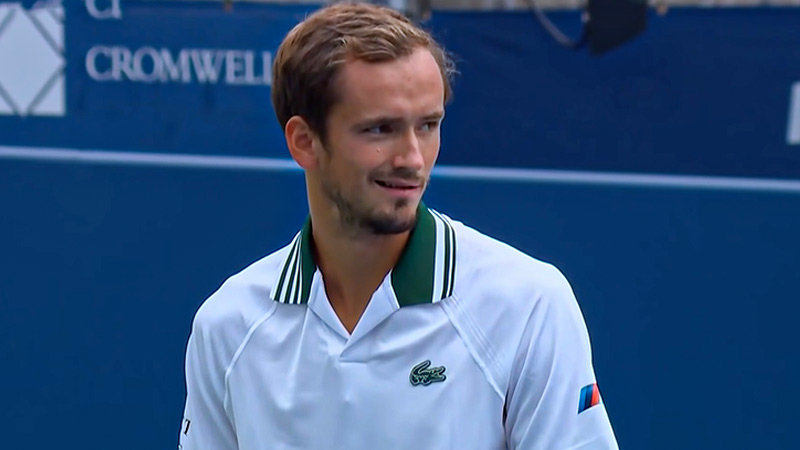
When tennis enthusiasts search for details regarding Daniil Medvedev’s appearances in Madrid, confusion frequently arises surrounding whether he skipped the event, withdrew before play began, or suffered an injury during competition.
The historical record shows two primary pivotal moments at the Mutua Madrid Open: his mid-match retirement during the 2024 quarterfinals due to an acute lower-body issue, and his complete absence from the 2022 iteration following scheduled medical surgery.
This comprehensive analysis delves into the underlying causes of his physical setbacks in Madrid, the biomechanical strain of clay-court movement on elite players, modern tournament scheduling tactics, and how these events impact the broader landscape of professional tennis.
1. The Madrid Narrative: Dissecting Medvedev’s Key Tournament Setbacks
Understanding a marquee player’s tournament attendance requires differentiating between voluntary scheduling choices, pre-tournament medical withdrawals, and mid-match retirements.
In the case of Former World No. 1 Daniil Medvedev, public inquiries regarding his participation in Madrid stem primarily from two distinct seasons that dramatically altered his clay-court campaign.
The 2024 Quarterfinal Retirement Against Jiří Lehečka
The most recent and widely discussed incident occurred during the 2024 Mutua Madrid Open. Entering the tournament as one of the top seeds, Medvedev successfully navigated the early rounds to reach a high-stakes quarterfinal matchup against Czech contender Jiří Lehečka.
However, during the opening set of their clash on May 2, 2024, Medvedev began displaying obvious signs of physical discomfort. After dropping the first set 6–4, he requested an off-court medical timeout to receive treatment from the tournament physiotherapist.
Upon returning to the court, Medvedev found himself severely restricted in motion, explicitly noting that he was unable to move properly.
Recognizing the risk of exacerbating a serious muscular condition right before a major Grand Slam, Medvedev made the difficult decision to retire from the match.
This premature exit halted his deep run in the Spanish capital and sparked widespread discussion across the sporting community regarding player workload, injury prevention, and physical conditioning during the grueling spring clay swing.
The 2022 Absence: Recovery From Hernia Surgery
Two years prior to the 2024 injury, Medvedev was noticeably absent from the Madrid entry list altogether. Following a demanding hard-court swing in early 2022, medical evaluations revealed a small hernia that required surgical correction.
To address the issue effectively and ensure long-term health, Medvedev underwent a minor hernia procedure during the spring. The prescribed recovery timeline necessitated several weeks of complete rest and gradual rehabilitation, forcing him to skip the 2022 Madrid Open.
This planned absence represented a calculated medical decision aimed at safeguarding his availability for major summer events rather than a sudden physical breakdown on court.
2. The Biomechanics of Clay: Why Madrid Poses Unique Physical Demands
Clay-court tennis presents a fundamentally different physical challenge compared to hard courts or grass.
For a player of Medvedev’s distinct tall stature (standing 6 feet 6 inches) and counter-punching baseline style, the transition to red clay demands exceptional physical flexibility, core stability, and lower-extremity resilience.
Groin and Upper Leg Strain in Clay Movement
The retirement against Lehečka in 2024 was specifically attributed to an upper right leg and groin injury. On red clay, players must repeatedly slide into shots, absorb heavy lateral impact, and push off instantly from unstable footings.
- Lateral Sliding Forces: When sliding across clay, the adductor muscle group (located along the inner thigh and groin) contracts eccentrically to decelerate the body’s momentum. For tall baseline competitors who cover vast court territory behind the baseline, these deceleration forces are magnified exponentially.
- Rapid Directional Changes: Pushing out of a deep slide requires intense contraction of the groin and upper leg flexors. If the kinetic chain experiences minor fatigue or micro-trauma during preceding matches, sudden acceleration can easily cause an acute strain or pull.
- Court Altitude and Conditions: Madrid sits at an elevation of approximately 650 meters (2,100 feet) above sea level. The thinner air causes the ball to fly faster and bounce higher than at sea-level clay events, forcing players into quicker adjustments and explosive movement adjustments that heighten lower-body strain.
Core Engagement and Surgical Rehabilitation
Medvedev’s 2022 hernia surgery highlights the central role of core stability in modern tennis stroke mechanics.
The abdominal wall and groin flexors work in tandem to transfer rotational force from the lower legs through the trunk to the racket arm.
When recovering from hernia surgery, returning to high-volume competitive sliding too quickly poses significant risks.
By taking the necessary time off in 2022, Medvedev protected his core integrity, though the required layoff disrupted his rhythm during the critical European clay season.
3. Strategic Scheduling and Tour Attrition: The Modern ATP Dilemma
Medvedev’s physical struggles in Madrid are not isolated events; rather, they reflect a broader trend across the professional men’s tennis circuit.
The spring clay-court stretch features sequential high-intensity tournaments—including Monte Carlo, Madrid, and Rome—leading directly into the two-week marathon of Roland Garros in Paris.
Load Management Across Back-to-Back Masters Events
Modern professional tennis requires elite players to balance the pursuit of ranking points and prestigious Masters 1000 titles with long-term physical longevity.
- The High Cost of Deep Runs: Competing deep into 96-player, multi-week Masters draws requires exceptional physical endurance. For Medvedev, who actively pursued adding a second clay-court Masters 1000 title to his trophy cabinet following his breakthrough victory in Rome in 2023, the physical toll accumulated rapidly across consecutive grueling matches.
- Precautionary Withdrawals vs. Pushing Through: When a player senses muscle tightness or acute strain during a Masters event, continuing to play poses a massive gamble. Retiring early in Madrid—as Medvedev did in 2024—serves as a defensive measure to prevent a minor strain from evolving into a full muscle tear that would rule out participation in the upcoming French Open.
Comparative Scheduling: The Djokovic Approach
The dilemma facing Medvedev in Madrid mirrors choices made by other top-tier competitors. For example, legend Novak Djokovic opted to skip the 2024 Madrid Open entirely, preferring to rest, manage his physical condition at home, and streamline his preparation exclusively for major championship goals.
Online analysts and fan communities frequently highlight how top stars utilize selective tournament entries to preserve energy, emphasizing that skipping high-altitude clay events can be a strategic necessity rather than a setback.
4. Community Reactions and Tour-Wide Analysis
Player injuries and unexpected retirements inevitably spark intense discussion among fans, sports journalists, and industry analysts. Medvedev’s 2024 retirement in Madrid triggered a wave of public commentary dissecting the current state of professional tennis.
Fan Sentiment on Tour Health and Schedule Demands
Across major sports discussion forums, fans expressed frustration and empathy regarding the frequent string of player retirements during the spring swing.
- Concerns Over Attrition: Comments on public tennis boards noted the mounting physical toll on ATP competitors, with some users humorously or critically labeling the tour as exceedingly fragile due to the sheer volume of mid-tournament withdrawals.
- Impact on Tournament Quality: Fans highlighted how sudden retirements affect draw excitement, especially when high-profile seed clashes are cut short.
- Sympathy for Missed Milestones: Many observers lamented Medvedev’s bad luck in Madrid, noting his genuine effort to adapt his game to clay and his missed opportunity to capture another elite clay title.
Contrasting the ATP Attrition with WTA Consistency
The discourse surrounding Medvedev’s exit also prompted comparisons between the men’s and women’s events in Madrid. While the men’s draw suffered key physical casualties and retirements, the women’s event delivered a historic showcase.
- A Marquee Final: The 2024 WTA Madrid final featured World No. 1 Iga Świątek facing off against World No. 2 Aryna Sabalenka in a highly anticipated rematch of their previous championship battle.
- Public Perception: Fan commentary emphasized how the women’s circuit produced a healthy, high-stakes final between the top two players in the world, serving as a bright spot for tournament organizers while the men’s side contended with multiple injury exits.
5. Tactical Implications for Grand Slam Readiness
A withdrawal or retirement from a key warm-up event like Madrid ripples through a player’s strategic preparations for the second Grand Slam of the year at Roland Garros.
Rehabilitation and Recovery Protocols
Following an acute groin or leg strain such as the one Medvedev experienced in 2024:
- Immediate Diagnostic Imaging: High-resolution scans are conducted to determine whether the injury involves micro-tearing or general muscular fatigue.
- Targeted Physical Therapy: Initial recovery focuses on inflammation reduction through cryotherapy, targeted massage, and gentle mobility work.
- Re-establishing Lateral Load Capacity: Before returning to competitive play, athletes undergo rigorous movement tests to verify that the adductor muscles can handle high-velocity sliding without pain or restriction.
Mental Resilience and Clay Court Confidence
In addition to physical rehabilitation, managing mid-season health disruptions requires mental fortitude. Medvedev has historically maintained an open, candid dialogue regarding his complex relationship with clay courts.
While hard courts remain his statistically dominant surface, his dedication to optimizing his baseline strategy on clay highlights his professional adaptability.
Overcoming physical setbacks in Madrid demonstrates the balancing act elite athletes perform constantly: striving for immediate tournament success while safeguarding their bodies for multi-week Grand Slam battlegrounds.
Final Takeaways
Daniil Medvedev’s history at the Madrid Open illustrates the complex physical demands placed on modern tennis professionals.
Whether managing post-surgical rehabilitation in 2022 or navigating acute lower-body strain during a deep tournament run in 2024, Medvedev’s experiences reflect the critical importance of load management, body awareness, and strategic recovery.
As the physical intensity of professional tennis continues to evolve, understanding player health dynamics provides valuable insight into the grueling reality behind every Grand Slam campaign.