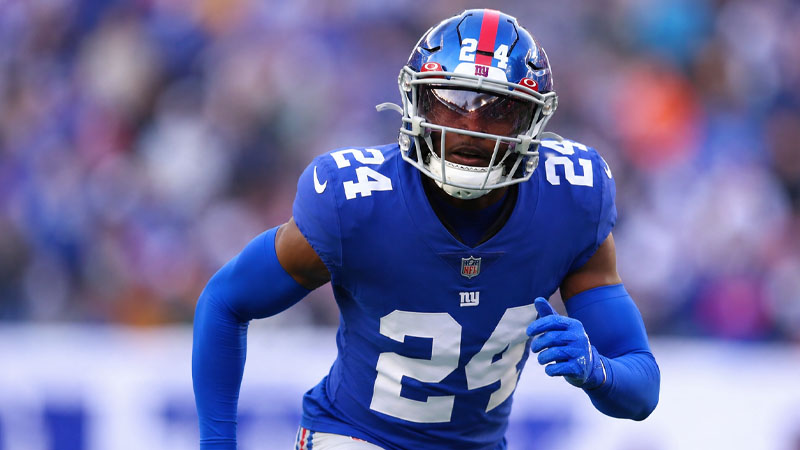
Why did the Giants release James Bradberry? The New York Giants released cornerback James Bradberry on May 9, 2022, purely as a salary cap casualty to resolve a severe financial crisis.
Inheriting a strained salary cap with less than $7 million in available space, newly hired General Manager Joe Schoen had to clear room to sign the team’s incoming 11-player rookie draft class.
Releasing their star cornerback immediately cleared $10.1 million in cap space, though it forced the team to absorb $11.7 million in dead money. It was a strict business decision rather than a performance issue.
The Dave Gettleman Contract Restructure Crisis
Navigating a complex salary cap landscape requires careful planning, but the front office inherited a deeply compromised balance sheet that made keeping elite veteran talent virtually impossible for the upcoming campaign.
How Gettleman’s Backloaded Contracts Caught Up
Former General Manager Dave Gettleman utilized aggressive, backloaded contract restructures to manage short-term budgets.
While this strategy deferred immediate financial pain, it pushed massive liabilities into future years, creating a compounding crisis that became completely unsustainable by the time the 2022 offseason arrived.
Facing the Ballooning $21.9 Million Salary Cap Hit in 2022
Due to those aggressive contract restructuring maneuvers, Bradberry was scheduled to carry an overwhelming $21.9 million cap hit for the 2022 league year.
This inflated figure made him one of the most expensive defensive players in the league, forcing the front office to make a drastic move.
The Cost-Cutting Mandate of GM Joe Schoen
Newly hired General Manager Joe Schoen took the reins in early 2022 with a direct ownership mandate to clear roughly $40 million in salary cap space.
Achieving this goal required shedding expensive veteran contracts and prioritizing the franchise’s long-term fiscal health over retaining individual stars.
Why Was James Bradberry Cut? The Crucial Financial Math
Behind the scenes, the front office faced rigid NFL financial deadlines and severe resource scarcity, meaning a major transaction had to occur before any incoming players could be signed.
Running Out of Space with Under Seven Million Left
Prior to making any moves, the franchise possessed less than $7 million in available cap space.
This tiny operating reserve left zero room for roster flexibility, making it impossible to address basic operational needs or handle standard in-season replacement costs.
Freeing Up Funds to Sign the Rookie Draft Class
The franchise desperately needed immediate room to sign their massive 11-player rookie draft class.
This class featured premium, high-profile first-round selections Kayvon Thibodeaux and Evan Neal, whose rookie contracts required substantial and immediate salary cap allocations that the team simply did not possess.
Unlocking Over Ten Million in Immediate Cap Relief
By releasing the Pro Bowl defender, the front office managed to instantly free up $10.1 million in salary cap space for the 2022 season.
While this move provided the necessary cash flow to sign the incoming rookies, it came with a heavy cost of $11.7 million in dead money.
Why Couldn’t the Giants Trade James Bradberry First?
Trading an elite defensive back should have brought back high-value assets, but rival organizations understood the team’s fiscal desperation and used it to corner the front office.
Actively Shopping Bradberry and the Texans Trade Collapse
The front office spent several months actively shopping the veteran cornerback across the league to recoup draft assets.
A trade with the Houston Texans was nearly completed but collapsed because the player could not agree on altered contract extension terms with Houston’s management.
How Rival Franchises Exploited the Giants’ Financial Deadlock
Recognizing that the franchise was completely backed into a corner, rival teams refused to trade draft capital.
They waited out the market, knowing an outright release was inevitable, forcing New York to cut him right before OTAs without getting anything in return.
The Salary Cap Breakdown of the James Bradberry Move
To understand the true magnitude of this transaction, we must look at the specific ledger details of the contract. The table below illustrates the stark reality of the team’s cap sheet, followed by a list of key takeaways from this high-stakes decision.
| Cap Statistic | Financial Figure | Franchise Impact |
|---|---|---|
| Scheduled 2022 Cap Hit | $21.9 Million | The ballooned salary figure inherited from the previous front office regime. |
| Pre-Move Salary Cap Space | Under $7.0 Million | Insufficient funds to sign rookies, the practice squad, or cover in-season injury replacements. |
| Immediate Cap Savings | $10.1 Million | The exact amount freed up to sign first-round picks like Kayvon Thibodeaux and Evan Neal. |
| Absorbed Dead Money | $11.7 Million | Non-operating cost spread over the next two seasons with zero on-field production. |
| Mandated Offseason Target | $40.0 Million | The overall clearing goal set for newly hired GM Joe Schoen to stabilize the franchise. |
- The Debt of Restructuring: Backloading deals can help win short-term games but almost always results in losing premier talent down the road without compensation.
- Draft Capital Priority: Drafted talent under rookie contracts is the lifeblood of a modern rebuild, forcing teams to cut highly productive veterans.
- Rival Leverage is Real: In the NFL, rival franchises will actively weaponize your cap difficulties to force a release rather than helping you via trade.
- Dead Money Acceptability: Swallowing $11.7 million in dead money is sometimes the only way to escape structural roster stagnation and reset the culture.
- The Timing Window: Waiting until May to execute a release is a clear indicator of exhausting every single potential trade path.
How the Philadelphia Eagles Capitalized on the Release
Losing an elite player is painful, but watching him join a direct rival and achieve championship-caliber success made this transaction one of the most discussed stories of the year.
Capitalizing on the Release: The Philadelphia Eagles Contract
Just nine days after his release, the veteran defender signed a one-year deal with the direct divisional rival Philadelphia Eagles.
This immediate signing proved that his market value remained incredibly high and that divisional rivals are always ready to exploit another team’s fiscal distress.
Second-Team All-Pro Success and Super Bowl LVII
He enjoyed a stellar campaign in Philadelphia, securing Second-Team All-Pro honors. His elite coverage on the boundary was a primary catalyst in propelling the rival team all the way to an appearance in Super Bowl LVII, amplifying the pain of his departure.
Rebuilding the Defense Under Wink Martindale
To replace their departed star, defensive coordinator Wink Martindale had to rely on Adoree’ Jackson and a young rotation of defensive backs. The defense shifted its strategy to compensate for the loss of a lockdown veteran, focusing on aggressive blitz schemes.
FAQs
Could the team have kept him by restructuring his contract?
The team had already restructured his deal under the previous regime, which is exactly why his 2022 cap hit swelled to a massive $21.9 million.
A further restructure would have pushed even more dead money into future years, which directly contradicted Joe Schoen’s mandate to clear $40 million and restore long-term fiscal health.
Why didn’t the Houston Texans trade go through?
The trade fell through because the cornerback could not reach an agreement with Houston’s management regarding altered terms for a contract extension.
Because the trade collapsed and other NFL teams knew the front office was desperate for cap relief, they simply waited for an outright release.
How did his departure impact the team’s rookie draft class?
Releasing him was the key that unlocked the team’s draft class. The $10.1 million saved was used immediately to sign their 11-player rookie class, including top draft picks Kayvon Thibodeaux and Evan Neal. Without this move, the team could not have legally signed its rookies.
Roster Construction Lessons for Modern NFL Franchises
The decision to release a Pro Bowl cornerback was a painful but necessary step in resetting a franchise’s financial foundation.
It underscores a vital lesson in modern sports management: short-term restructuring moves can have severe, long-term roster consequences.
While the loss of on-field talent was tough to swallow, freeing up $10.1 million enabled the team to build for the future with key draft assets.
Ultimately, this transaction shows that in the modern league, managing the salary cap is just as critical to success as managing the players on the field.