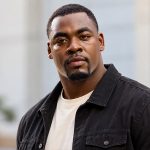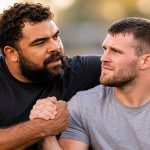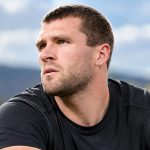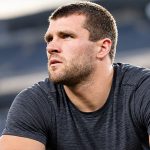
Nakobe Dean did not run the 40-yard dash during the 2022 NFL pre-draft process because of a severe pectoral strain.
He suffered this upper-body injury while training for the bench press in February 2022, forcing him to skip all physical testing drills at both the NFL Scouting Combine and Georgia’s Pro Day.
Fearing a complete tear that would require immediate surgical intervention, Dean and his team strategically chose to protect his health and rely on his elite college film instead.
This decision significantly impacted his draft placement, costing him millions.
What is Nakobe Dean’s Actual 40-Yard Dash Time?
Uncovering official athletic testing metrics for elite prospects is crucial for evaluating draft value. However, the lack of recorded times often leads to confusion, erroneous database entries, and misaligned projections among analysts.
Demystifying the Missing Combine Speed Metric
Scouting personnel and collegiate football fans frequently attempt to look up official sprint metrics for the former Georgia linebacker. The reality is that he does not possess an official, electronically timed sprint from his draft cycle.
Because he was physically sidelined during the major evaluation events in early 2022, scouts had to rely entirely on non-metric assessments.
The False 4.74-Second Database Error
Several online athletic databases erroneously document a speed of 4.74 seconds for the elite linebacker. This specific statistic is completely incorrect and represents a technical mix-up of physical height-weight projections and player comparison data points.
He never participated in any timed linear sprints for league scouts during the entire pre-draft evaluation window.
Why Did Nakobe Dean Not Run the 40-Yard Dash?
To understand the complete absence of physical performance numbers, we must examine the specific medical timeline of early 2022. A single training accident completely altered his draft-season path.
A Heavy Bench Press Training Accident
In February 2022, while preparing to showcase his physical strength for the NFL Scouting Combine, he suffered a severe pectoral strain during a heavy bench press training session.
This sudden muscle strain immediately compromised his upper-body stability. The timing of the injury left virtually zero recovery runway before physical evaluations commenced.
Sitting Out the Indianapolis Scouting Combine
When the NFL Scouting Combine took place in Indianapolis, the linebacker’s pectoral injury was still fresh and highly vulnerable.
Consequently, he was physically unable to participate in any on-field athletic drills. He sat out the 40-yard dash, vertical jump, shuttle runs, and the physical bench press test.
The Georgia Pro Day Restriction
On March 16, 2022, scouts gathered at Georgia’s annual Pro Day expecting the star defender to run his sprint. However, his college coach, Kirby Smart, confirmed that his pre-draft training schedule remained heavily restricted.
To prevent aggravating the muscle tear, he participated only in minor, position-specific drills.
The Strategic Business Choice of Skipping the Sprint
Faced with a compromised physical state, the player and his agency had to weigh the immediate pressure of testing against the long-term biological risks of running through a severe muscle strain.
Biomechanical Risks of Sprinting with a Pec Strain
Sprinting at maximum velocity requires explosive, high-frequency arm pumping to maintain physical balance and power. Attempting a linear sprint with an active pectoral strain risked turning a minor tear into a complete rupture.
A full muscle rupture would have required immediate surgical repair, ending his rookie preparation.
Protecting Draft Stock Through Game Tape
Draft analysts advised that running a timed sprint while physically compromised would inevitably produce a subpar, slow clocking.
A poor speed metric would damage his draft projection far more than recording a “Did Not Participate” (DNP) status. His team opted to let front offices trust his dominant college game film.
Film-Based Speed vs. Electronic Timers
While scouts lacked electronic timing data, professional evaluations of his college game tape revealed exceptional functional on-field speed.
Film analysts estimated his closing pursuit speed to be in the highly competitive 4.52-second range. His elite field vision and instincts effectively compensated for the lack of formal track times.
How Much Did the Draft Slide Cost Nakobe Dean?
While skipping the testing process was a sound medical choice, the absence of verified numbers created an information vacuum. NFL franchises reacted with extreme caution during the draft.
Medical Whispers and Pectoral Injury Rumors
The lack of official measurements allowed negative speculation to propagate throughout the league’s front offices.
Without verified testing, rumors intensified regarding the true severity of his pectoral strain, coupled with additional reports concerning a lingering meniscus issue. These unverified medical red flags severely damaged his draft profile.
The Slide to Day Two and the Philadelphia Eagles
Previously viewed as a guaranteed first-round selection, the linebacker experienced a dramatic slide on draft night.
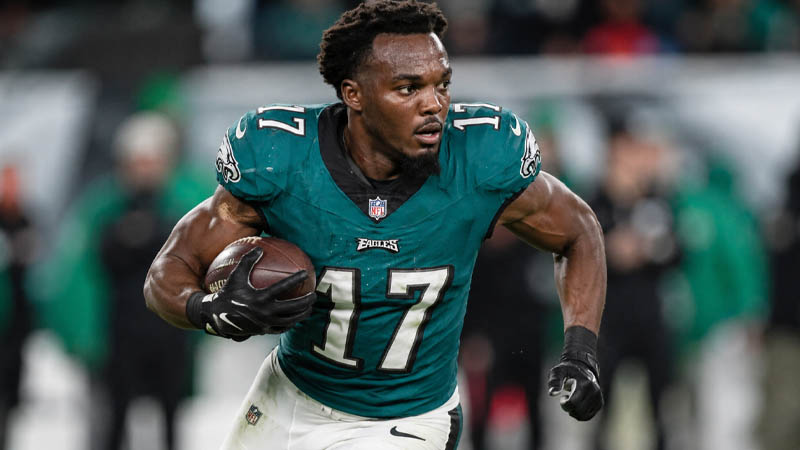
Franchise after franchise passed on him due to medical uncertainty. Ultimately, the Philadelphia Eagles stopped his fall, selecting him in the third round with the 83rd overall pick.
The Estimated $15 Million Financial Impact
The drop from a projected first-round slot to the mid-third round carried a massive financial penalty. The discrepancy between first-round rookie contract structures and a third-round contract cost him an estimated $15 million in career earnings.
This slide represents one of the most expensive medical-testing drops in recent history.
Professional Vindication and the NFL Proof of Concept
Despite the initial draft-day setback and the substantial loss of rookie revenue, the linebacker quickly demonstrated that game film is a far more reliable indicator of professional success than track metrics.
Super Bowl LIX Championship Success
His elite play speed and football intelligence translated seamlessly to the professional level with the Philadelphia Eagles.
He contributed significantly to the team’s defensive units, culminating in winning a championship ring during the franchise’s successful Super Bowl LIX run in the 2024 season.
Long-Term Security with the Las Vegas Raiders
His early success with the Eagles fully validated his original draft profile and erased any lingering concerns about his durability.
Ahead of the 2026 season, he capitalized on his stellar play by signing a highly lucrative multi-year contract to join the Las Vegas Raiders.
Essential Frequently Asked Questions (FAQ)
What was the exact injury that prevented him from running?
He suffered a severe pectoral strain in February 2022 while performing heavy bench press workouts during pre-draft training.
Did he run at his Pro Day?
No, he only participated in minor, position-specific drills at Georgia’s Pro Day, skipping the sprint to avoid a full tear.
Why do some websites show a 4.74-second time?
This is an error that mixes up height-weight projections and player comparison metrics; he has no official timed linear speed.
What is his estimated game speed?
Scouting analysts evaluated his college film and estimated his functional closing speed to be in the 4.52-second range.
How far did he fall in the NFL Draft?
Widely projected as a first-round lock, he fell to the third round (83rd overall) to the Philadelphia Eagles.
Where does he play now?
After winning Super Bowl LIX with the Eagles, he signed a lucrative contract with the Las Vegas Raiders for the 2026 season.
Conclusion: A Strategic Blueprint for NFL Athletes
The story of the pre-draft process in 2022 offers a critical case study in risk management, draft economics, and athletic evaluation.
Elite prospects are constantly forced to balance the immense pressure of athletic metrics against the absolute necessity of physical preservation.
While the immediate financial consequence of skipping the sprint was undeniably severe—costing millions of dollars in rookie contract value—the decision protected the athlete from a potentially career-altering complete pectoral muscle tear.
By prioritizing long-term health, trusting the durability of his collegiate tape, and refusing to perform while physically compromised, he was able to enter the professional ranks healthy enough to perform.
His subsequent championship victory with the Philadelphia Eagles in Super Bowl LIX and his lucrative contract with the Las Vegas Raiders in 2026 prove that game tape remains the ultimate validator.
Ultimately, speed metrics are merely diagnostic tools, whereas true football instincts and championship execution are the true currencies of professional gridiron success.